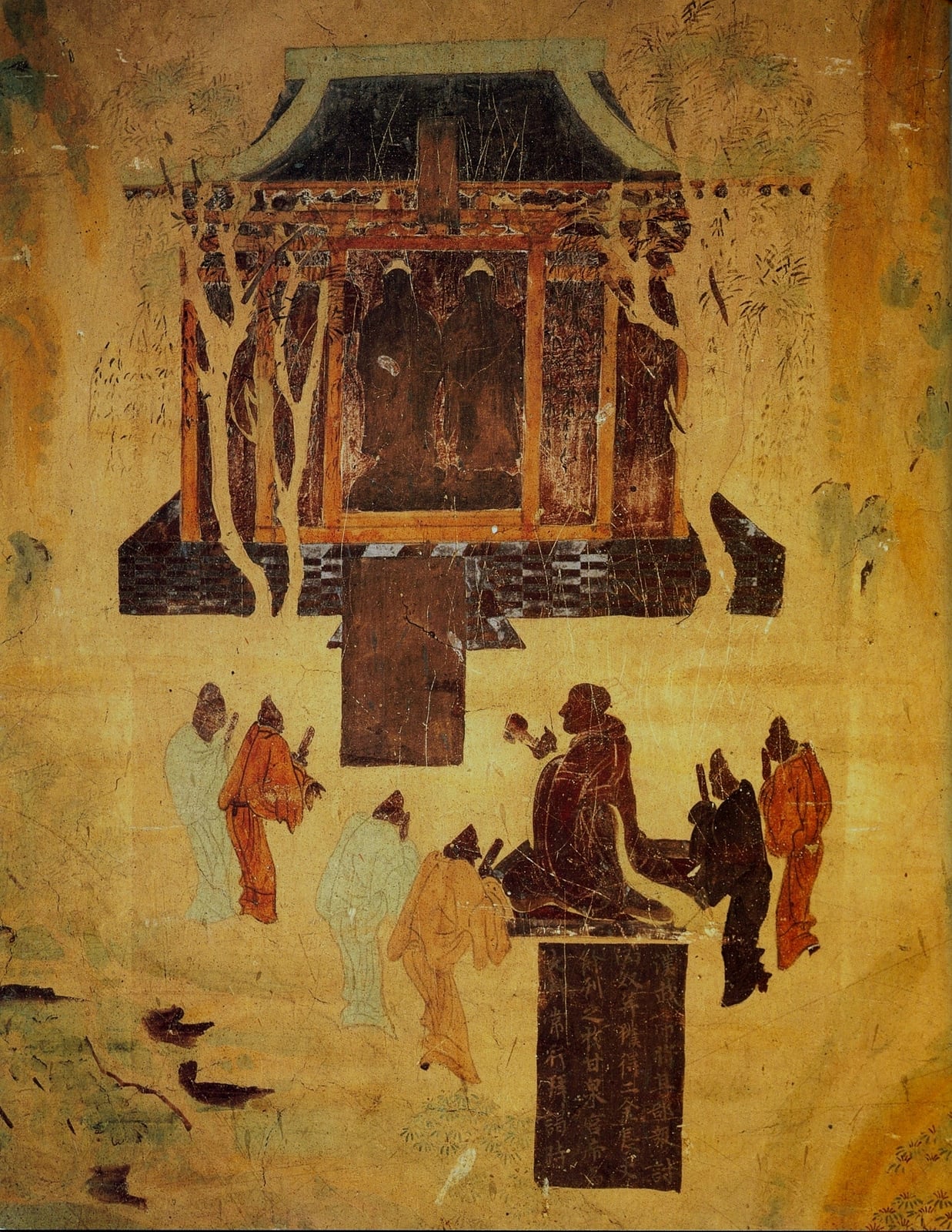
Zhang Qian’s Mission Opens Routes to Central Asia
A Han envoy’s travels paved the way for the Silk Road.
Around 139 or 138 BCE, Emperor Wu of the Western Han dynasty dispatched an imperial officer named Zhang Qian on an ambitious diplomatic venture into the Western Regions. The nomadic Xiongnu confederation held dominance over Inner Mongolia and controlled the routes extending west of Han lands, obstructing communication with other realms. Seeking to break this encirclement, the imperial court instructed Zhang Qian to cross northern steppe lands and form a mutual military pact with the Yuezhi, a nomadic group that had recently been driven westward by Xiongnu forces.
The journey began with severe disruption. Accompanied by roughly one hundred men, including a Xiongnu-born former slave named Ganfu, Zhang Qian was captured by Xiongnu forces almost immediately after setting out. He remained detained for over a decade, during which he took a local wife and fathered a son. Taking advantage of his captors' trust, Zhang Qian eventually escaped with his companions and continued west. Journeying past Lop Nor and skirting the northern rim of the Tarim Basin, the small party traversed several oasis settlements before reaching Dayuan in the Fergana valley.

Keep reading in Yester
Coming soon to the App Store
Keep following the story
Sources
Image: Unknown author Unknown author