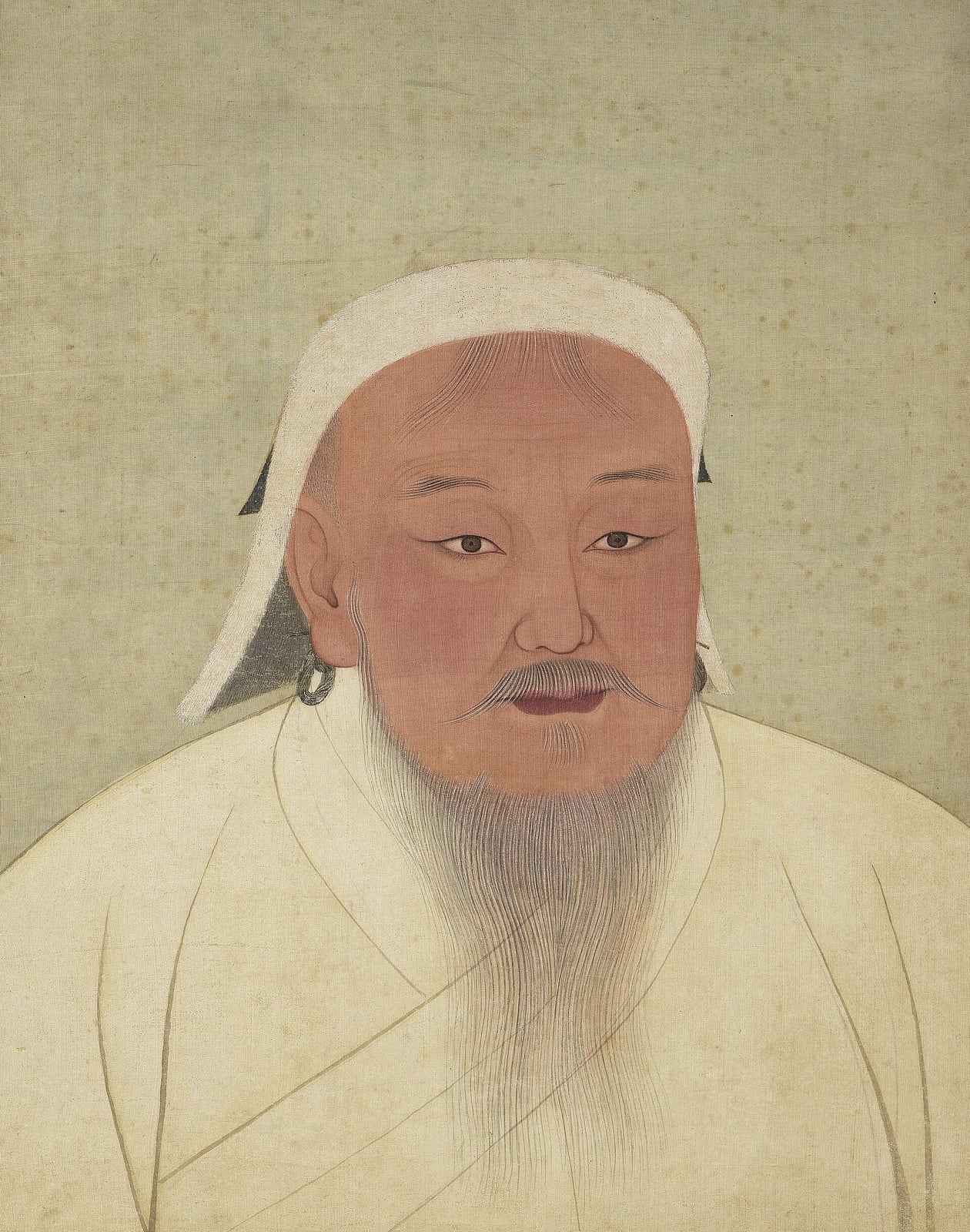
A Great Assembly Proclaims Genghis Khan
Mongol tribes united under one ruler who would build a vast empire.
In 1206, a general council of nomadic chieftains gathered along the steppe to formally invest Temujin with supreme authority over the newly unified tribes of Mongolia. Bestowed with the title Genghis Khan, a designation whose linguistic origin remains debated by scholars, he brought an end to decades of decentralized warfare among regional pastoral groups. His elevation was not the result of undisputed hereditary succession, but of a long, calculated consolidation of power across northern Eurasia. From an impoverished youth, Temujin systematically broke the ancestral networks of rival steppe clans, replacing traditional tribal entitlement with an integrated social order focused around his household.
Temujin had grown up amid volatile steppe politics after the poisoning of his father Yesugei by Tatars. Stripped of influence and cast out by their own clan, his immediate family lived as foragers along the Onon River. In his early adolescence, Temujin killed his older half-brother Behter during a family dispute, an act that prevented Behter from asserting senior control over the kin group under levirate customs. Surviving capture and raiding parties, Temujin slowly established a circle of personal companions known as nokod. Through martial patronage and an initial partnership with Toghrul, ruler of the Kerait, he gradually forged a devoted military faction that prized direct loyalty above lineage.

Keep reading in Yester
Coming soon to the App Store
Keep following the story
Sources
- Mongol Unity under Chinggis Khan (Asia for Educators, Columbia University)
- Chinggis Khan's Four Great Legacies (Asia for Educators, Columbia University)
- Three Invasions Led by Chinggis (Asia for Educators, Columbia University)
- Bichig Mongolian, a thousand-year-old script in survival mode (Inalco)
- Mongolia's marauding son gets a makeover (Christian Science Monitor)
- Commemorative 20,000 togrog banknote (Bank of Mongolia)
- Genghis Khan
Image: Unknown author Unknown author