Samarkand Measures the Stars on a Monumental Scale
An observatory and its scholars produced astronomical measurements that outlived the ruler who supported them.
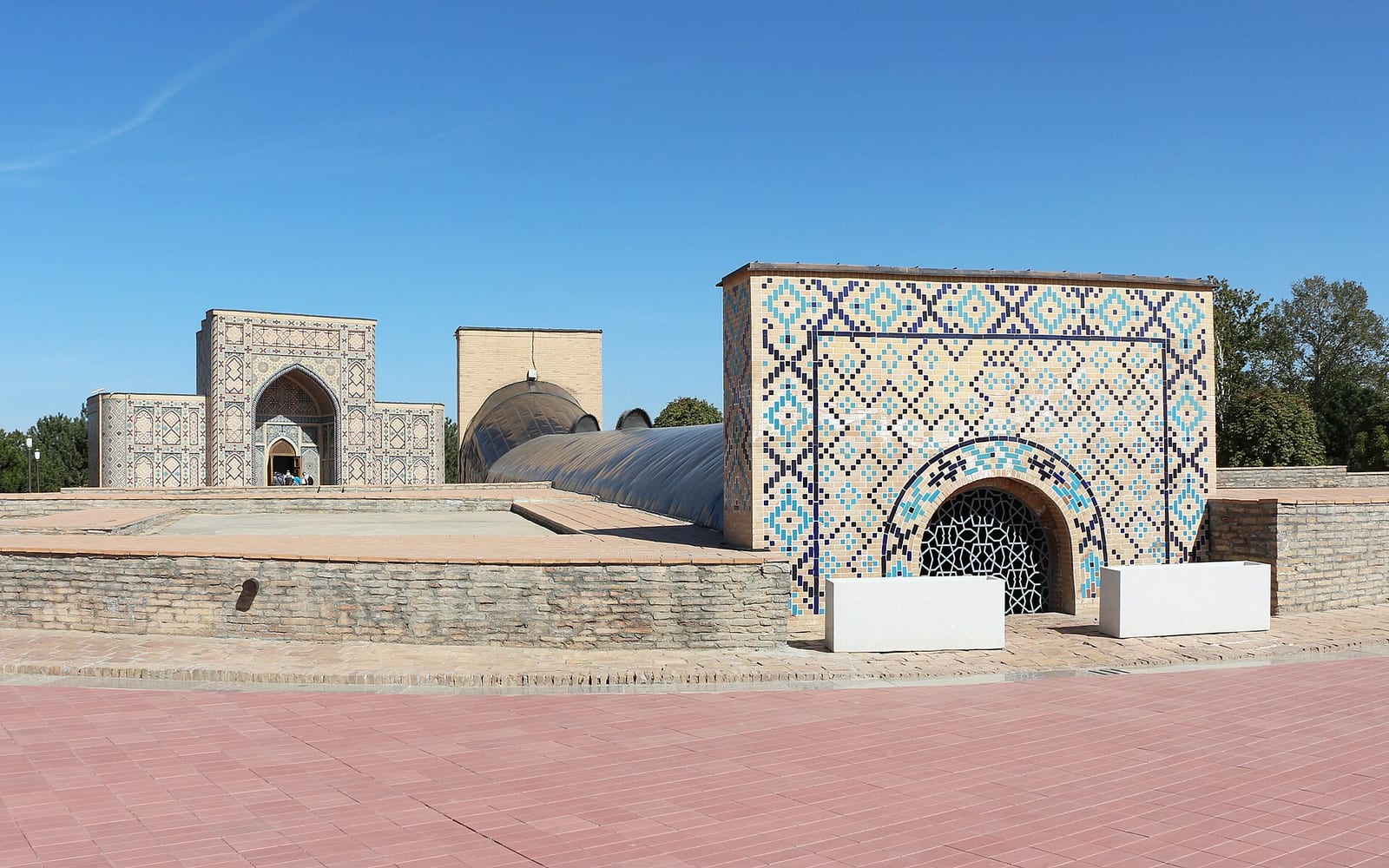
During the 1420s, the Timurid ruler Ulugh Beg established an ambitious center for astronomical study on a hill rising twenty-one meters above Samarkand. As the son of Shah Rukh and grandson of Amir Timur, Ulugh Beg directed royal patronage toward mathematics and observation, drawing over sixty scholars to the city. While political, social, and commercial factors may have encouraged the project, correspondence indicates that his earlier visit to the historic Maragha complex also left a lasting impression. He brought together notable mathematicians and astronomers, including Ghīyāth al-Dīn Jamshīd al-Kāshī, Qāḍī Zāda al-Rūmī, and Ali Qushji, creating an active scientific community alongside a nearby madrasa.
The physical design of the observatory balanced monumental scale with structural limitations. The cylindrical brick structure measured roughly forty-six meters in diameter and reached between thirty and thirty-three meters high. Because the regional brick was soft, constructing a building tall enough to house an astronomical instrument with a radius of 40.04 meters carried a serious risk of collapse. Architects resolved this danger by carving the primary instrument into the underlying rock and placing part of it in a trench approximately two meters wide. This subterranean placement allowed the massive curved track to remain stable, while the flat roof and arched upper stories accommodated additional apparatus.

Keep reading in Yester
Coming soon to the App Store
Keep following the story

Sources
Image: Bgag