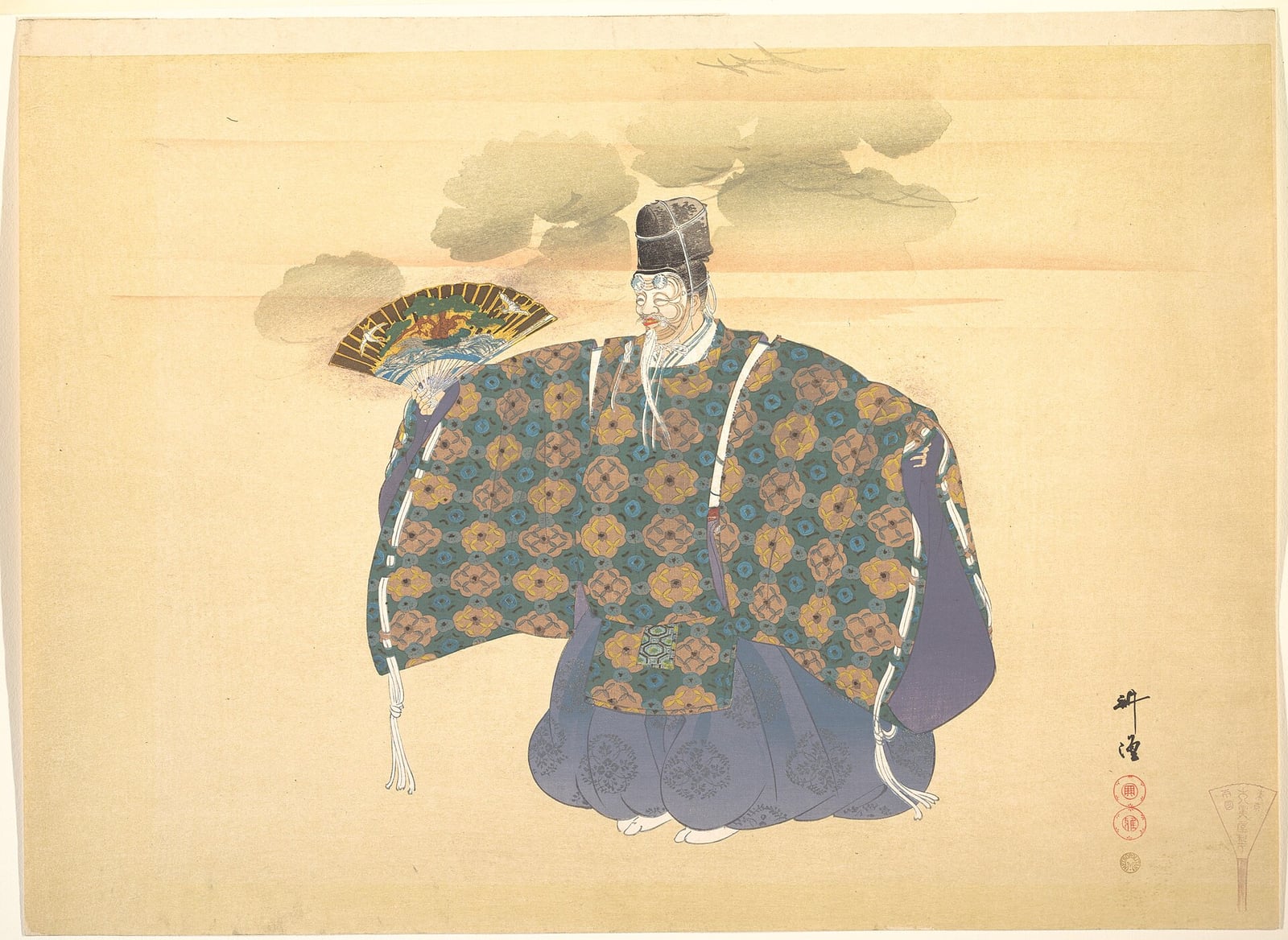
Zeami Shapes the Art of Noh Theater
An actor and playwright wrote the treatises that defined Noh.
Born around 1363 near Nara, the actor and dramatist Zeami Motokiyo transformed Japanese performance from a rustic folk entertainment into an enduring classical theater. Zeami began acting in childhood under the guidance of his father, Kan'ami, who managed a popular traveling troupe. In 1374 or 1375, at a performance in Imakumano in Kyoto, the young actor appeared before the teenage shogun Ashikaga Yoshimitsu. Captivated by the troupe's artistry and the youth's stage presence, the shogun awarded the performers ongoing patronage. This elevated status gave Zeami access to the aristocratic court, where the distinguished statesman and renga poet Nijo Yoshimoto provided him with an elite education in poetry, philosophy, and classical literature, an extraordinary privilege for an actor of modest social origins.
Following his father's death in 1384, Zeami assumed leadership of the Kanze troupe. Under his direction, the ensemble shifted focus from the rural and ritual associations of earlier performance toward refined aesthetic entertainment designed for an elite audience. Zeami's plays drew extensively from traditional sources, including The Tale of the Heike as well as ancient Japanese and Chinese poetry. Authorship in the Noh canon remains complicated because texts were frequently revised across generations, but modern scholars estimate that Zeami composed between thirty and sixty plays. Universally recognized pieces such as Atsumori, Takasago, and Izutsu established a delicate balance of dance, song, and dramatic tension.

Keep reading in Yester
Coming soon to the App Store
Keep following the story
Sources
- Zeami (Japan Search, National Diet Library of Japan)
- The Words of Zeami: His Dramatic Life (the-noh.com)
- Kan'ami (the-noh.com Noh dictionary)
- De theoretische geschriften van Zeami, E. G. De Poorter, Forum der Letteren 1972 (DBNL)
- YOSHIDA Togo (Portraits of Modern Japanese Historical Figures, National Diet Library)
- Zeami Motokiyo
Image: Kōgyo Tsukioka