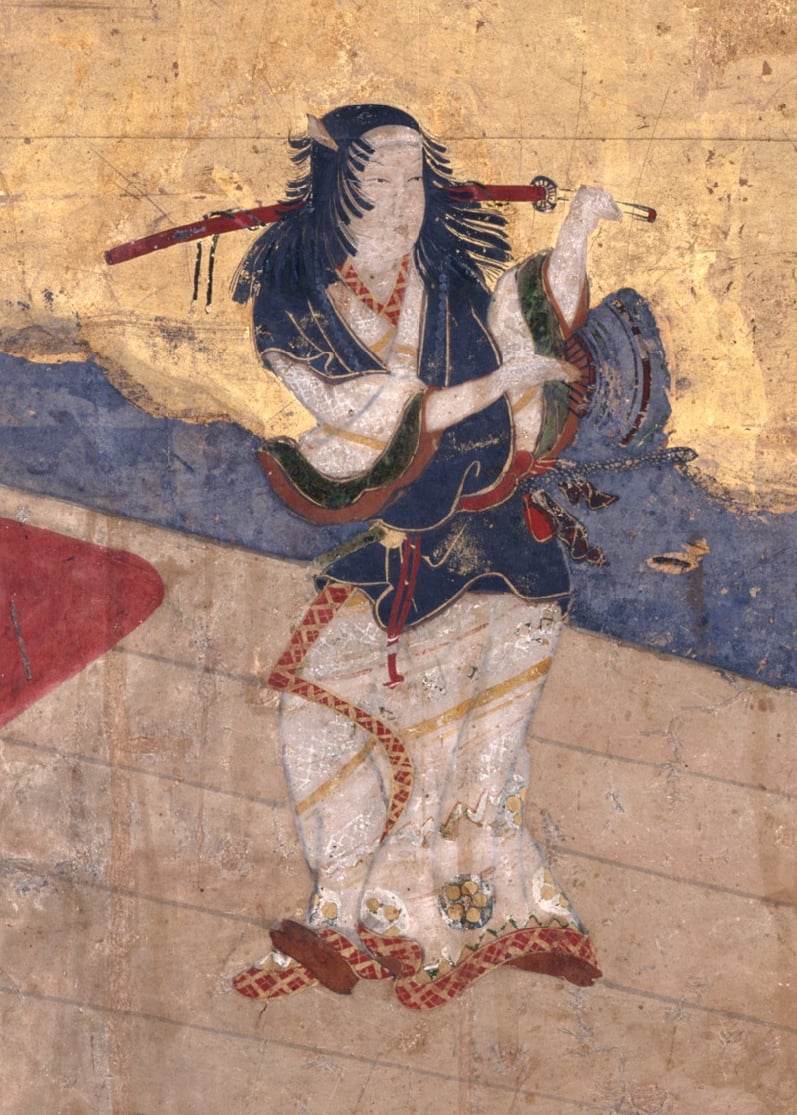
Okuni Dances the Beginnings of Kabuki
Performances on a Kyoto riverbank launched a theatrical form that later barred women.
Around 1603, an entertainer known as Izumo no Okuni began staging public performances on a makeshift stage in the dry riverbed of the Kamo River in Kyoto. Very little is known about her life for certain, and the accuracy of the paintings, drawings and diaries that mention her has been difficult to establish. She is said to have been an attendant at the Grand Shrine of Izumo and presented herself as a shrine maiden from that shrine. Instead of remaining within traditional religious boundaries, she adapted her material to secular tastes and drew large urban crowds.
Okuni modified existing traditions, achieving popularity with parodies of Buddhist prayers and with dances that borrowed the costumes and movements of the kabukimono, eccentrically dressed figures who swaggered through urban streets. Her repertoire included sketches in which performers dressed as men visited teahouses and flirted with the women there. These lusty, unrestrained spectacles departed sharply from traditional performances and attracted ordinary townspeople as well as samurai and members of the nobility.

Keep reading in Yester
Coming soon to the App Store
Keep following the story
Sources
Image: Unknown author Unknown author