The Hand That Revealed an Invisible Light
An unexpected glow led Wilhelm Röntgen to radiation that could pass through flesh. Seeing inside the body without cutting it open changed what a medical examination could reveal.
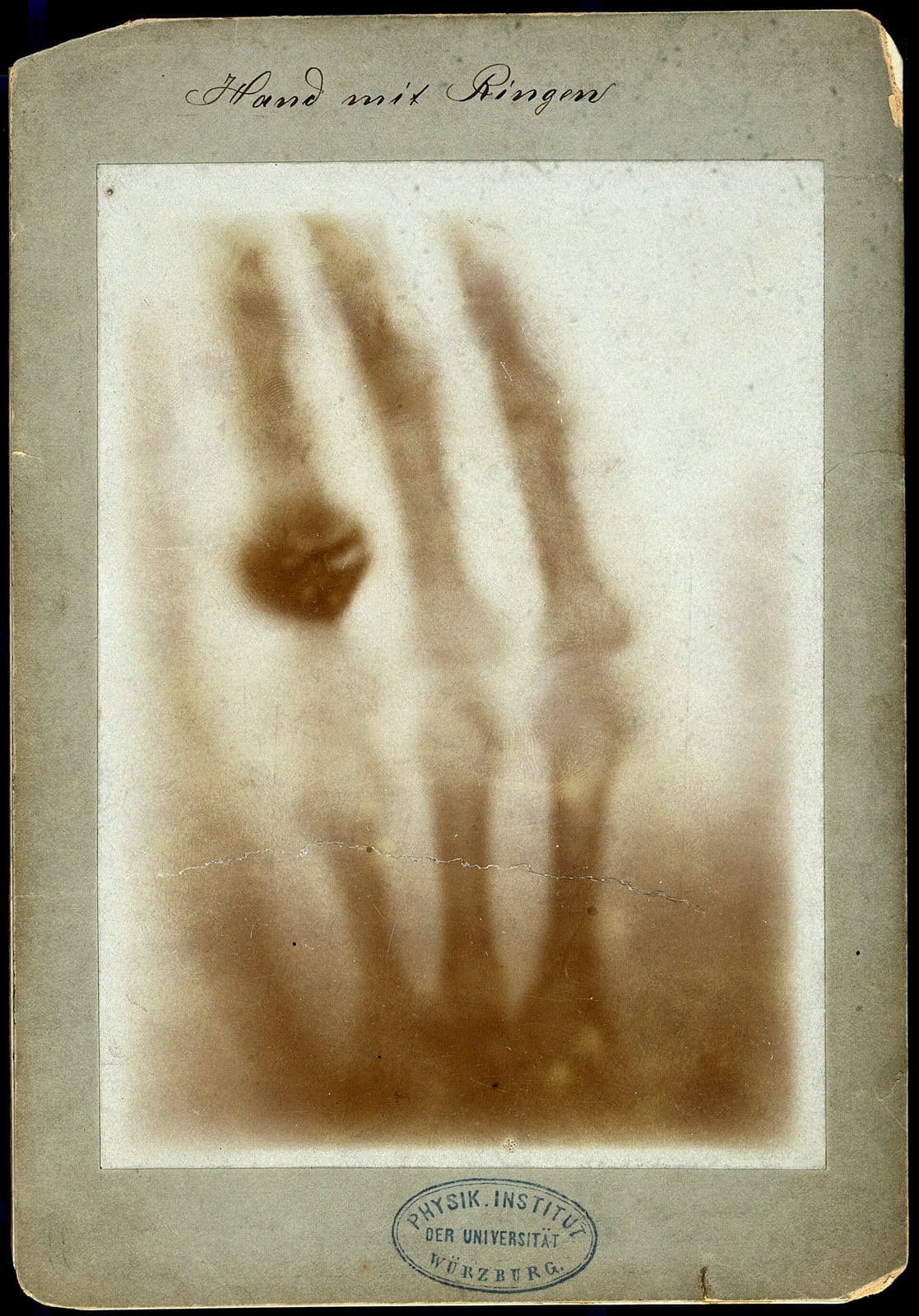
The bones are visible, but so is a ring. That combination made an early X-ray image of a hand especially unsettling: an ordinary object worn on the outside appeared beside a structure normally hidden within. In late 1895, Wilhelm Röntgen found a way to record such images without cutting into the body. The discovery began not in an operating room, but with an unexpected glow during an experiment with electrical discharge.
Röntgen was working in Würzburg, Germany, with a glass tube containing gas at low pressure. On November 8, he noticed that a nearby fluorescent screen responded even though the tube had been covered to block ordinary light. Rather than treating the glow as a nuisance, he investigated what could be producing it. The new radiation passed through some materials that stopped visible light. He called it X-radiation because its nature was still unknown.

Keep reading in Yester
Coming soon to the App Store
Keep following the story

Sources
Image: Wilhelm Röntgen