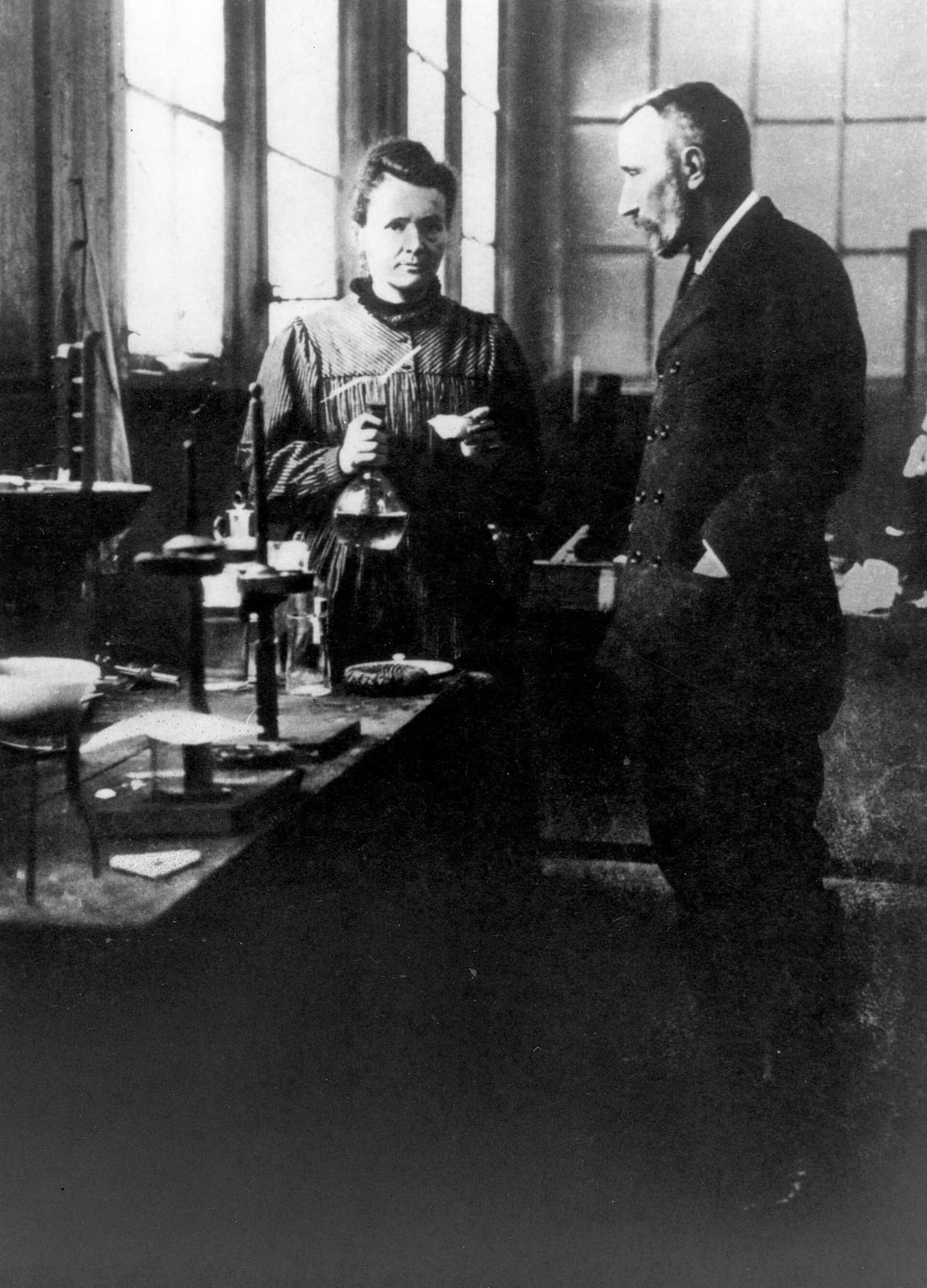
Finding New Elements in an Invisible Signal
Investigating anomalous activity in uranium minerals led Marie and Pierre Curie to identify polonium and radium. Establishing the existence of these elements required years of rigorous chemical separation and physical measurement.
Before 1898, research into uranium rays revealed an unexpected anomaly when certain minerals exhibited more activity than could be explained by their known uranium content. Marie Curie treated this discrepancy as evidence worth investigating, recognizing that an awkward measurement might point toward an unidentified substance.
In 1898, Marie and Pierre Curie pursued this unseen property by combining chemical separation with physical measurements of activity. Rather than searching for visually distinctive minerals, they tracked a signal that the human eye could not detect, systematically isolating fractions to follow the concentrated activity.

Keep reading in Yester
Coming soon to the App Store
Keep following the story
Sources
Image: AIP Emilio Segrè Visual Archives, Physics Today Collection