James Watt’s Engine Goes to Work
A separate condenser made steam power far more efficient.
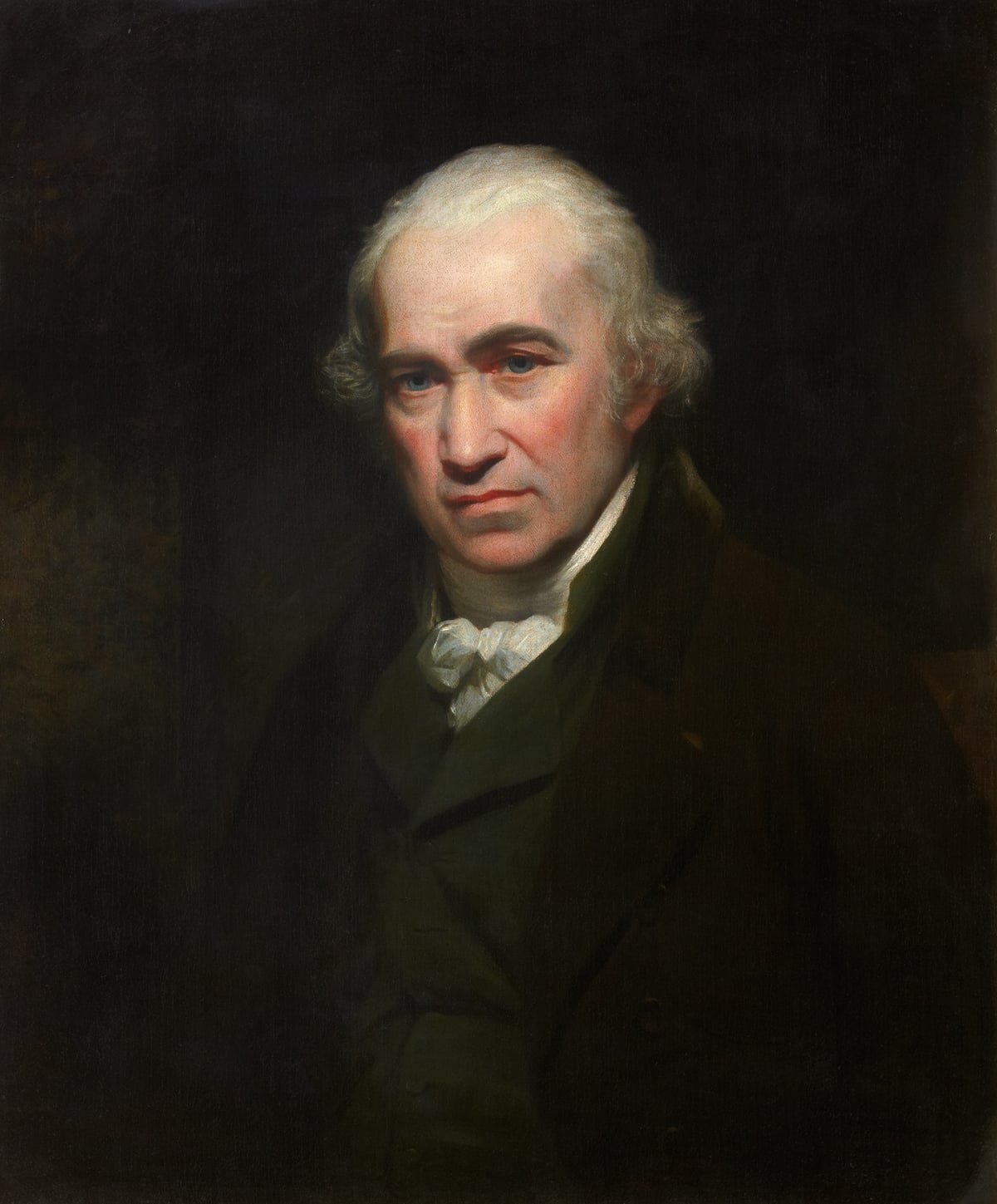
In 1763 or 1764, while employed as an instrument maker at the University of Glasgow, James Watt received an assignment to repair a model of Thomas Newcomen's atmospheric engine. Introduced in 1712, Newcomen's design relied on repeatedly injecting cold water directly into the main cylinder to condense steam and create a partial vacuum. While effective at pumping deep mines, this process repeatedly chilled the cylinder walls, wasting substantial quantities of heat each time fresh steam entered for the subsequent stroke. Observing this recurring thermal loss, Watt sought a method to condense the steam without requiring the working cylinder to cool down.
Watt addressed the flaw in 1765 by designing a separate condensation chamber connected to the main cylinder by a valve. In this arrangement, steam moved into the cold condenser, which was submerged in a cold water bath, while the primary cylinder was kept continuously hot. By adding an external steam jacket around the cylinder and sealing its top, Watt prevented premature cooling. The warm condensate was extracted by an air pump and recycled as boiler feedwater. These modifications allowed the engine to complete its stroke using far less fuel, ultimately cutting coal consumption by about two-thirds, according to the Science Museum.

Keep reading in Yester
Coming soon to the App Store
Keep following the story
Sources
- John Roebuck (European Route of Industrial Heritage)
- James Watt (Kinneil, Bo'ness local history)
- James Watt (Grace's Guide)
- Rotative Steam Engine by Boulton and Watt, 1788 (Science Museum Group)
- James Watt (Encyclopaedia Britannica)
- James Watt and the separate condenser (Science Museum blog)
- Original indenture of agreement for erection of a rotative engine (Science Museum Group Collection)
- Cast iron boring bar and boring head, Bersham (Science Museum Group Collection)
Image: Sir William Beechey, RA (1753-1839)