The Railway That Had to Work Every Day
A steam engine could demonstrate speed. A railway linking two industrial centers had to do something harder: turn that speed into a dependable service for people and goods.
The Liverpool and Manchester Railway opened on September 15, 1830, with crowds watching trains travel between two centers of industrial England. A locomotive moving under its own power was not an entirely new sight. The more ambitious promise was a service: people and goods could make the journey repeatedly on a railway designed around steam operation. Its importance would depend on what happened after the ceremonial trains passed, when ordinary customers expected the route to work again.
Liverpool’s port and Manchester’s industry gave the connection an economic purpose beyond spectacle. Moving goods between them involved delays and competing transport interests. A railway proposed a different arrangement, requiring investment not only in engines but in land, track, structures and terminals. George Stephenson became chief engineer in 1826. The route made engineering a problem spread across a landscape. An obstacle that seemed small on a map could demand expensive work before a train could cross it reliably.

Keep reading in Yester
Coming soon to the App Store
Keep following the story
Sources
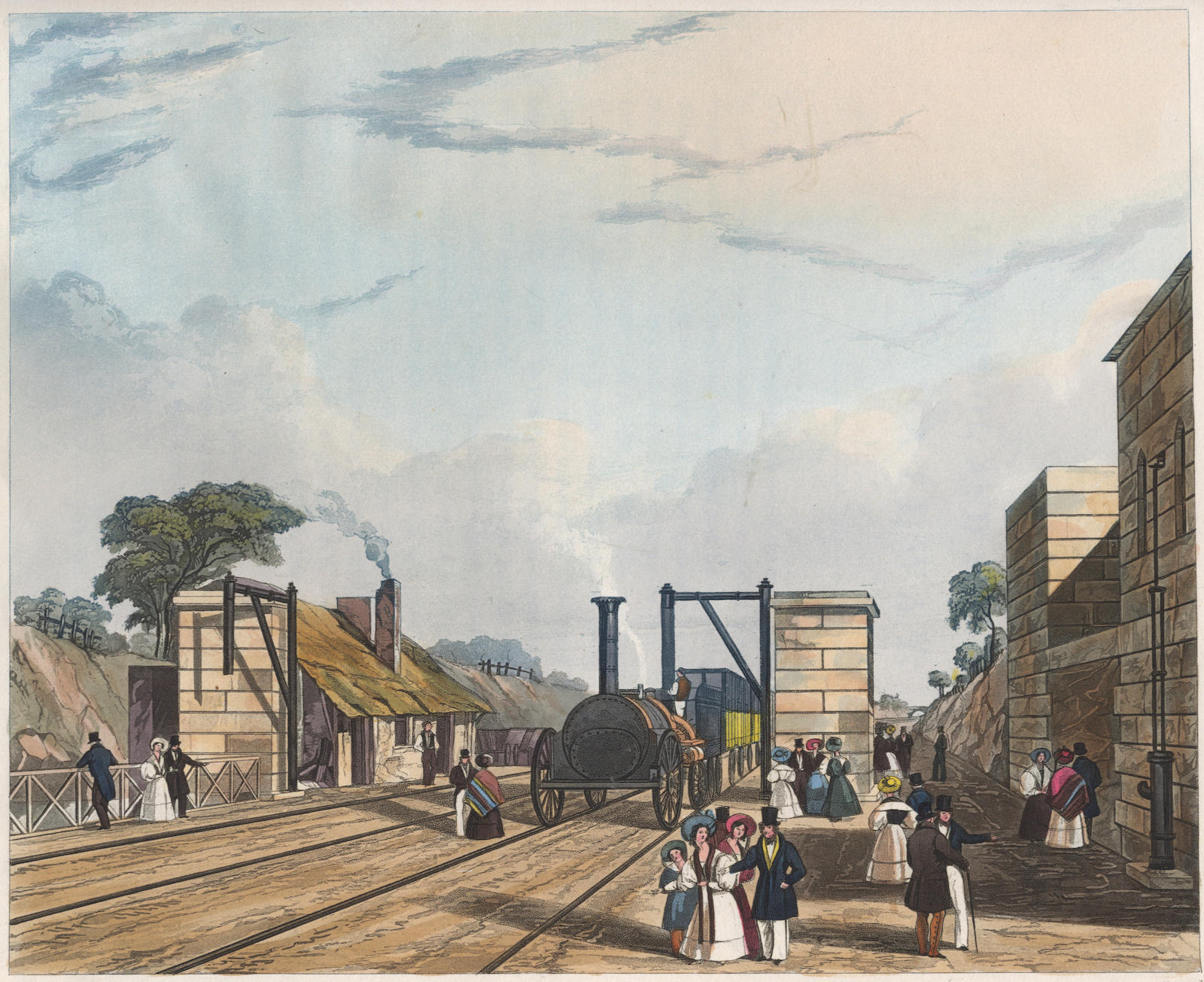
Image: plates by S.G. Hughes and H. Pyall after T. Bury, plates watermarked "J. Whatman, 1831"