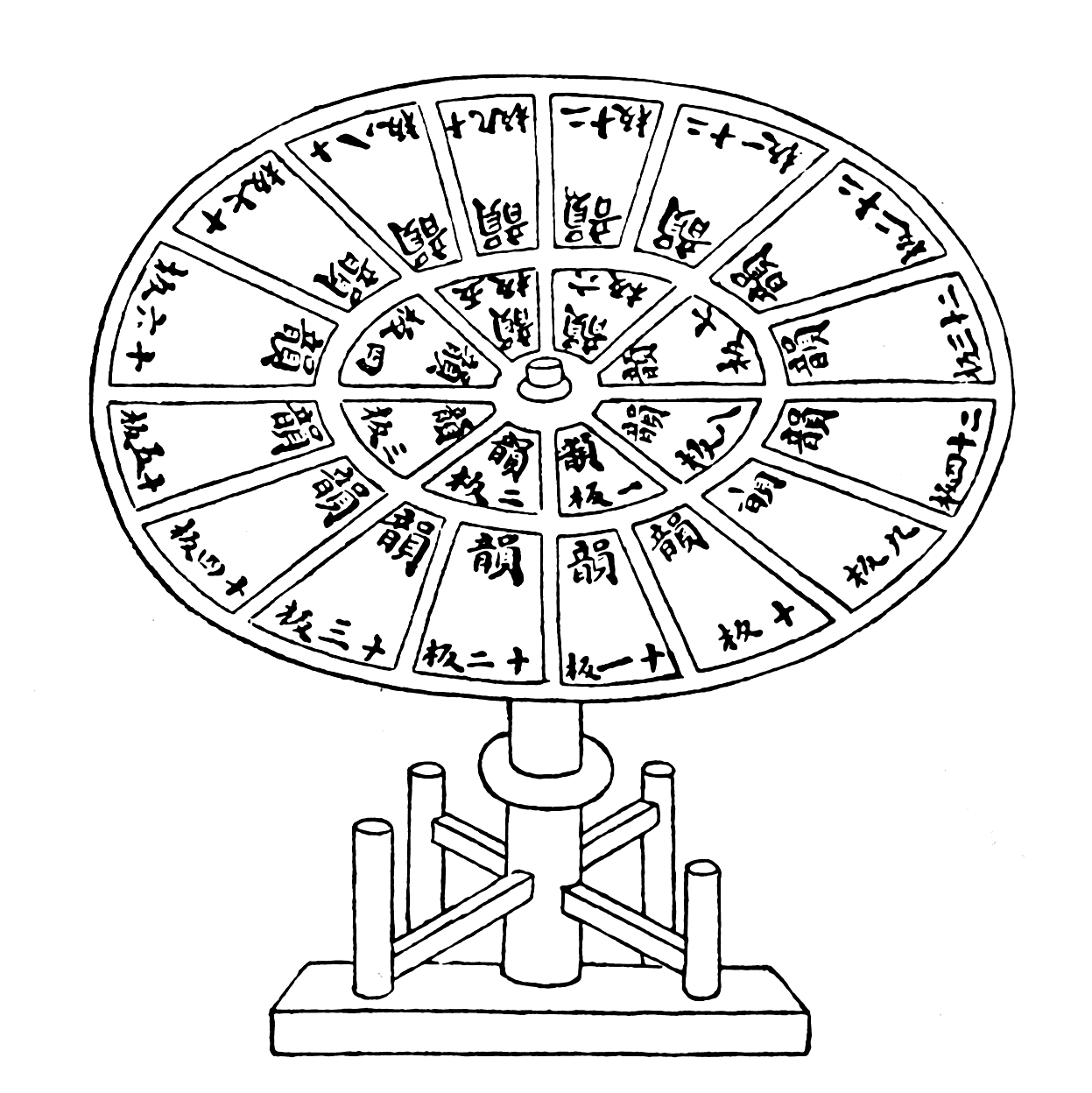
Wang Zhen Brings Farming and Printing into One Project
An illustrated agricultural treatise also documented practical experiments with movable type.
In 1313, an official named Wang Zhen published the Nong Shu, or Book of Agriculture, a vast treatise numbering over 110,000 Chinese characters. Wang had served in administrative posts across Anhui and Jiangxi provinces, including a tenure from 1290 to 1301 as magistrate of Jingde. Observing the economic hardships and agricultural disruption that had followed the transition from the Song to the Yuan dynasty, he compiled extensive guidance intended for local magistrates. These administrators were expected to consult the compendium to guide rural farming communities in raising yields and applying practical mechanics.
The Nong Shu surveyed farming techniques across China, deliberately contrasting the dryland cultivation systems of the north with the intensive irrigated methods of the south. Wang documented diverse equipment, including grain storage structures, ceremonial vessels, transport carts, boats, and textile machinery. He paired these descriptions with illustrations, including an intricate circular agricultural calendar that coordinated seasonal tasks with solar terms and natural phenomena. Among its industrial mechanical diagrams, the treatise presented the earliest known printed illustration of water-powered blast furnace bellows, showing complex linkages and waterwheels used to generate continuous blast air for cast-iron smelting.

Keep reading in Yester
Coming soon to the App Store
Keep following the story

Sources
Image: User:Parhamr