Wallace Reaches Natural Selection from the Malay Archipelago
Fieldwork and correspondence brought a second naturalist to an explanation of how species change.
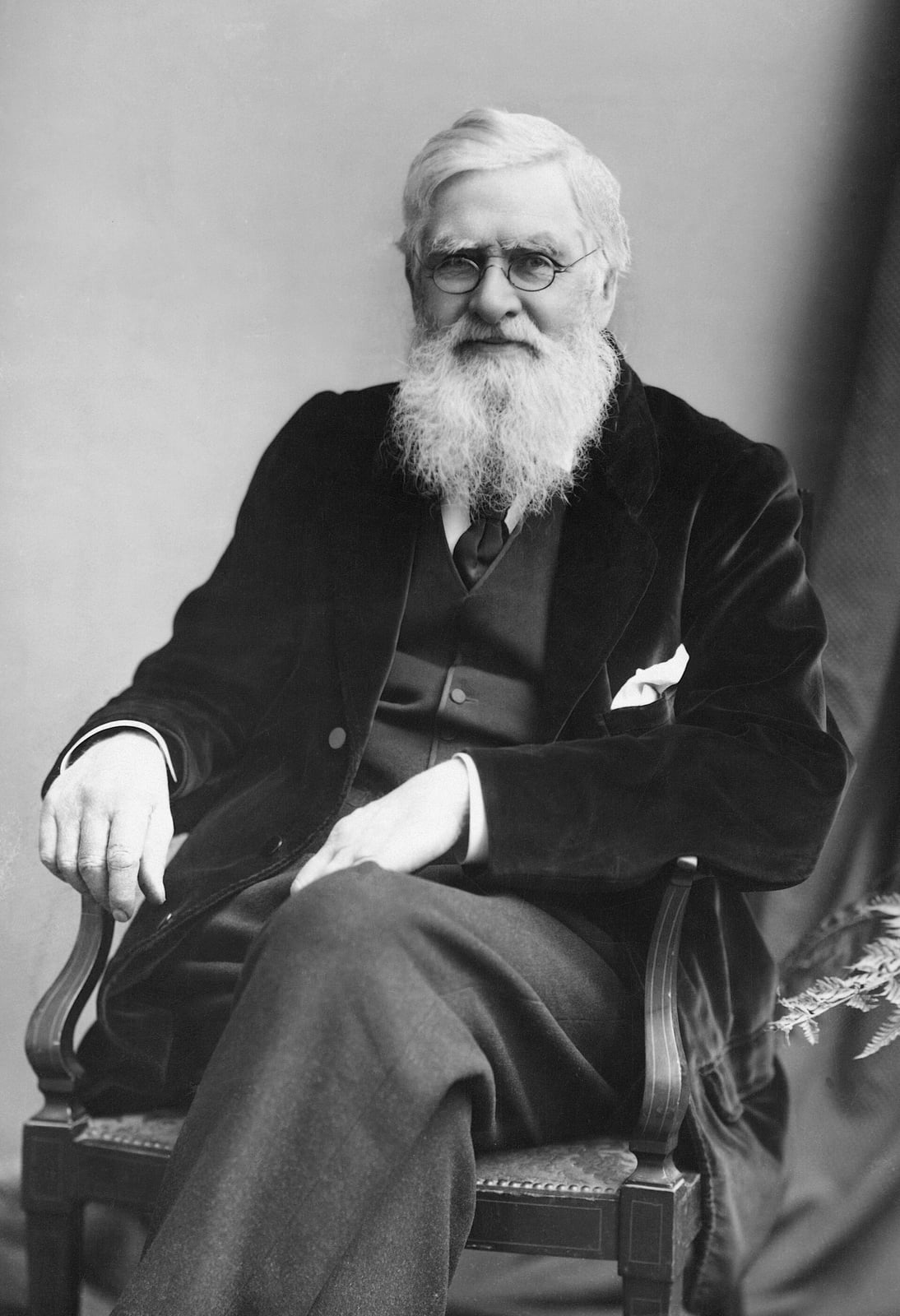
In March 1854, the English naturalist Alfred Russel Wallace embarked from Southampton for Southeast Asia, funded in part by the Royal Geographical Society and aiming to support his research by selling duplicate zoological specimens. Earlier field expeditions in the Amazon basin had ended in disaster when the ship carrying the bulk of his collections caught fire at sea in 1852. Undeterred by the near-total loss of those South American materials, Wallace chose the Malay Archipelago as his next destination. He recognized that its complex island geography offered exceptional opportunities to investigate the distribution of living organisms and the mechanisms behind the transmutation of species.
Across eight years of travel through modern Singapore, Malaysia, and Indonesia, Wallace accumulated an extraordinary scientific archive. His operations depended heavily on local knowledge and labor; he hired guides, porters, and boatmen, while more than thirty individuals worked as full-time collectors under his direction. Among them, a Malay assistant named Ali became his most trusted researcher, personally preparing thousands of avian specimens. In total, the expedition gathered 125,660 specimens, including more than 83,000 beetles and thousands of species previously unknown to Western science.

Keep reading in Yester
Coming soon to the App Store
Keep following the story
Sources
Image: London Stereoscopic and Photographic Company (active 1855-1922)