The Book That Made Nature a History
Darwin explained how small inherited differences could reshape living populations. His book made the diversity of life a question about descent, struggle and time.
A pigeon breeder could produce striking differences between birds by choosing which ones reproduced. Charles Darwin asked what might happen without a breeder making the choices. In nature, organisms differed, resources were limited, and not every offspring survived to reproduce. Could those ordinary facts, repeated over immense stretches of time, help explain why living things took such different forms? In 1859, On the Origin of Species assembled a sustained argument that they could.
The book grew from years of work after the Beagle voyage, not from a single revelation on an island. Darwin compared fossils, geographical distributions, domestic breeding and the structures of living organisms. The challenge was to explain both resemblance and difference. Why did species share features while also fitting different ways of life? Descent with modification supplied a historical answer: related organisms could inherit a common starting point while their descendants gradually diverged.

Keep reading in Yester
Coming soon to the App Store
Keep following the story

Sources
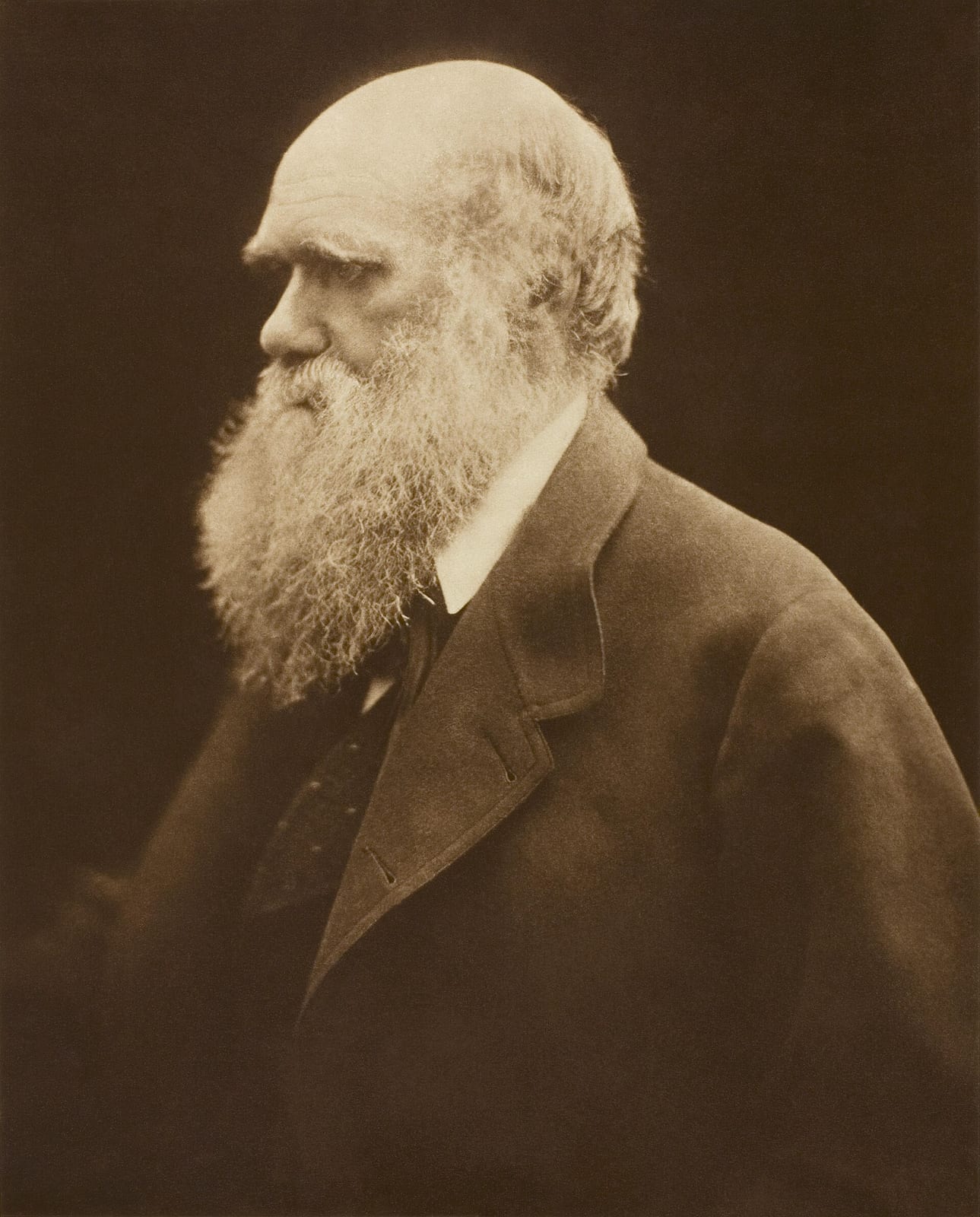
Image: Julia Margaret Cameron / Adam Cuerden