The Ottoman Siege of Vienna Is Broken
A relief army defeated the besiegers outside the Habsburg capital.
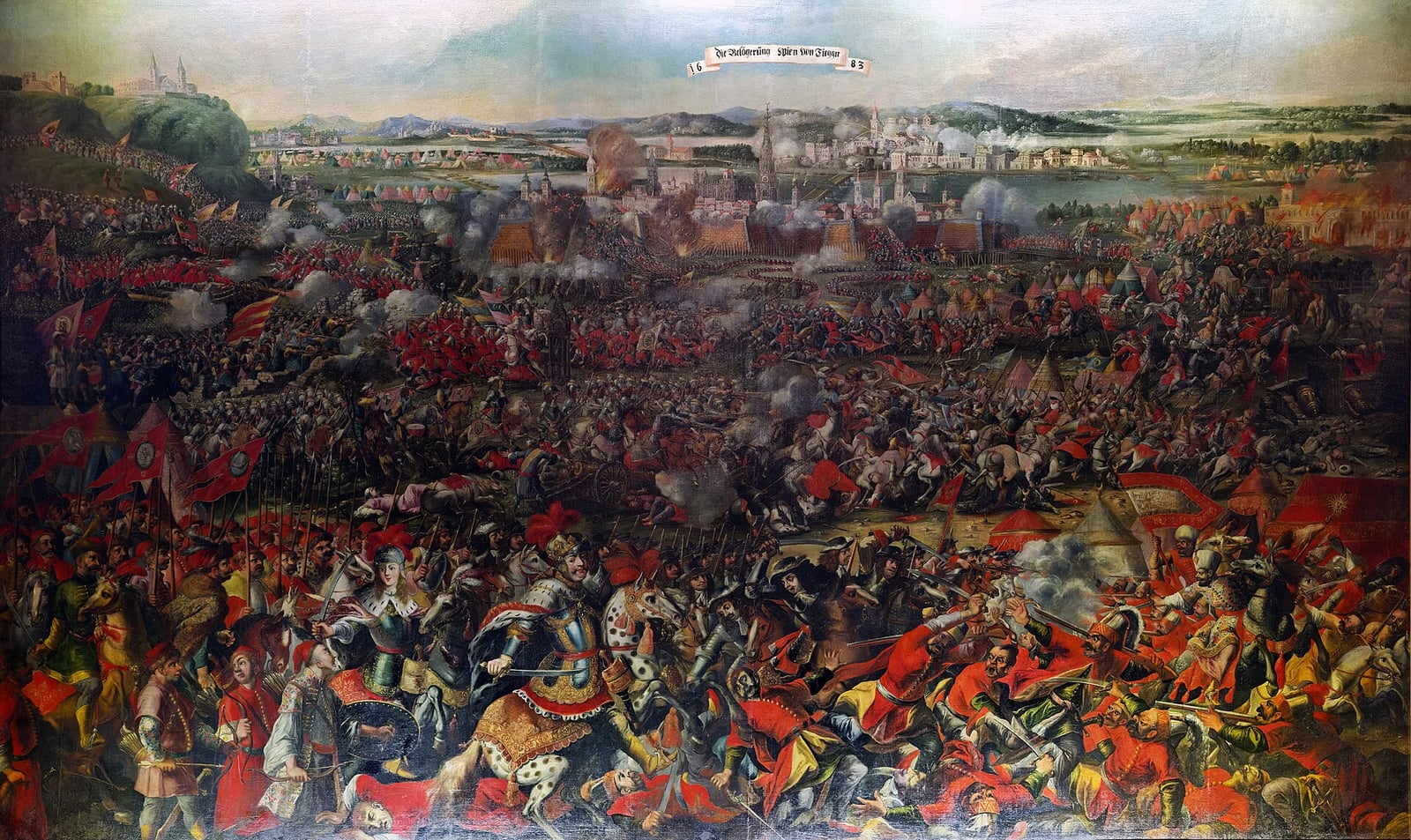
On 14 July 1683, an Ottoman army commanded by Grand Vizier Merzifonlu Kara Mustafa Pasha surrounded the Habsburg capital of Vienna, beginning a two-month siege. Capturing the city had long stood as a strategic Ottoman goal because of Vienna's position along the Danube and the main trade routes connecting Germany to the eastern Mediterranean. Emperor Leopold I evacuated the city for Passau alongside tens of thousands of residents, leaving Count Ernst Rüdiger von Starhemberg to direct the defense with a garrison of about 11,000 regular soldiers, along with several thousand armed citizens and local volunteers.
The attackers dug zigzagging trench lines and launched intensive subterranean mining operations beneath the fortifications, seeking to detonate large deposits of gunpowder under the bastions. The defenders attempted to counter the threat by excavating intercepting tunnels and driving timber palisades into the ground to reinforce the crumbling perimeter. By early September, Ottoman sappers had breached sections of the outer walls and captured the Burg ravelin. Starhemberg faced mounting casualties, exhausted provisions, and widespread disease, forcing the surviving defenders to construct barricades within the inner city in anticipation of a final breakthrough.

Keep reading in Yester
Coming soon to the App Store
Keep following the story
Sources
- 'The Turk' at the gates of Vienna: Episode 2 (The World of the Habsburgs, Schönbrunn Group)
- The second Turkish siege of Vienna, 1683 (The World of the Habsburgs)
- Die türkische Niederlage von Wien (12. September 1683), contemporary eyewitness account (German History in Documents and Images, GHI)
- Kara Mustafa (Wien Geschichte Wiki, City of Vienna)
- Kara Mustafa Pascha (Austria-Forum, AEIOU)
- Polish King Jan III Sobieski's army saves Europe in the famous Battle of Vienna (PAP, Polish Press Agency)
- Battle of Vienna
Image: Anonymer, zeitgenössischer Maler