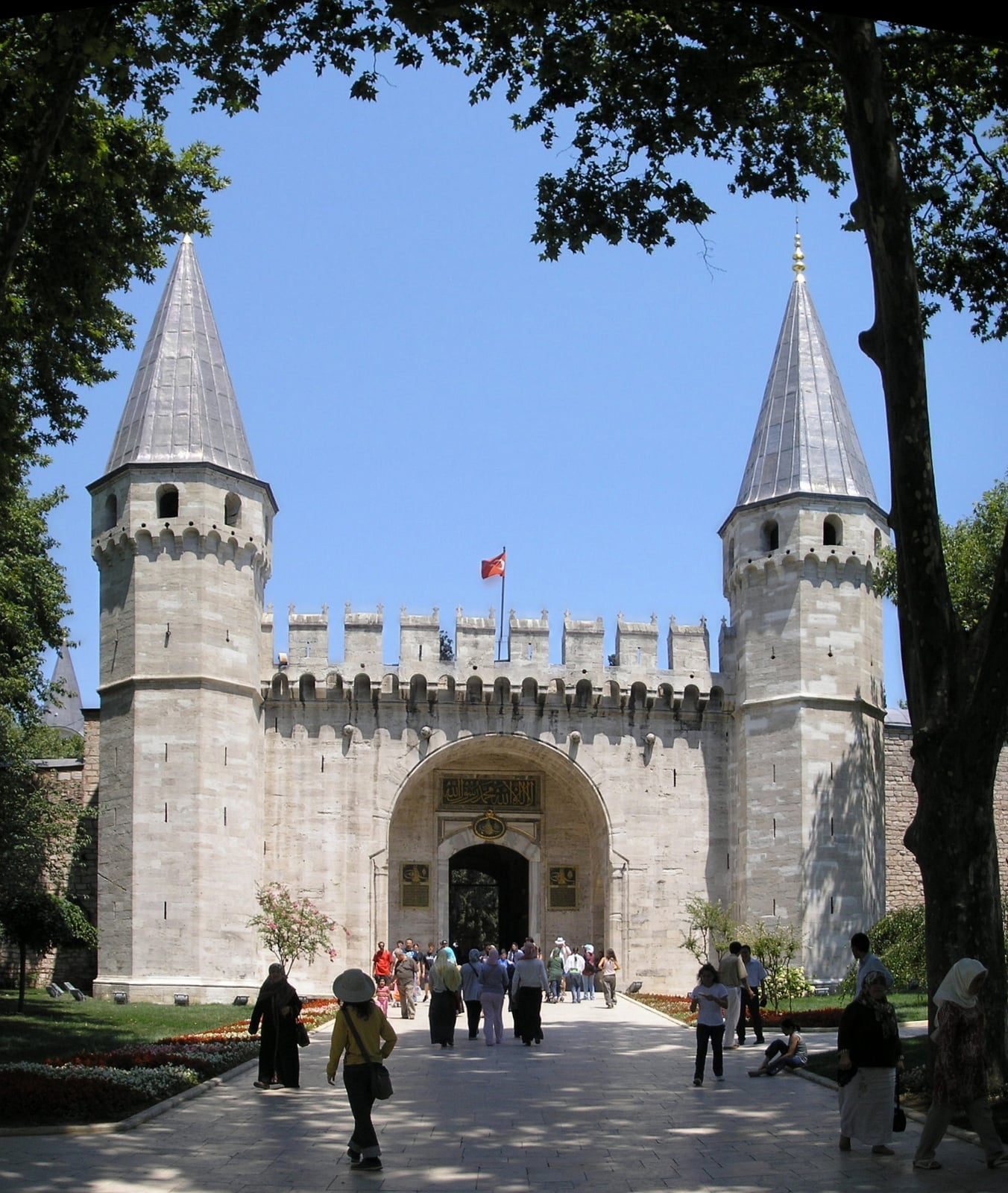
Mehmed II Completes the Topkapı Palace
The Ottoman court was run from a palace above the Bosphorus for centuries.
A few years after the Ottoman conquest of Constantinople in 1453, Sultan Mehmed II initiated the construction of a new seat of imperial authority. The existing Byzantine palace lay mostly in ruins, prompting the sultan to govern initially from the Old Palace in Beyazit Square. For his ambitious new project, begun around 1460 on the promontory overlooking the Golden Horn and the Sea of Marmara, Mehmed summoned skilled stonecutters, masons, and carpenters. Sources differ on the exact dates, but Turkey's national palaces administration dates the main construction to 1460 to 1478, establishing a layout that stood in stark contrast to the monolithic imperial residences of contemporary Europe.
Known during this early era as the Imperial New Palace, the site received its modern name of Topkapi centuries later. Mehmed placed his personal quarters at the highest point of the hilly terrain, ordering smaller pavilions, halls, and administrative wings to cascade down toward the shoreline behind defensive ramparts. The primary entrance into the outer courtyard, the massive Imperial Gate, bears an inscription dated 1478. Visitors could ride through it into the First Courtyard, but only the sultan could pass the next gate on horseback, so officials and foreign dignitaries dismounted and continued on foot.

Keep reading in Yester
Coming soon to the App Store
Keep following the story
Sources
- Topkapi Palace (Presidency of National Palaces, Republic of Turkiye)
- Topkapi Sarayi, TDV Islam Ansiklopedisi (Turkiye Diyanet Foundation)
- Historic Areas of Istanbul (UNESCO World Heritage Centre)
- Secret Garden: Topkapi Palace Harem (Bilkent University history pages)
- Topkapi Palace: Administrative and cultural center of the Ottoman Empire (Bilkent University history pages)
- Dolmabahce Palace (Presidency of National Palaces, Republic of Turkiye)
- Topkapı Palace
Image: Gryffindor