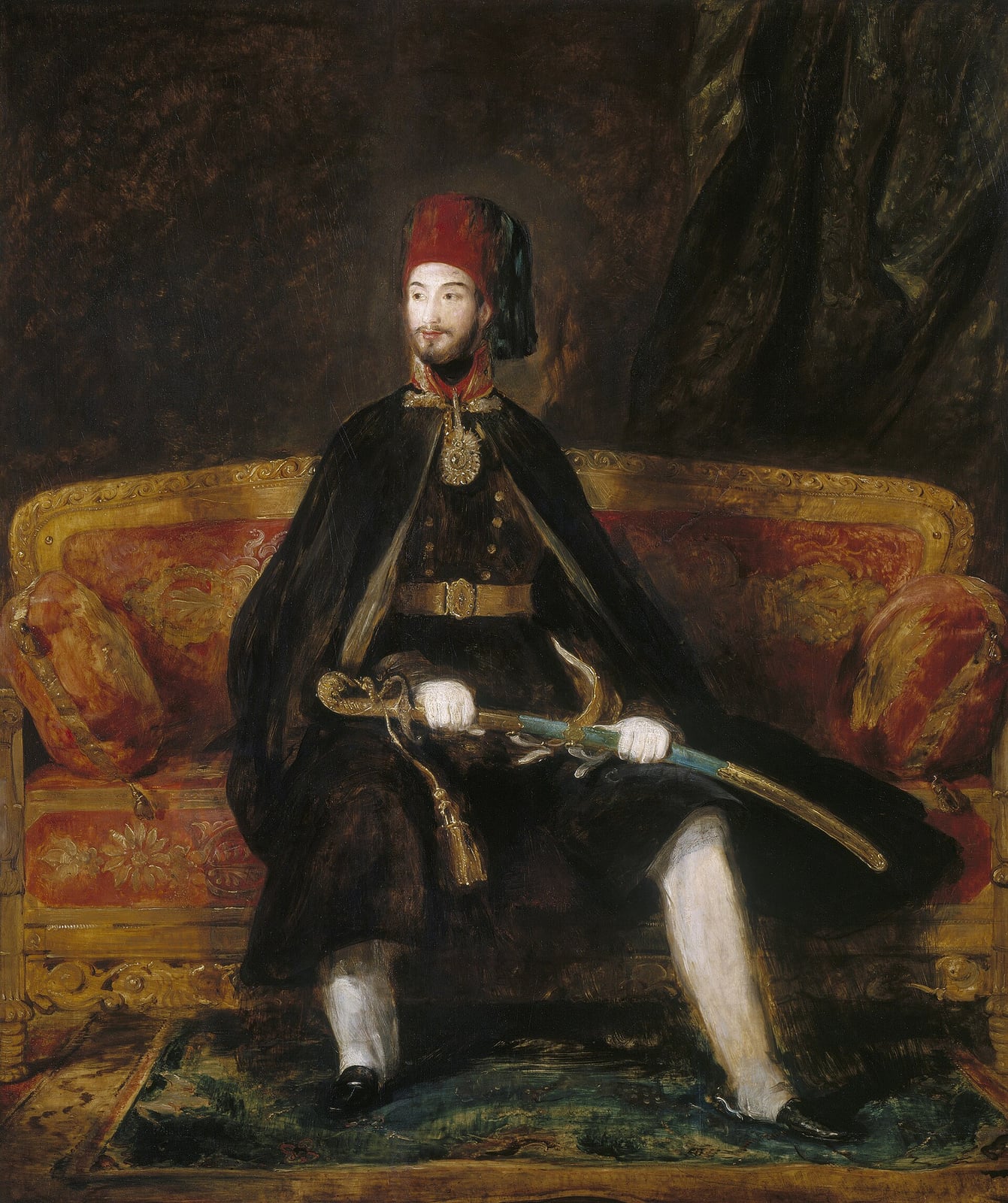
The Ottoman Empire Launches the Tanzimat Reforms
A decree promised equal treatment and new institutions.
On November 3, 1839, the young Sultan Abdulmejid I issued an imperial edict known as the Hatt-i Sharif of Gülhane. Read in a rose garden within the precinct of the Topkapı Palace, the decree inaugurated the reorganization movement known as the Tanzimat. The edict proclaimed royal guarantees safeguarding the lives, honor, and property of all Ottoman subjects regardless of religion. It also promised regularized taxation, public trials, and an end to the corrupt practice of tax farming. The proclamation was designed to preserve an empire shaken by military defeats, territorial contraction, and internal challenges from ambitious provincial rulers.
The intellectual roots of the decree remain a subject of historical debate. Scholar Butrus Abu-Manneh argued that the document drew primarily on traditional Ottoman court philosophy, whereas Stanford Jay Shaw identified the influence of modern European legal principles, such as those found in the 1789 French Declaration of the Rights of Man and of the Citizen. Reformist statesmen, most notably former ambassador Mustafa Resid Pasha, viewed administrative centralization and institutional restructuring as necessary steps to modernize the state apparatus and discourage European powers from intervening on behalf of Ottoman Christian communities.

Keep reading in Yester
Coming soon to the App Store
Keep following the story

Sources
- Tanzimat (TDV İslâm Ansiklopedisi)
- Kānûn-ı Esâsî (TDV İslâm Ansiklopedisi)
- Meclis-i Mebusan ve faaliyetleri (I. Meşrutiyet Dönemi) (Marmara University Open Access)
- Empire ottoman, Constitution de 1876 (Digithèque MJP, Université de Perpignan)
- 'Impossible to provide an accurate estimate': the interested calculation of the Ottoman public debt, 1875-1881 (British Journal for the History of Science, Cambridge University Press)
- Tanzimat
Image: Not stated.