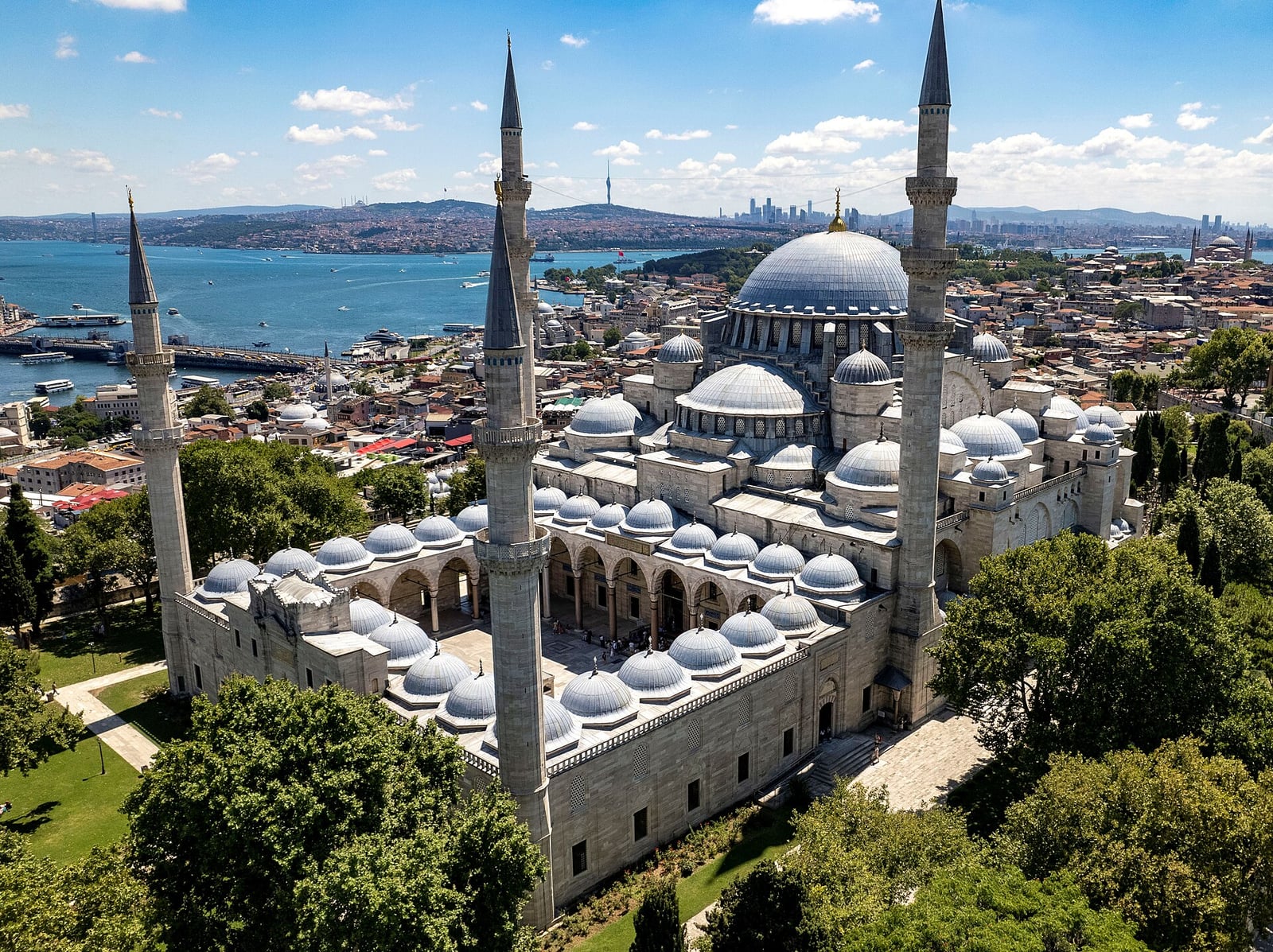
Mimar Sinan Completes the Süleymaniye Mosque
The Ottoman architect built a mosque complex for Suleiman the Magnificent.
In 1550, Sultan Suleiman the Magnificent initiated the construction of a vast imperial mosque complex on the Third Hill of Istanbul, overlooking the Golden Horn. Seeking a monument that would project the authority of the Ottoman state and surpass the creations of his predecessors, Suleiman entrusted the commission to his chief architect, Mimar Sinan. The project required clearing the grounds of the Eski Saray, the earlier Ottoman palace on the site. An Arabic inscription placed above the entrance to the prayer hall records the foundation date of 1550 and an official inauguration in 1557, although auxiliary construction continued for several years.
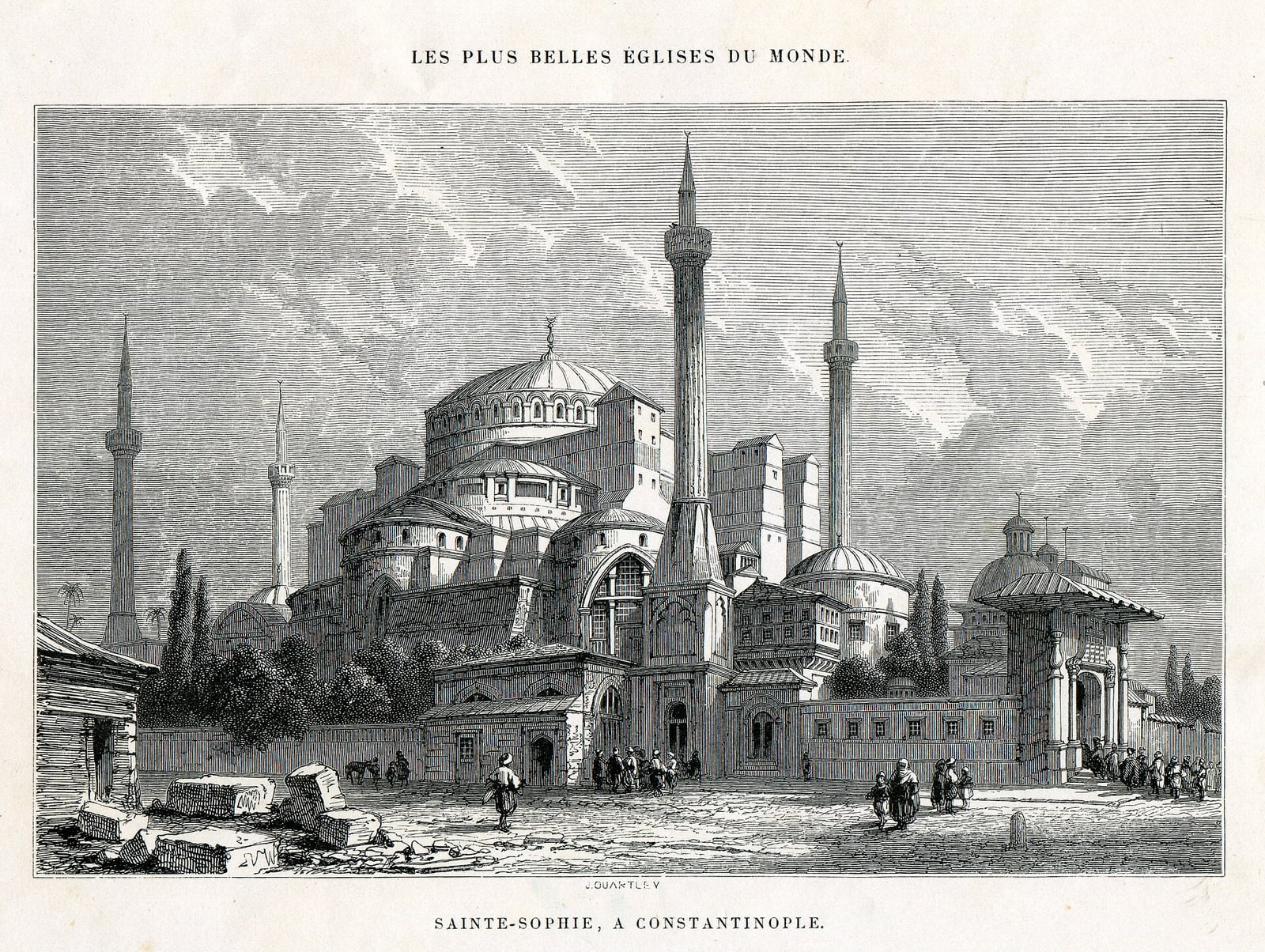
Sinan structured the prayer hall around a monumental central dome about 27 meters in diameter, its crown rising roughly 50 to 53 meters above the floor depending on the measurement. The layout reflected an established Ottoman design, flanked along its central axis by semi-domes and bordered by lateral aisles topped with smaller domes. This arrangement consciously recalled both the Bayezid II Mosque and the Byzantine landmark Hagia Sophia. While Sinan had already experimented with alternative configurations in his earlier Şehzade Mosque, modern scholars suggest that the return to this specific architectural model was likely requested directly by the sultan, who sought to rival the grandest historical monuments of the capital.

Keep reading in Yester
Coming soon to the App Store
Keep following the story
Sources
Image: Hunanuk