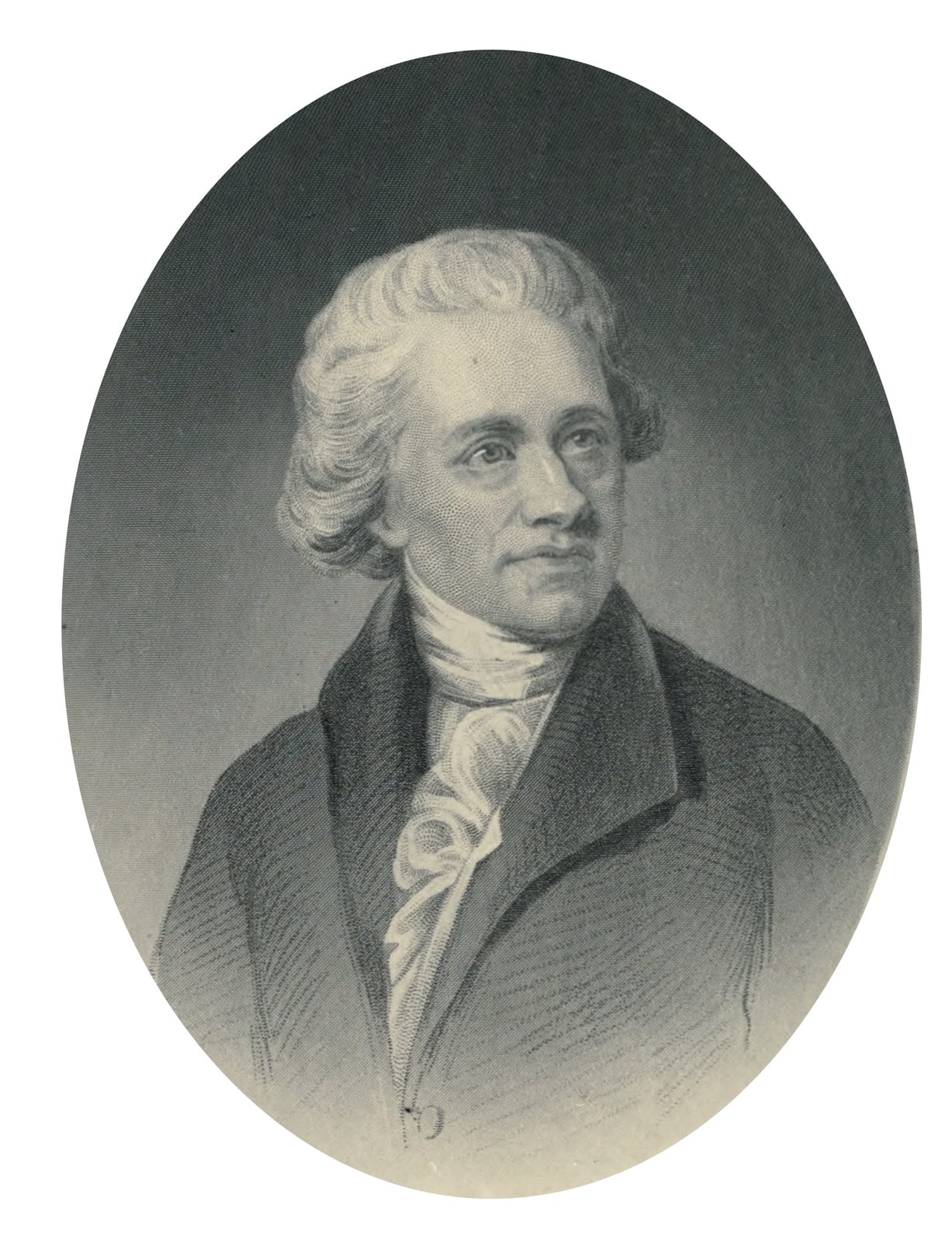
William Herschel Finds a New Planet
A telescope in a Bath garden revealed the first new planet found since antiquity.
On the evening of 13 March 1781, William Herschel set up a reflecting telescope in the garden behind his home on New King Street in Bath. A German-born musician who served as organist at the Octagon Chapel and directed the local orchestra, Herschel had spent years pursuing astronomy alongside his musical duties. While conducting a systematic search for double stars, he noted an unusual object in the constellation Gemini that appeared as a defined disk rather than a simple point of light. His instrument, a Newtonian reflector of seven-foot focal length with a 6.2-inch speculum metal mirror, had been cast and polished by his own hands.
Herschel had come to astronomy by an unusual route. Born in the Electorate of Hanover in 1738, he followed his father into the band of the Hanoverian Foot Guards before settling in England in 1758, at the age of 19. His interest in the stars grew alongside his music: among his books were Robert Smith's Harmonics and the same author's Opticks. He began grinding and polishing his own speculum metal mirrors, and his sister Caroline later recalled that while finishing one mirror he kept his hands on it for 16 hours without a break, so that she had to feed him. By 1780 he had joined the newly founded Bath Literary and Philosophical Society, greatly enlarging his circle of scientific contacts.

Keep reading in Yester
Coming soon to the App Store
Keep following the story
Sources
- The Discovery of Uranus (Royal Museums Greenwich)
- Frederick William Herschel biography (MacTutor, University of St Andrews)
- William Herschel's astronomical discoveries (MacTutor, University of St Andrews)
- Anders Johan Lexell biography (MacTutor, University of St Andrews)
- Uranus Moons: Facts (NASA Science)
- Frederick William Herschel (1738-1822) (High Altitude Observatory, NCAR)
- William Herschel
Image: Edward Singleton Holden, 1846-1914