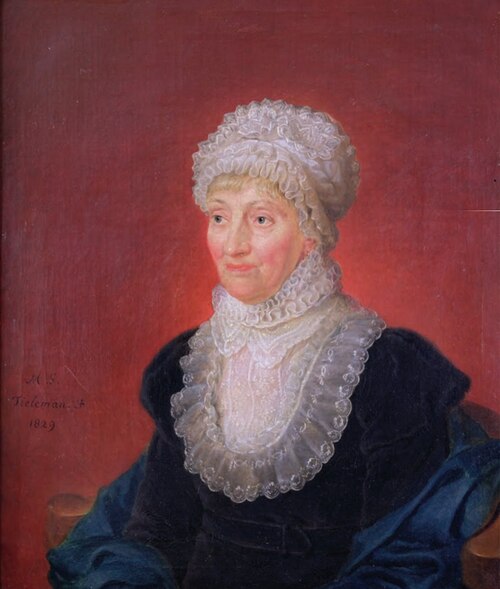
Caroline Herschel Finds Comets and Builds a Scientific Career
Observation and cataloguing brought recognition to an astronomer whose work extended far beyond assisting her brother.
On 1 August 1786, Caroline Herschel took advantage of her brother William's temporary absence to scan the night sky through his telescope. Her sweep revealed a previously unrecorded comet, an observation that quickly transformed her public reputation. While William was summoned to Windsor Castle to demonstrate the object to the royal family, Caroline began documenting her findings systematically. The discovery initiated a decade of remarkable solo observational work, during which she located eight comets between 1786 and 1797, retaining unquestioned priority as the primary finder for five of them.
Herschel had arrived in England in August 1772 from Hanover, where an attack of typhus at age ten had stunted her growth and damaged the vision in her right eye. Initially joining William in Bath to manage his household and sing in his musical performances, she gradually pivoted toward his expanding nocturnal pursuits. As William turned from music to telescope fabrication, Caroline spent daylight hours polishing optical mirrors and copying loaned astronomical tables. When night fell, she endured cold vigils outdoors, recording measurements and cross-referencing celestial coordinates against existing star catalogues.

Keep reading in Yester
Coming soon to the App Store
Keep following the story

Sources
Image: Ölgemälde: Melchior Gommar Tieleman ; Foto des gemeinfreien Gemäldes: unbekannt