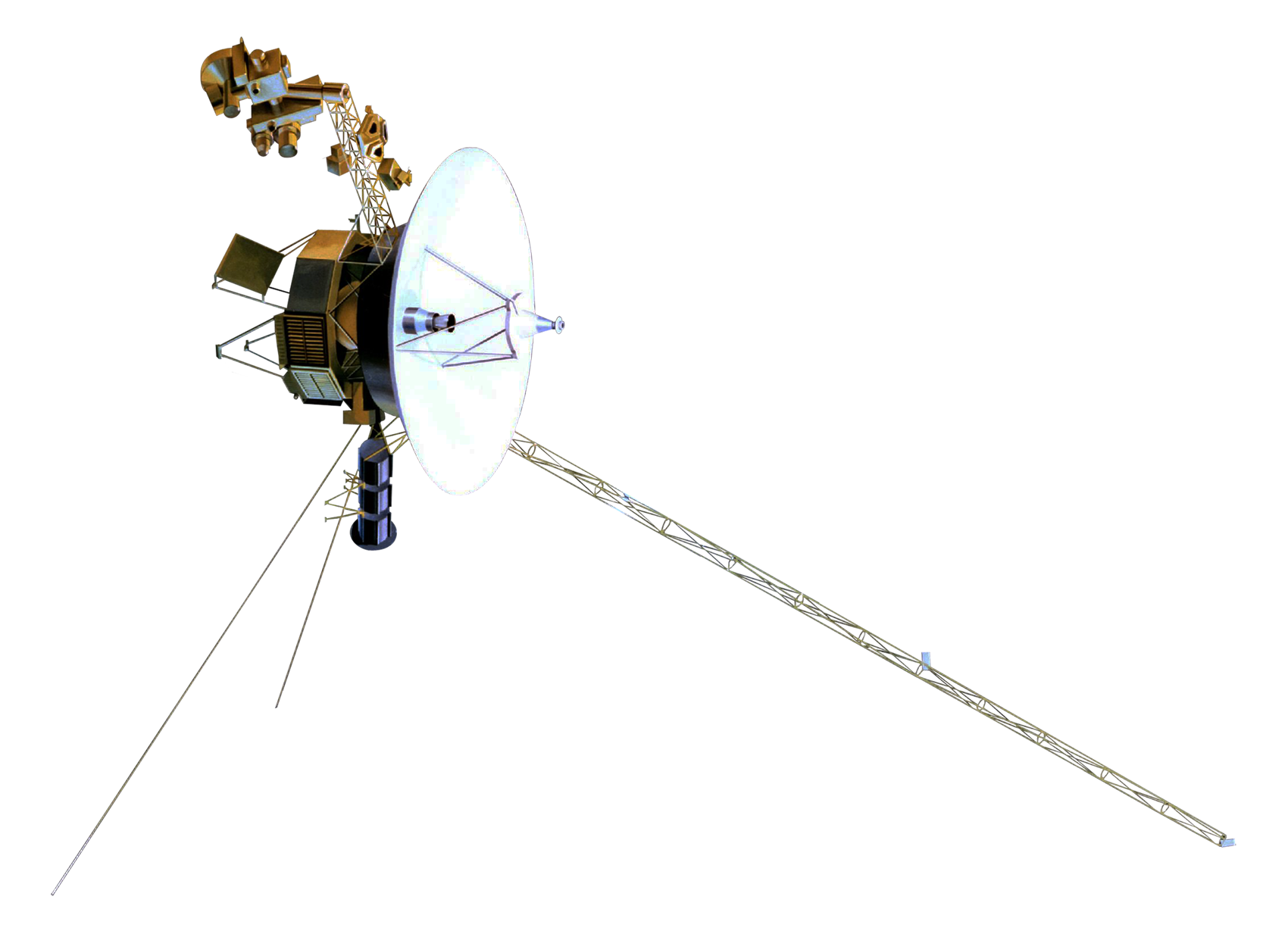
Voyager 2 Flies Past Uranus
The only spacecraft to visit Uranus revealed new moons and rings.
In the late 1970s, an uncommon alignment of the outer planets presented an opportunity to explore the distant reaches of the solar system. Taking advantage of gravity assists, a single spacecraft could navigate past several giant worlds in succession. NASA originally conceived an ambitious Grand Tour to dispatch multiple probes, but budget considerations prompted planners to scale back the initiative in 1972. The revised effort centered on two Mariner-derived spacecraft that preserved the potential to journey beyond Jupiter and Saturn under what became known as the Voyager program.
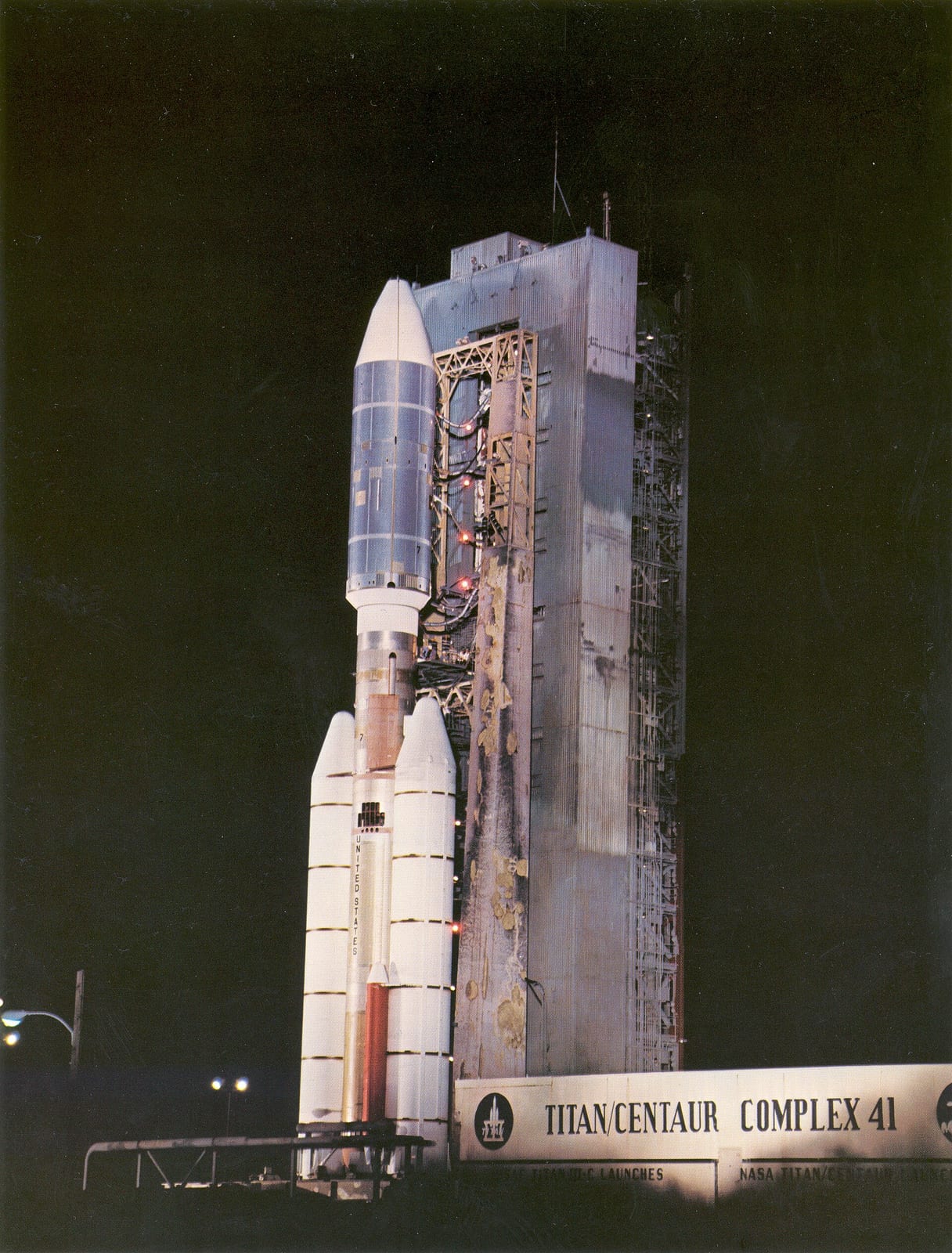
Voyager 2 lifted off from Cape Canaveral on August 20, 1977, setting out sixteen days ahead of its twin, Voyager 1. The mission architecture established Voyager 2 on a longer, more circular trajectory. This path allowed it to function as a reserve for Voyager 1's critical survey of Saturn's moon Titan, while also maintaining the ability to redirect outward toward Uranus and Neptune. After successful encounters with Jupiter in 1979 and Saturn in 1981, mission managers approved the extension that sent the probe on a solitary course toward the ice giants.

Keep reading in Yester
Coming soon to the App Store
Keep following the story

Sources
- Voyager 2 (NASA Science)
- Uranus Exploration (NASA Science)
- Uranus: Facts (NASA Science)
- Uranus Fact Sheet (NASA Space Science Data Coordinated Archive)
- Revisiting Decades-Old Voyager 2 Data, Scientists Find One More Secret (NASA)
- NASA's Voyager 2 Probe Enters Interstellar Space (NASA Science)
- Atmospheric Electricity at the Ice Giants, Aplin et al. (arXiv, Space Science Reviews)
- Voyager 2
Image: National Aeronautics and Space Administration (NASA)