Mathematics Points Astronomers to Neptune
A planet was found where calculations based on Uranus’s motion said it should be.
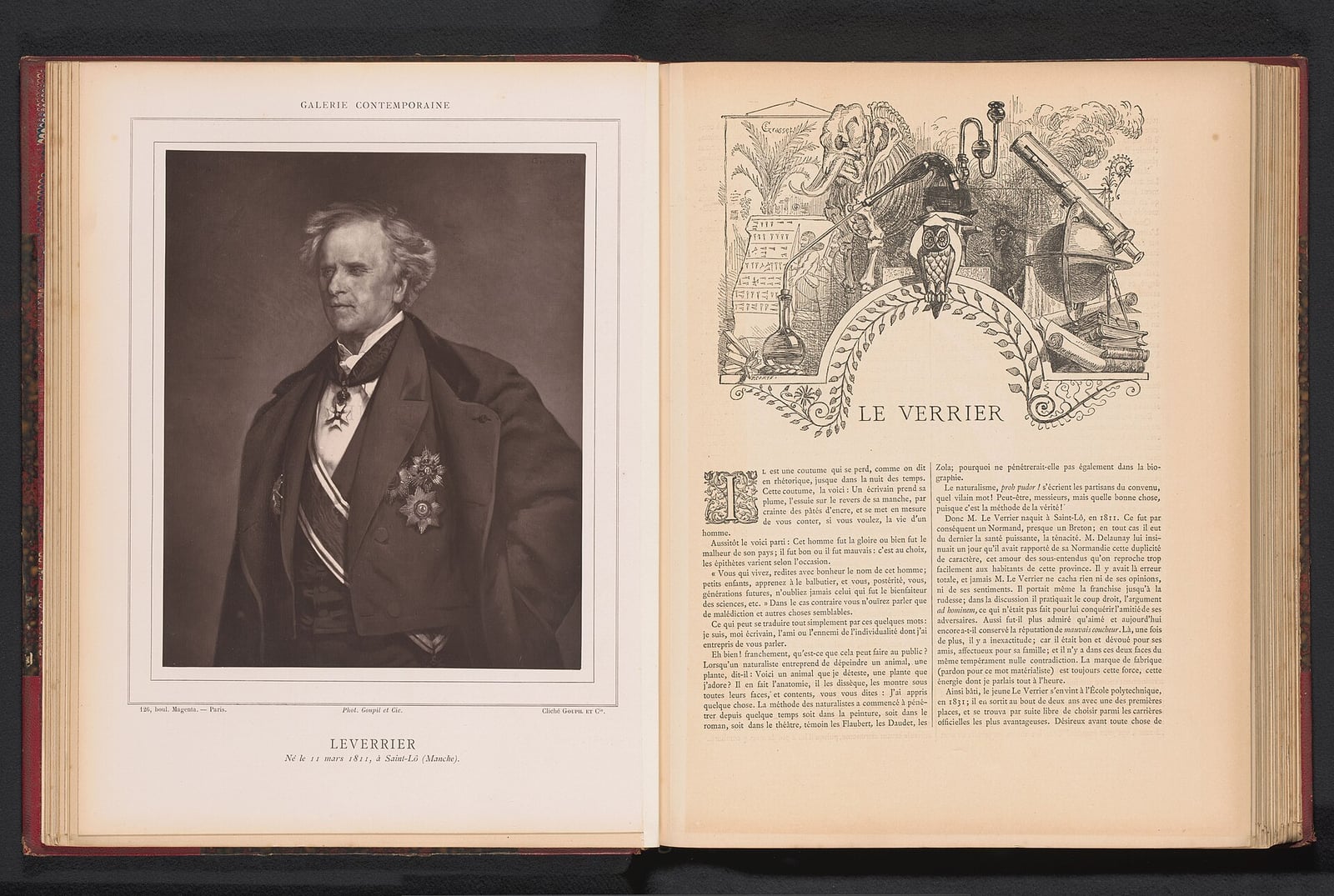
On the night of September 23, 1846, astronomer Johann Gottfried Galle pointed the Fraunhofer refractor at the Berlin Observatory toward a specific coordinate in the constellation of Aquarius. Working with Heinrich Louis d'Arrest, a student at the observatory, Galle aimed the telescope not in search of a random object, but to test a precise mathematical prediction mailed to him by French mathematician Urbain Le Verrier. Within less than an hour of scanning the sky, the observers identified a faint point of light absent from their newly printed star chart, locating a major planet less than one degree from where Le Verrier had calculated it would be.
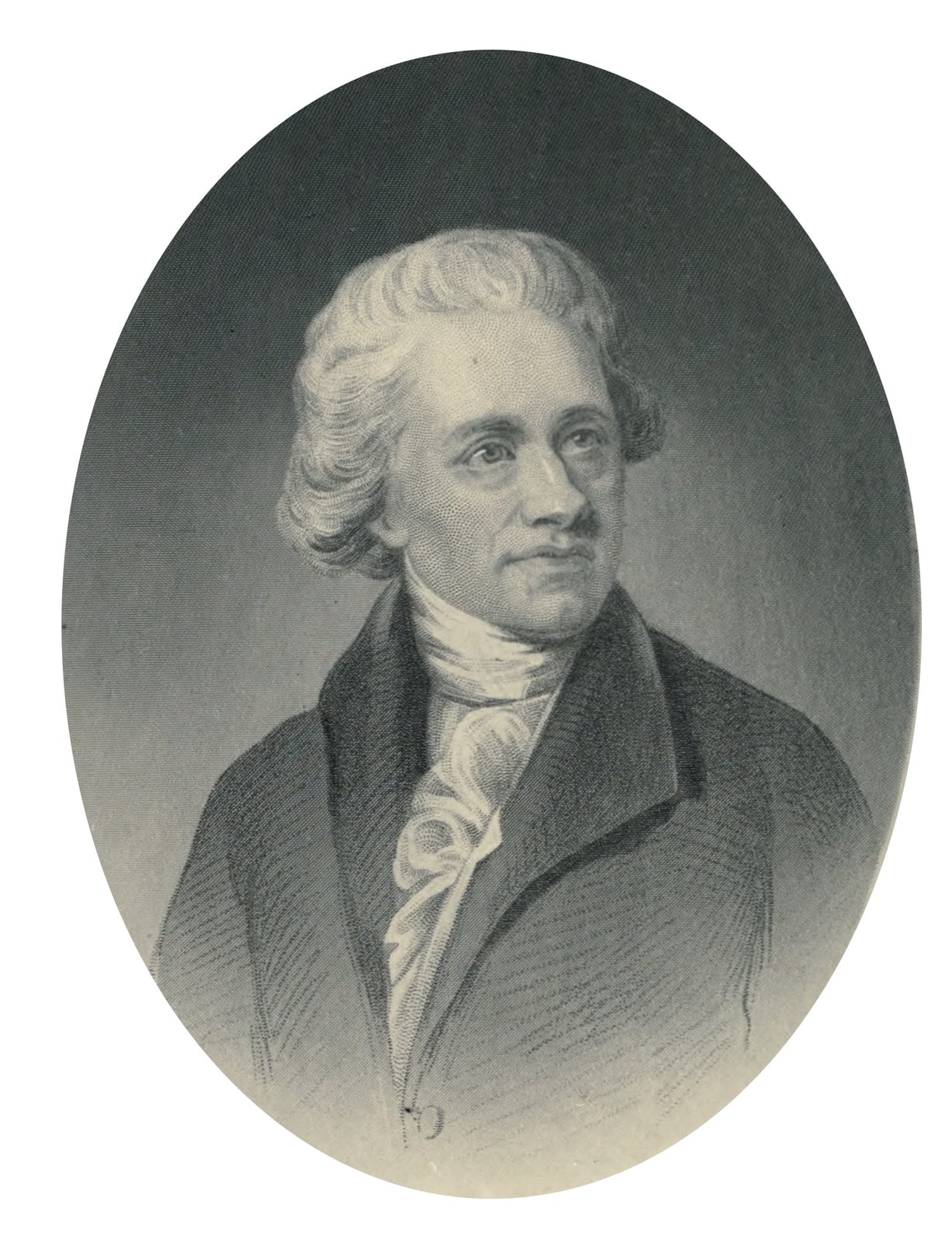
The search arose from persistent irregularities observed in the orbit of Uranus. Following its identification by William Herschel in 1781, Uranus failed to conform strictly to the tables compiled in 1821 by Alexis Bouvard, which relied on the laws of motion formulated by Isaac Newton. While some contemporary thinkers wondered whether observational errors or subtle deviations in gravitational attraction at vast distances were responsible, others proposed that the gravitational pull of an undiscovered outer body was tugging Uranus off course.

Keep reading in Yester
Coming soon to the App Store
Keep following the story
Sources
- Mathematical discovery of planets (MacTutor, University of St Andrews)
- Urbain Jean Joseph Le Verrier (MacTutor, University of St Andrews)
- John Couch Adams (MacTutor, University of St Andrews)
- Orbits and gravitation (MacTutor, University of St Andrews)
- Secret Documents Rewrite the Discovery of Neptune (Sky & Telescope)
- Johann Gottfried Galle (Encyclopaedia Britannica)
- Discovery of Neptune
Image: Rijksmuseum