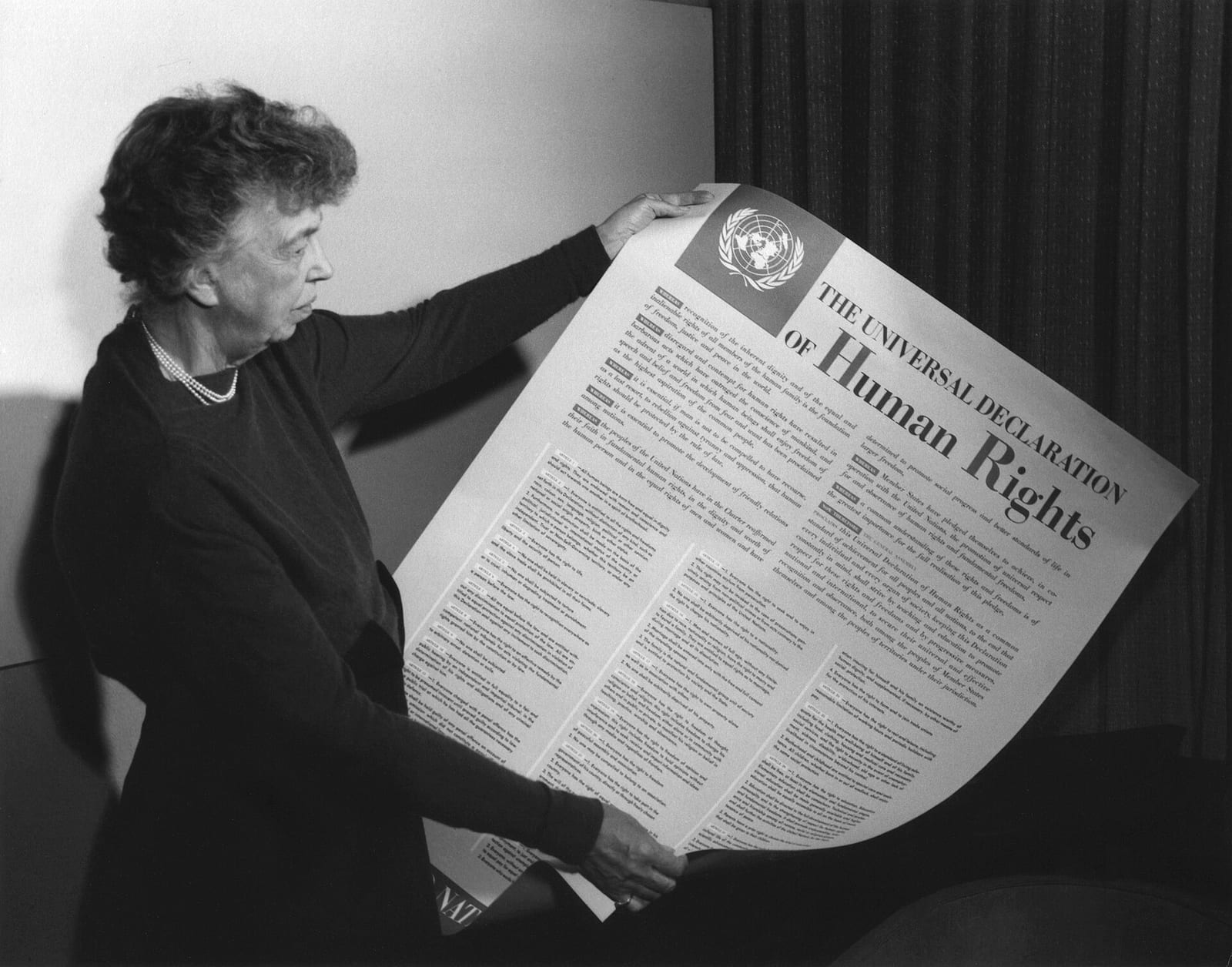
Rights That Were Meant to Belong to Everyone
After war and mass persecution, delegates tried to name rights that governments should not be free to erase. The resulting declaration was a standard, not an automatic guarantee.
What rights should a person possess before any government decides whether to recognize them? On December 10, 1948, the United Nations General Assembly adopted an answer in Paris: the Universal Declaration of Human Rights. The document’s thirty articles set out protections that were meant to belong to people because they were human, not because they held a particular passport or had won the favor of a state. That ambition was extraordinary precisely because governments had so recently demonstrated how completely they could violate it.
The declaration emerged from the aftermath of the Second World War, the Holocaust and mass persecution. The new United Nations had included human rights among its purposes, but a purpose needed more precise language. Delegates had to decide which protections to name and how to describe their relationship. Civil and political freedoms appeared alongside rights concerning work, education and living conditions. Human dignity was not reduced to a ballot or to protection against imprisonment alone.

Keep reading in Yester
Coming soon to the App Store
Keep following the story
Sources
Image: FDR Presidential Library & Museum