When Protest Became Federal Law
The Civil Rights Act of 1964 attacked discrimination in public life and employment. Passing it was a breakthrough, not the end of the struggle to make its promises real.
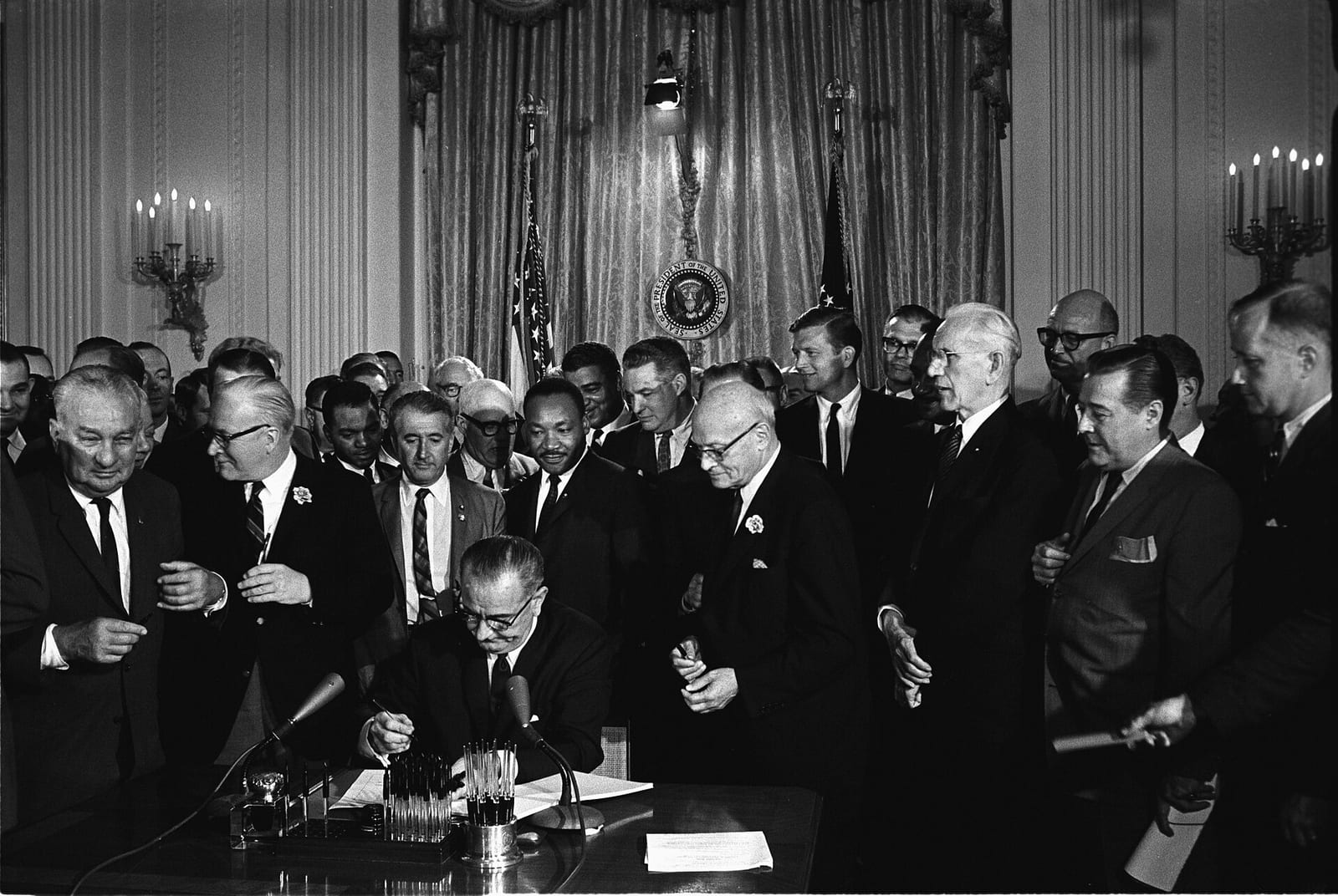
On July 2, 1964, Lyndon Johnson signed a law that challenged discrimination across several parts of American life. The ceremony supplied a clear image of a turning point: a president, a document and civil-rights leaders nearby. The work that brought them into the room was less compact. It included local campaigns, public protest, litigation and a difficult effort to assemble enough votes in Congress.
Segregation was not merely a collection of private prejudices. Rules and practices determined which restaurants would serve people, where they could stay while traveling and what opportunities employers would offer. Those restrictions shaped ordinary decisions long before someone reached a ballot box. A person’s constitutional citizenship could coexist with systematic exclusion from institutions that others used without thinking about it.

Keep reading in Yester
Coming soon to the App Store
Keep following the story
Sources
Image: Cecil Stoughton, White House Press Office (WHPO)