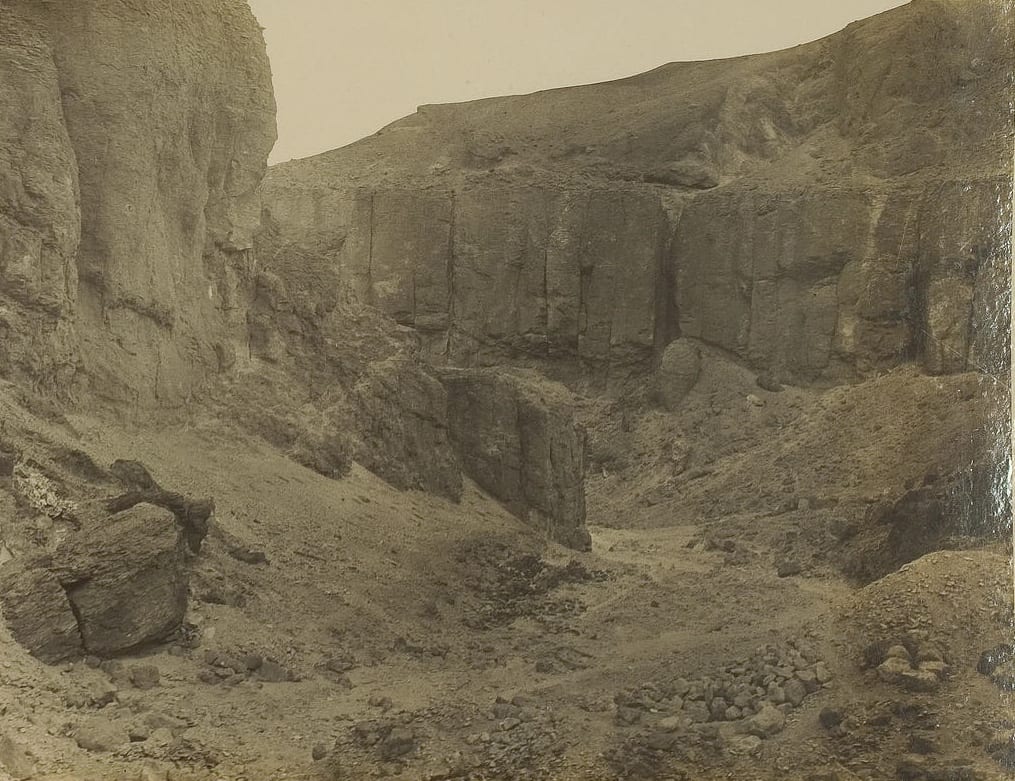
The Staircase That Led to Tutankhamun’s Tomb
A buried staircase led to a royal tomb crowded with objects. The discovery was only the beginning of a long task of recording, conservation and argument over Egypt’s past.
A staircase appeared beneath the ground in Egypt’s Valley of the Kings in November 1922. Workers on the excavation led by Howard Carter had found the approach to a tomb that would become one of archaeology’s most famous discoveries. By the end of the month, the team had entered an antechamber crowded with objects. The spectacle was extraordinary, but the image of one explorer looking into darkness leaves out most of what made the discovery possible and useful.
Tutankhamun had been a relatively short-lived king of Egypt’s Eighteenth Dynasty, not the builder of its largest monuments. His burial became exceptional for modern researchers because so much of its contents survived together. The tomb had experienced ancient disturbance, so calling it wholly untouched would be misleading. Its importance lay in the remarkable survival of a royal assemblage. Objects could be studied in relation to one another and to the spaces in which they had been placed.

Keep reading in Yester
Coming soon to the App Store
Keep following the story
Sources
Image: Harry Burton (1879-1940)