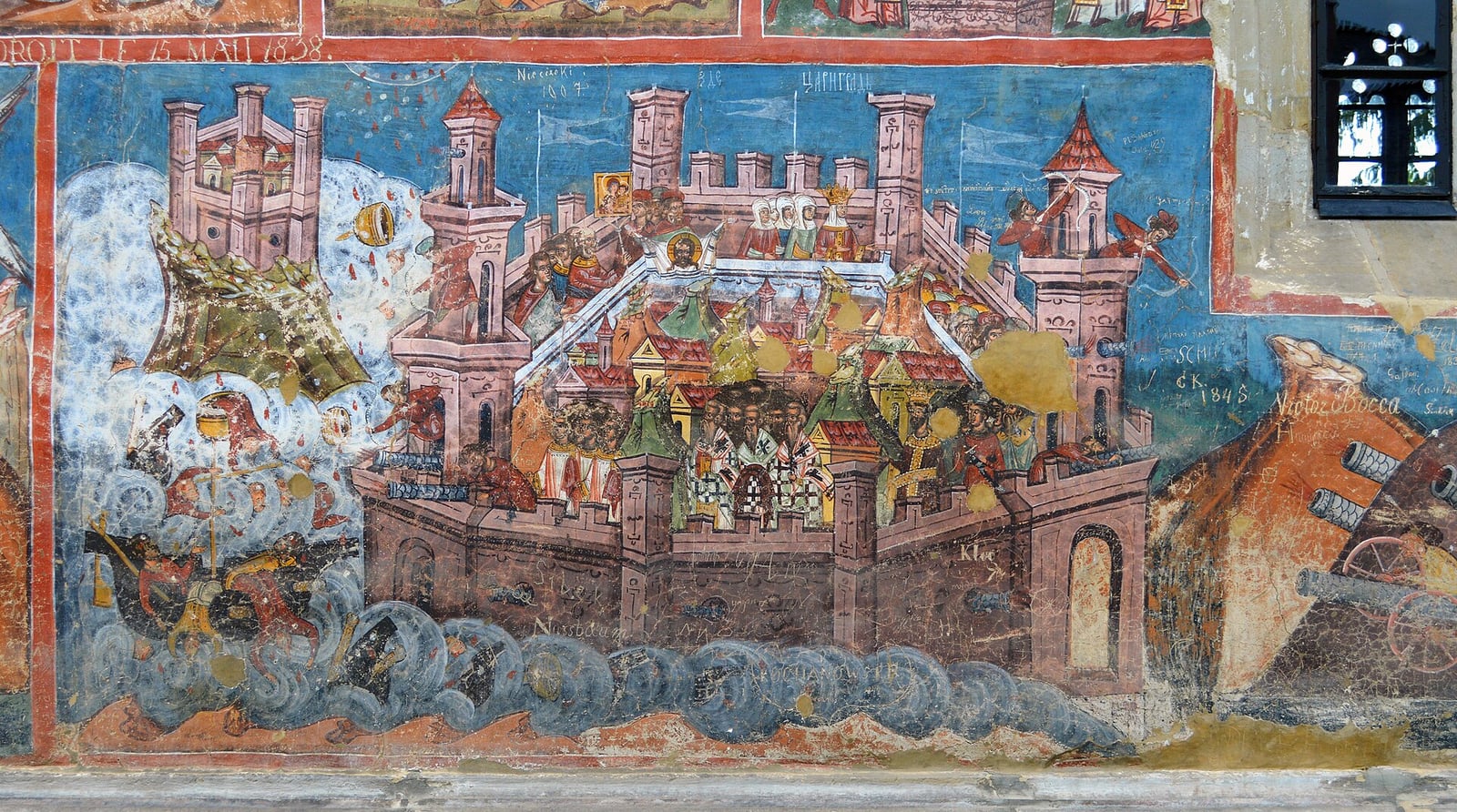
Ottoman Forces Take Constantinople
A 53-day siege brought the Byzantine Empire to an effective end and made the city the new Ottoman capital.
On 6 April 1453, the Ottoman army led by Sultan Mehmed II initiated the formal siege of Constantinople. The capital of the Byzantine Empire had functioned as an imperial seat since its dedication under Constantine the Great in 330. By the mid-fifteenth century, however, imperial holdings had contracted to a minor zone outside the city, the Princes' Islands, and parts of the Peloponnese. Weakened by plague and prolonged territorial decline, its population had shrunk far below its former size, though it still lay behind formidable fifth-century fortifications.
Defending the perimeter fell to Emperor Constantine XI Palaiologos, who had assembled a force of about 7,000 men, including around 2,000 foreign volunteers. The most notable contingent of outside fighters was commanded by the Genoese specialist Giovanni Giustiniani, who was placed in charge of the land defenses. Facing them was an Ottoman force that modern historians generally put at 60,000 to 80,000 troops, though contemporary witnesses offered far higher estimates of 200,000 or more. Mehmed secured the approaches by sea with a newly constructed fortress on the Bosphorus and deployed a substantial siege artillery train dragged from Adrianople.

Keep reading in Yester
Coming soon to the App Store
Keep following the story

Sources
Image: DimiTalen