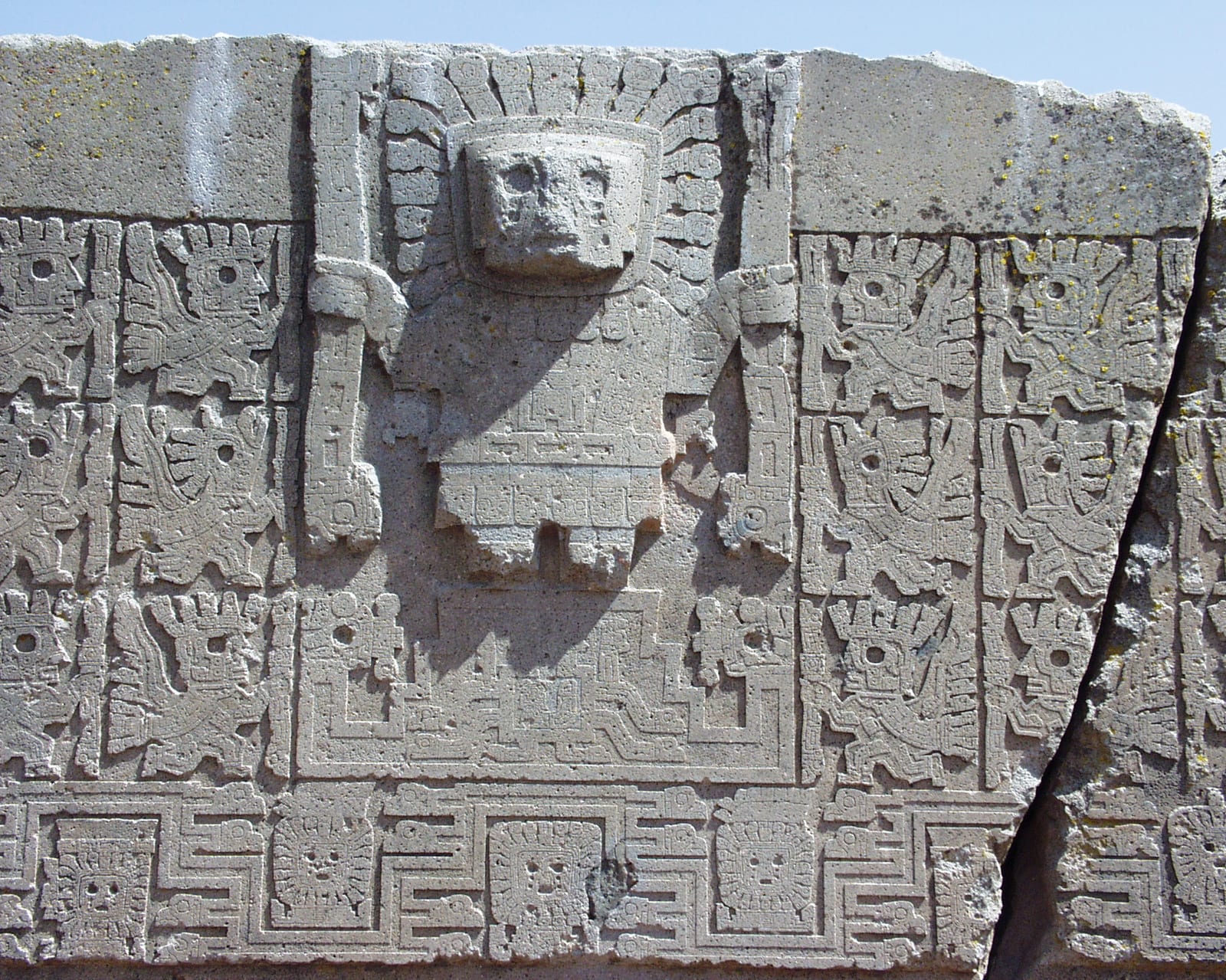
Tiwanaku Organizes Life on the Andean Plateau
Monuments and agricultural landscapes reveal a high-altitude center with influence far beyond its ceremonial core.
Near the southern shores of Lake Titicaca in western Bolivia, the ancient city of Tiwanaku developed into one of the most prominent urban and ceremonial centers in pre-Columbian South America. While early twentieth-century writers claimed the settlement was many thousands of years old and subsequent mid-century proposals placed its origins in the second millennium BC, some modern evaluations of radiocarbon evidence place the establishment of the settlement around AD 110. From approximately AD 375 to 700, the settlement expanded significantly across the high-altitude Andean plateau, eventually covering roughly four square kilometers and sustaining a population estimated between 10,000 and 20,000 residents by AD 800.
The growth of Tiwanaku rested on an agropastoral economy paired with trade networks and elite redistribution rather than commercial markets. State elites oversaw production and organized agricultural infrastructure, including the raised-field systems known as suka kollus, while supplying specialized laborers with the necessities for their work. Increased social stratification accompanied this economic structure, fostering groups of artisans who produced fine textiles, metalwork, jewelry, and decorated ceramics. At the same time, herders and farmers integrated the urban core with rural regions across the altiplano.

Keep reading in Yester
Coming soon to the App Store
Keep following the story
Sources
Image: Marc Davis