The Wari Build an Andean State
A highland state spread roads and administrative centers before the Inca.
Around 600 CE, an expansive state began to consolidate in the Ayacucho Basin of highland Peru. Known to archaeologists as the Wari Empire, this polity expanded to encompass broad swathes of both the Pacific coast and the Andean highlands. Long before the rise of the Inca, the Wari established a coordinated system of provincial administration and long-distance connectivity, fundamentally reshaping the political and economic landscape of the central Andes until their eventual decline around 1000 CE.
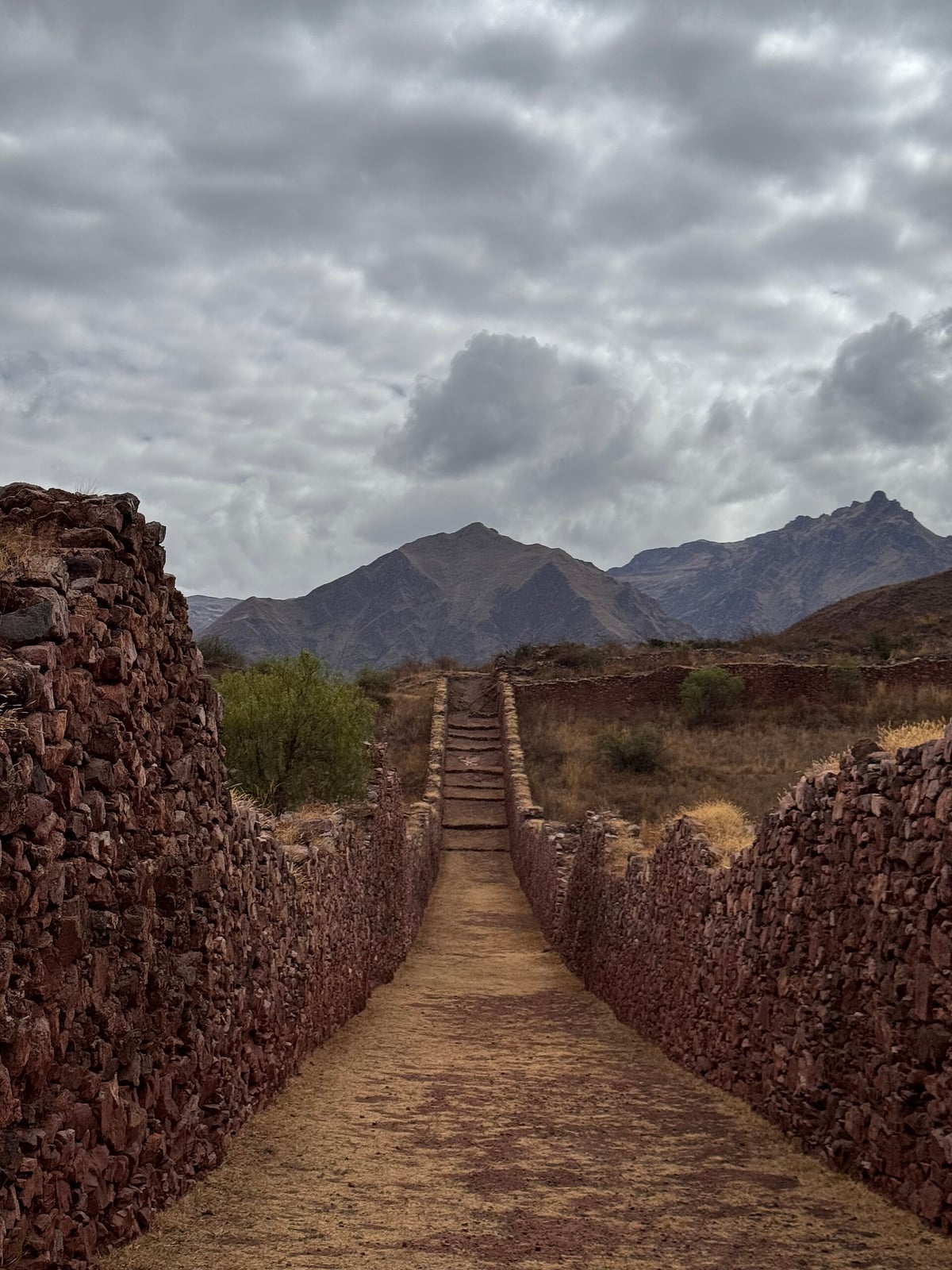
The growth of the Wari state depended heavily on complex infrastructure and monumental public works. Scholars classify the polity as an empire largely because of its regional highway systems and standardized provincial centers, such as Viracochapampa, Honcopampa, and Cerro Baul. These administrative nodes shared characteristic architectural layouts and ceramic styles linked to the capital city of Huari. To support these outposts, Wari planners mobilized massive labor forces to construct agricultural terracing and irrigation canals, seen extensively at settlements like Pikillacta near the Cusco Basin.

Keep reading in Yester
Coming soon to the App Store
Keep following the story
Sources
- Proyecto Arqueologico Cerro Baul (Field Museum)
- Unearthing bygone breweries in Peru (UIC Today, University of Illinois Chicago)
- Psychedelic-laced beer may have helped this ancient South American empire rule (CNN)
- Wari-Style Khipus from El Castillo de Huarmey (Society for American Archaeology abstract, tDAR)
- Twisted Records: Wari-style Khipus, talk April 2017 (Pre-Columbian Society of Washington DC)
- Violence, Food Insecurity, and Body Desecration, Tiffiny Tung lecture (Tulane University)
- Wari Empire
Image: Charlesdarling