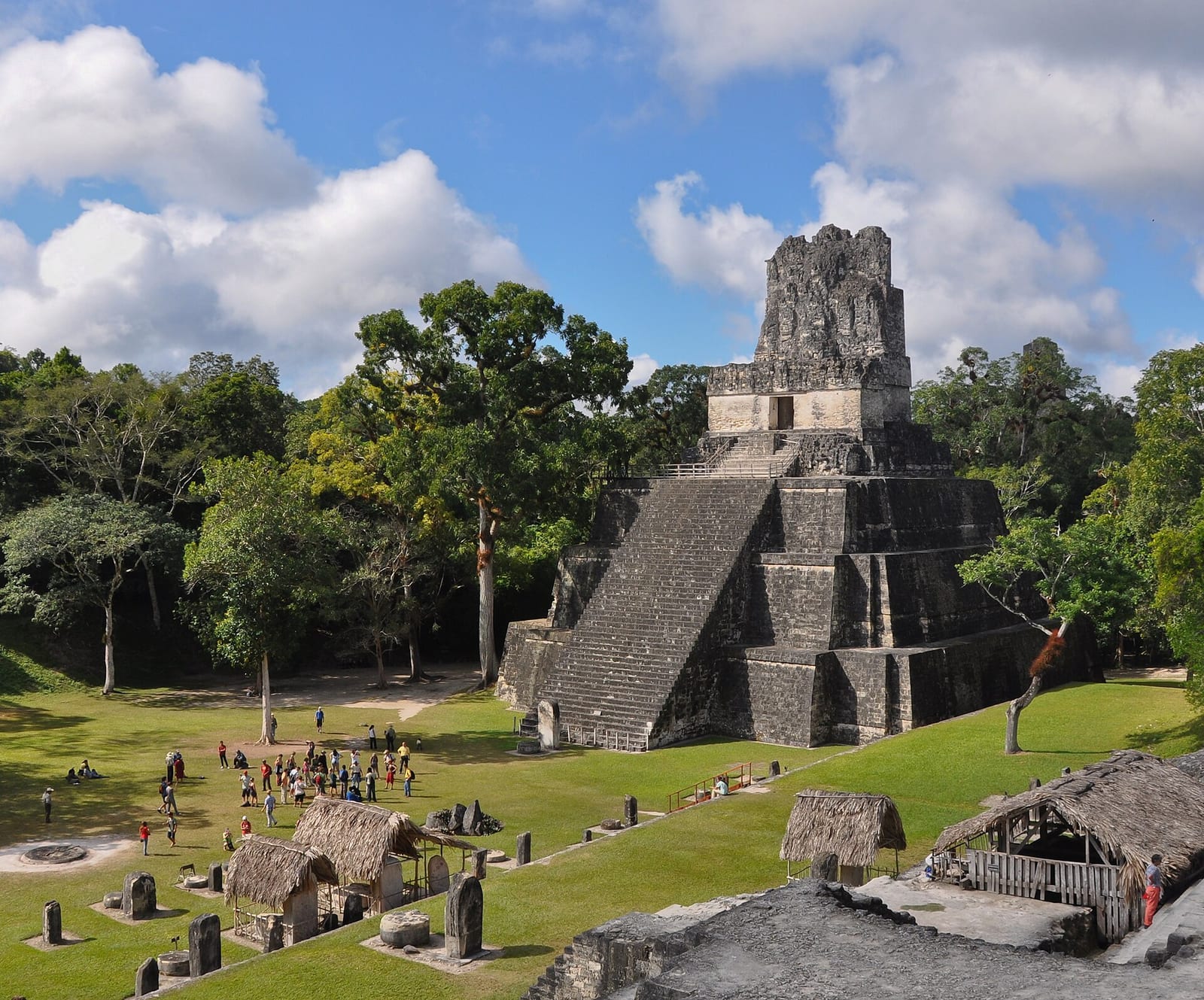
Tikal Builds Power in the Maya Lowlands
Temples and inscriptions reveal a city shaped by dynastic politics, rivalry and connections across Mesoamerica.
Rising above the forested lowlands of northern Guatemala, the limestone ridges of Tikal supported one of the most powerful political centers of the ancient Maya world. Hieroglyphic inscriptions indicate that the city was known anciently as Yax Mutal, serving as the seat of a dynasty that traced its royal lineage back to the founding figure Yax Ehb Xook, possibly around the first century. Over the centuries that followed, its monarchs erected monumental complexes across elevated ground, connecting major plazas and temple pyramids through raised causeways that crossed the surrounding marshy terrain.
During the fourth century, the internal politics of Tikal intersected directly with distant powers. Maya texts record that on 14 January 378, a foreign figure named Siyaj Kʼakʼ arrived from the west, the exact day on which Tikal's ruler Chak Tok Ichʼaak died. Epigraphers interpret this event as an external military intervention linked to the Mexican metropolis of Teotihuacan. Shortly thereafter, the young prince Yax Nuun Ahiin I took the throne of Tikal, inaugurating an era in which local court culture integrated Central Mexican visual styles, including depictions of the storm god Tláloc and distinctive warrior regalia.

Keep reading in Yester
Coming soon to the App Store
Keep following the story
Sources
Image: Mike Vondran derivative work: MrPanyGoff