The Popol Vuh Survives Through a Colonial Copy
A K’iche’ Maya account of creation reached later readers through a friar’s transcription.
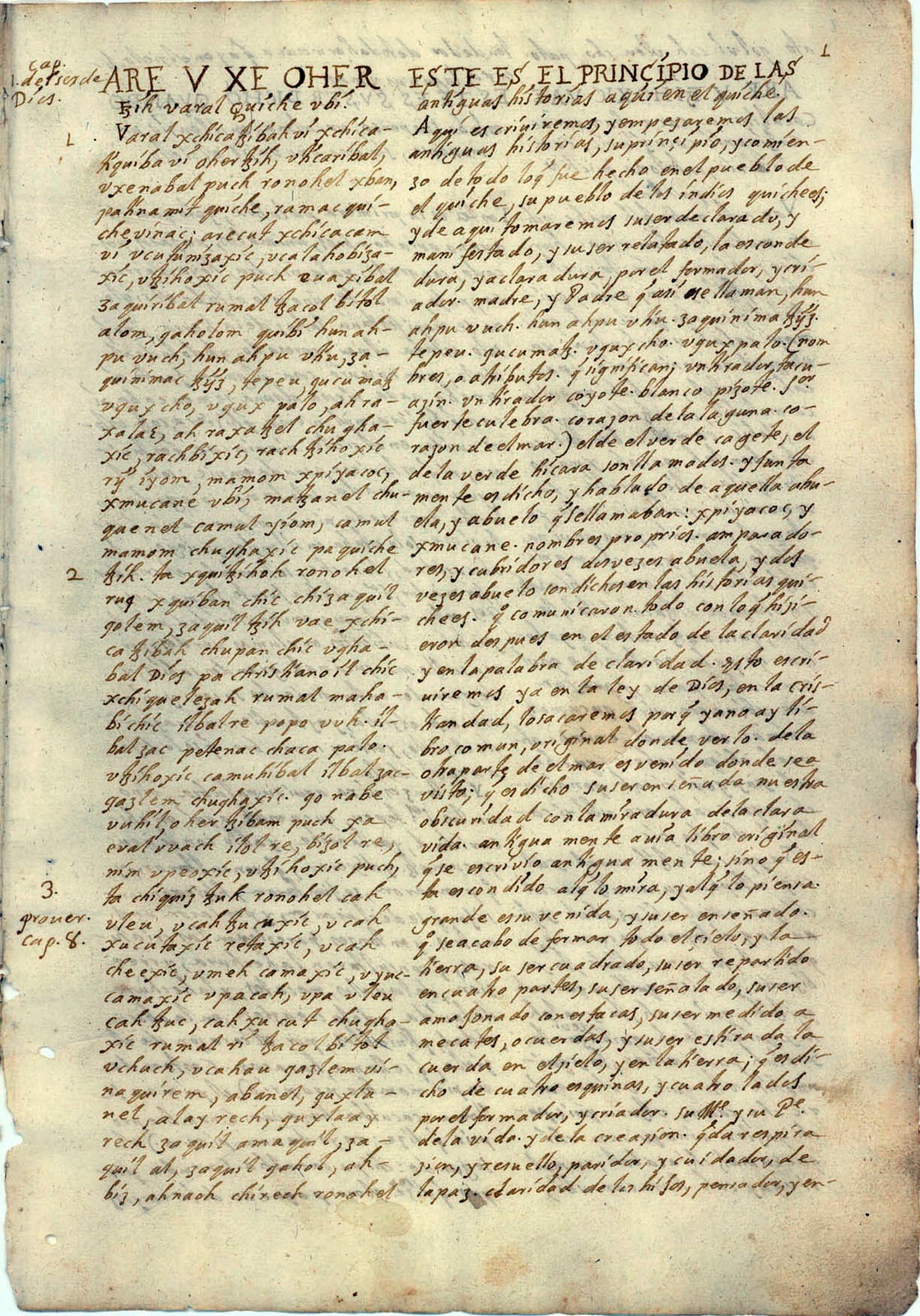
Around 1701, the Spanish Dominican friar Francisco Ximénez was serving in the highland parish of Santo Tomás Chichicastenango, in what is now Guatemala. While ministering to the local Kʼicheʼ Maya community, Ximénez obtained or heard a sacred account of creation, divine conflict, and dynastic lineage. He set to work recording it in two parallel columns, transcribing the Kʼicheʼ text in Latin script alongside his own Spanish translation. That manuscript is possibly the earliest surviving written copy of the Popol Vuh, a title rendered as the Book of the Community or Book of the Council; the word popol can also mean a woven mat.
The document opens with a cosmological narrative detailing the attempts of the gods to create humanity. Animals were shaped first, but could not give their makers praise. Subsequent human beings made of mud dissolved, while a later generation fashioned from wood lacked understanding and perished in a great deluge, with their survivors becoming monkeys. True human beings were successfully fashioned only from maize. Alongside this creation sequence, the narrative records the descent of the Hero Twins, Hunahpú and Xbalanqué, into the underworld realm of Xibalba to avenge their father and uncle, overcome trials set by subterranean lords, and ultimately become the sun and the moon.

Keep reading in Yester
Coming soon to the App Store
Keep following the story
Sources
- Popol Vuh research guide (Newberry Library)
- Popol Vuh (Wuj) online (Newberry Library Digital Collections)
- Popol Vuh (Encyclopaedia Britannica)
- Who's Who in the Popol Vuh (Bowers Museum)
- Conmemoran el Día Nacional del Popol Vuh, texto sagrado de la cultura maya (Agencia Guatemalteca de Noticias)
- Popol Vuh
Image: Francisco Ximénez