Song Yingxing Publishes an Encyclopedia of Crafts
His illustrated book explained how to make rice, salt, silk, paper and iron.
In May 1637, the Chinese scholar Song Yingxing published Tiangong Kaiwu, or The Exploitation of the Works of Nature, with financial support from his friend and patron Tu Shaokui. The compendium offered an expansive investigation of manufacturing, agriculture, and industrial technology during the late Ming dynasty. Setting itself apart from standard classical treatises, the work largely dispensed with citations of past literary authorities. Song explained in his preface that this departure from tradition stemmed from his modest social rank and limited resources, producing an account shaped instead by direct observation and practical craft.
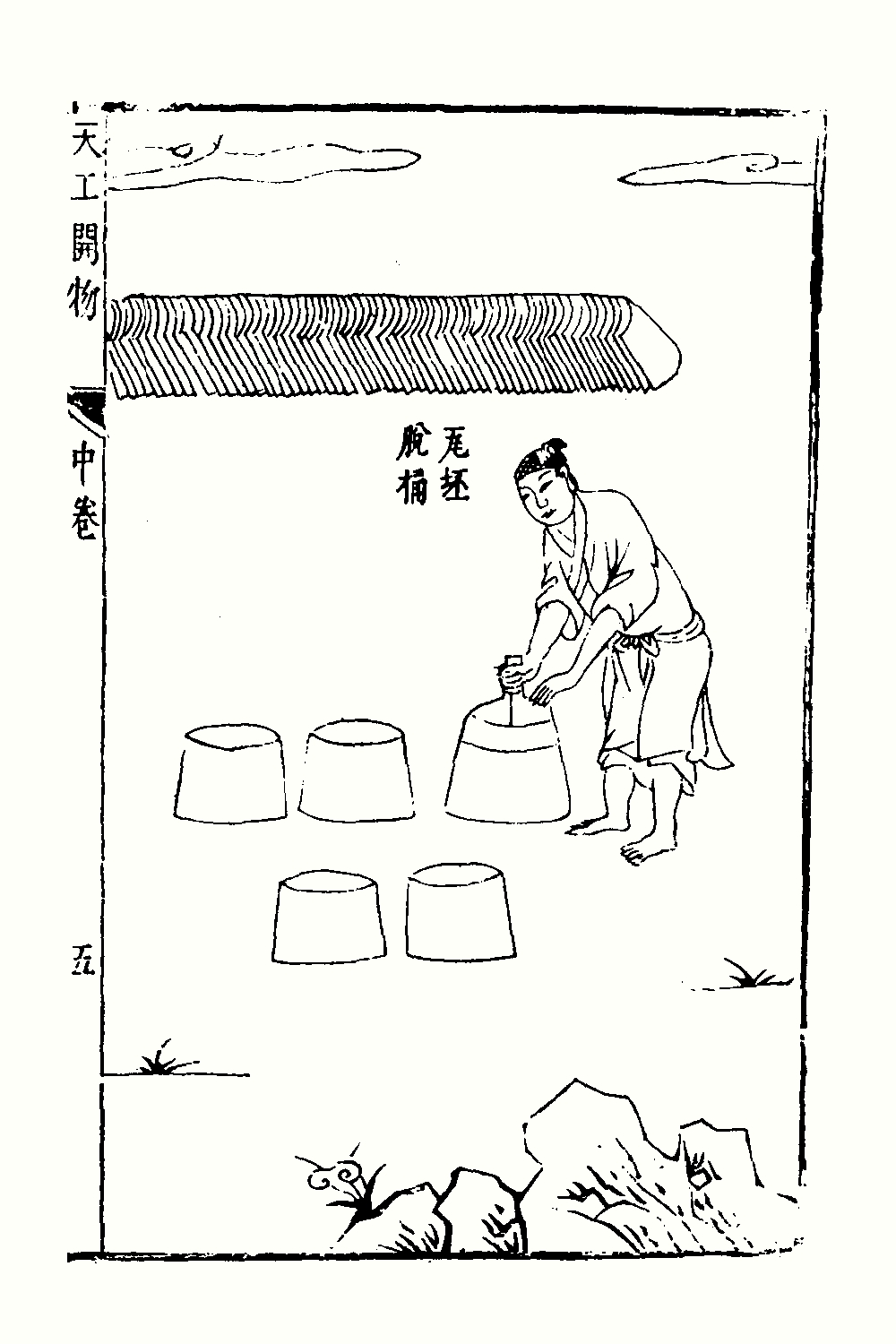
The encyclopedia distinguished itself through an extraordinary collection of detailed technical illustrations. Modern scholars such as Joseph Needham have highlighted that the abundance and accuracy of these woodblock cuts far surpassed those of earlier Chinese compendia. Song recorded mundane manufacturing stages with precision, depicting brickmakers shaping clay within wooden molds and kiln masters checking furnace conditions before introducing water to produce a surface glaze. These visual records transformed everyday labour into a systematic subject of study, preserving mechanical techniques that scholars had often ignored.

Keep reading in Yester
Coming soon to the App Store
Keep following the story
Sources
Image: Sung Ying-Hsing; 1587-1666 AD