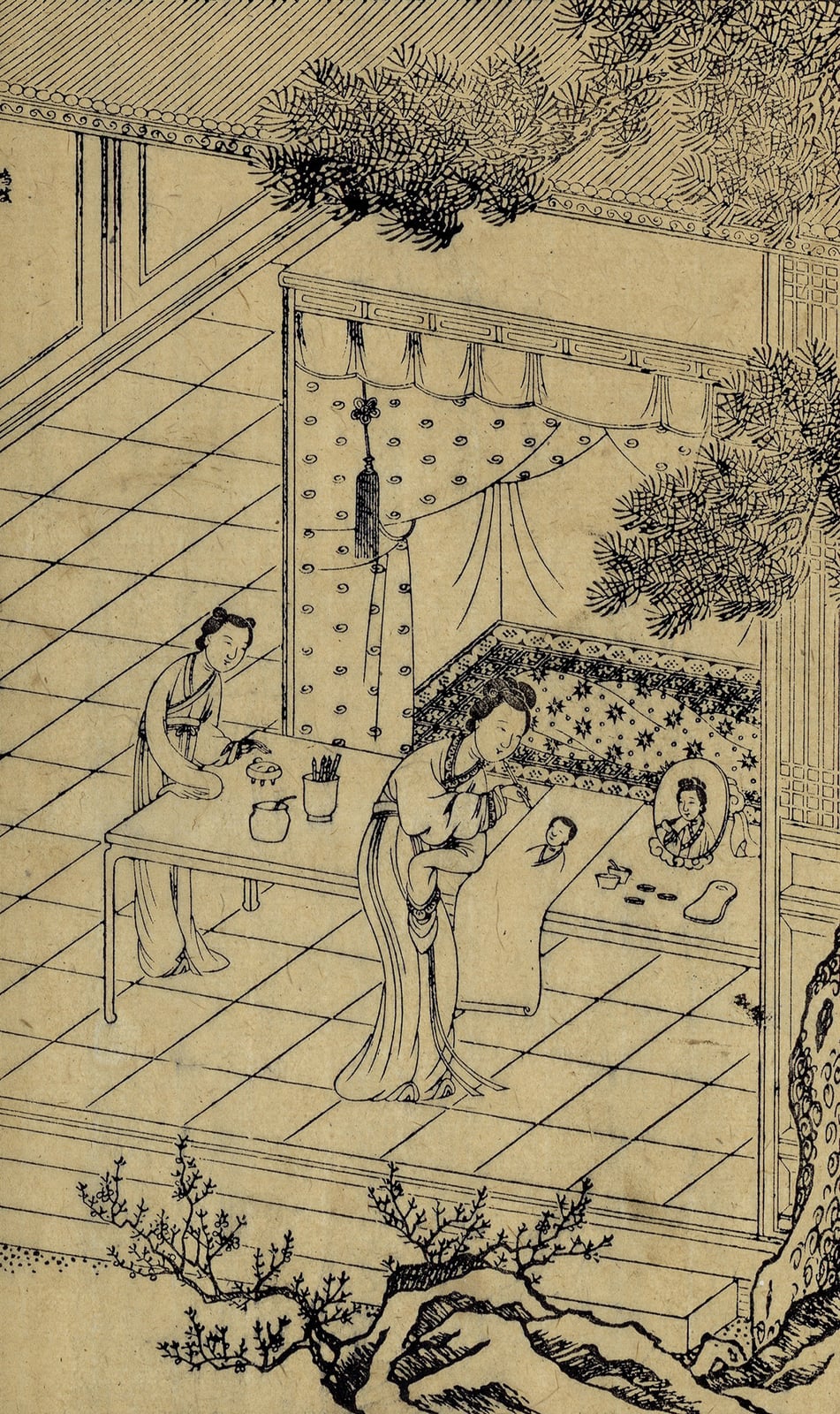
Tang Xianzu Completes The Peony Pavilion
In a 55-scene opera, a young woman dies of longing for a man she met in a dream.
In 1598, the Ming dynasty playwright Tang Xianzu completed The Peony Pavilion, a sprawling fifty-five-scene work of romantic tragicomedy that became his most celebrated literary achievement. The play went on to become the central work of the Kunqu operatic tradition. Tang based his narrative on an earlier tale entitled Du Liniang Revives For Love, transposing the emotional journey into an expansive dramatic architecture. Although set against the historical backdrop of the waning Southern Song dynasty, Tang freely wove contemporary Ming societal elements into the drama, shaping a multi-layered masterpiece that anchored his famous collection The Four Dreams in the Jade Tea Hall.
The central plot traces the poignant romance of Du Liniang, the sixteen-year-old daughter of an official named Du Bao. Persuaded by her maid to take a springtime stroll through her family garden, Liniang falls asleep and experiences an intense dream wherein she meets a scholar named Liu Mengmei. After waking from the vision when startled by a falling flower petal, she finds herself unable to overcome her overwhelming lovesickness for the young stranger. Consumed by this unattainable longing, Liniang wastes away and dies shortly thereafter.

Keep reading in Yester
Coming soon to the App Store
Keep following the story


Sources
Image: Unknown author Unknown author