Teotihuacan Builds a Metropolis Beyond a Single People
A vast city organized neighborhoods, monuments and exchange on a scale that still raises questions about power.
By the middle of the fourth century, the urban center of Teotihuacan in the Valley of Mexico had developed into one of the largest settlements in the ancient world. Beginning around 100 BCE as a cluster of farming communities near active freshwater springs, the settlement expanded rapidly, stimulated in part by regional migrations following volcanic eruptions such as the eruption of Xitle. At its peak during the Classic period, the metropolis covered between twenty and thirty square kilometers and housed an estimated population of approximately 100,000 residents, drawing eighty to ninety percent of the surrounding valley's inhabitants within its planned perimeter.
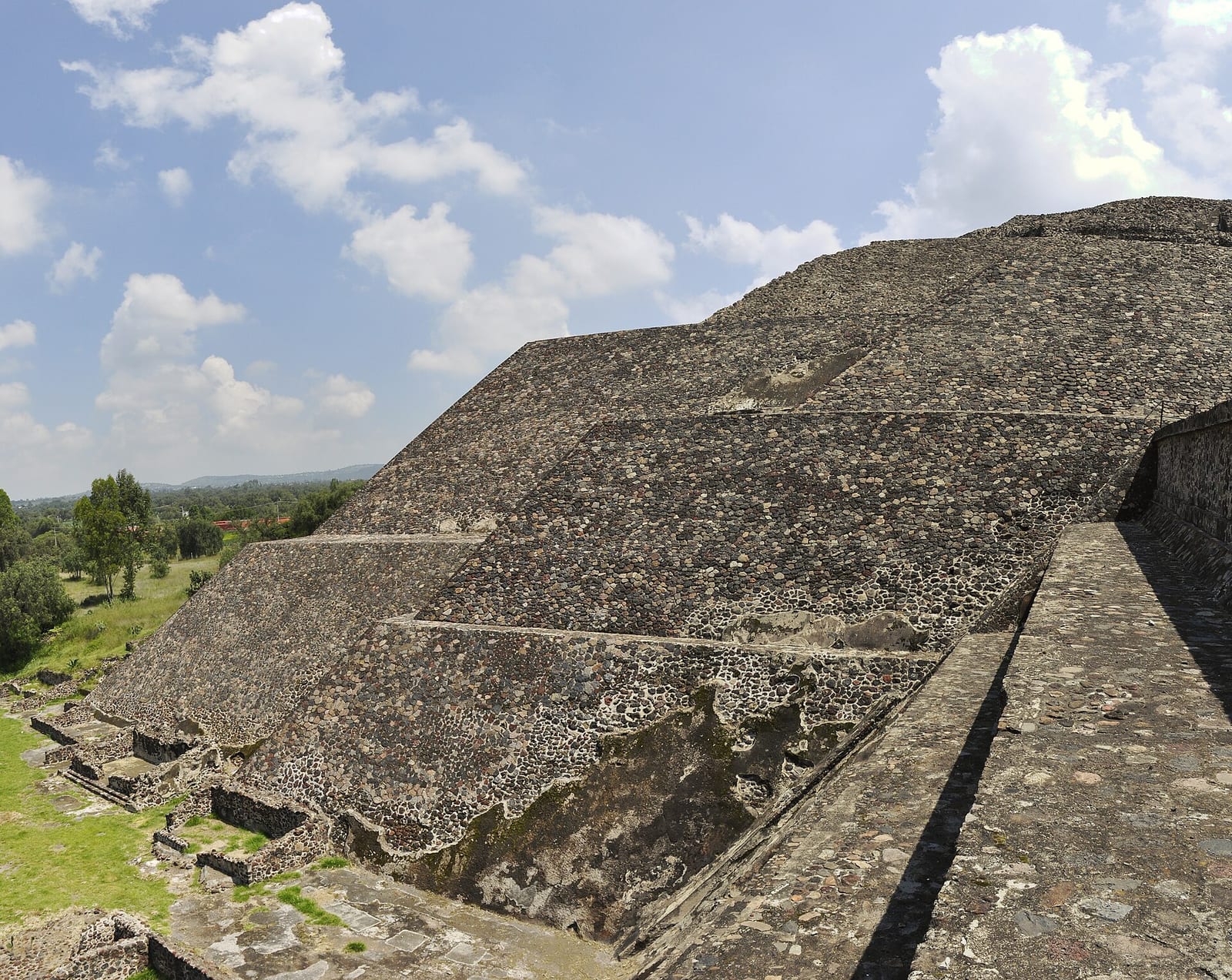
The spatial design of the city was governed by an intentional, measured grid that integrated astronomical alignments with the local topography. At its core lay the Avenue of the Dead, a broad north-to-south thoroughfare flanked by major monuments such as the Pyramid of the Moon, the Ciudadela complex, and the Pyramid of the Sun, which was aligned both with the northern peak of Cerro Gordo and with specific points in the 260-day calendar cycle. Planners also engineered the surrounding landscape directly, diverting the natural course of the San Juan River so that it bent around civic structures before continuing through the valley.

Keep reading in Yester
Coming soon to the App Store
Keep following the story
Sources
Image: Jarek Tuszyński