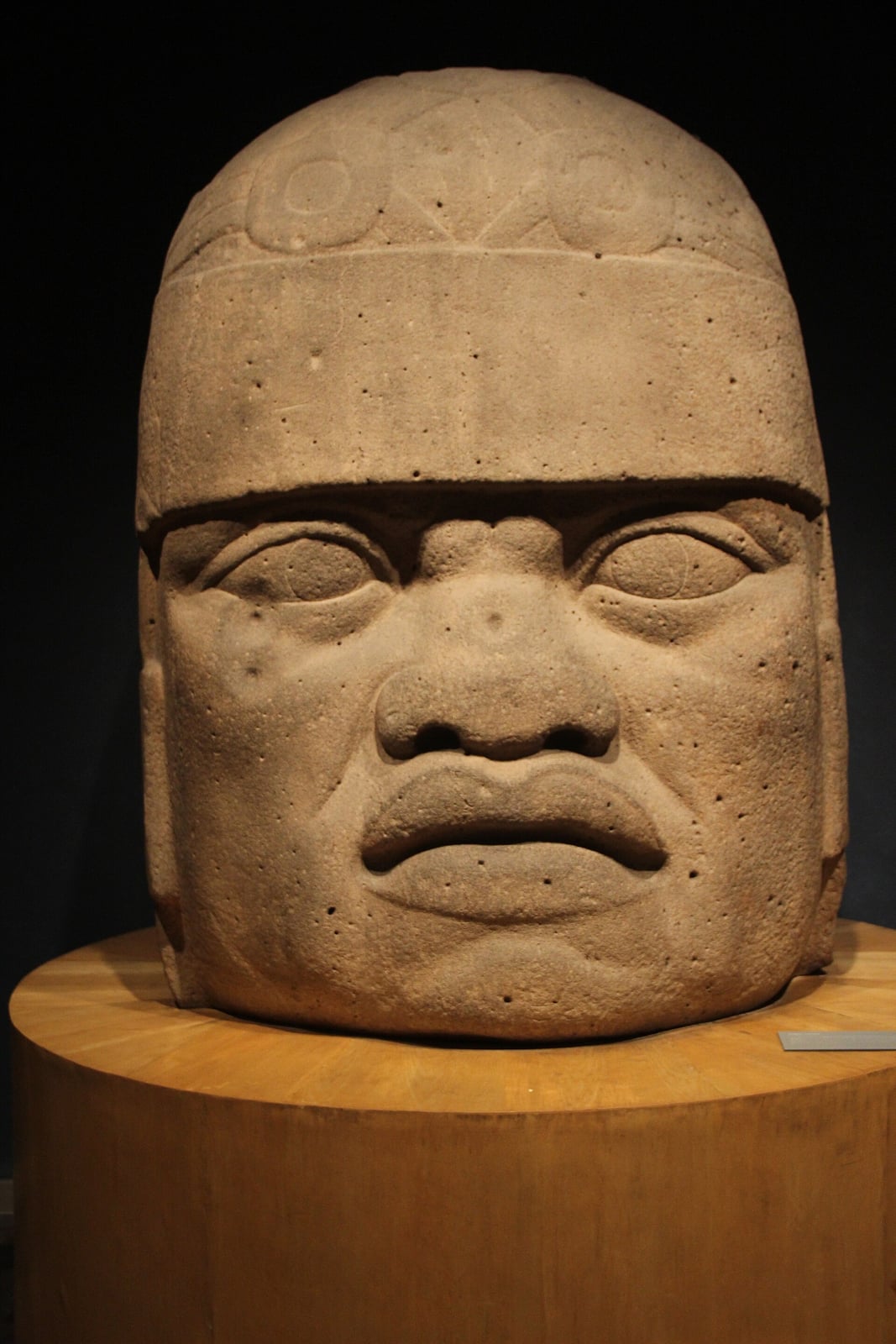
The Olmec Carve Colossal Stone Heads
Huge basalt portraits were moved for kilometers without wheels or draft animals.
Between about 1200 and 400 BCE, the Olmec civilization flourished along the tropical lowlands of the Gulf Coast of Mexico, across modern-day Veracruz and Tabasco. Among their most distinctive artistic legacies are seventeen confirmed colossal stone heads sculpted from dense basalt. These monuments, measuring between 1.17 and 3.4 metres tall and weighing between 6 and roughly 45 to 50 tons, depict mature men with individualized facial features. Rather than idealized abstractions, the carvings present realistic portraits marked by flat noses, fleshy cheeks, and varying expressions ranging from stern to placid. Scholars broadly identify these subjects as prominent Olmec rulers, whose power is underscored by the extraordinary communal effort required to create and transport each monument.
The raw stone for every confirmed head originated in the Sierra de los Tuxtlas mountains of Veracruz. Massive boulders of coarse-grained volcanic basalt, particularly from deposits displaced by volcanic mudslides, were selected for their roughly spherical form. Because the Olmec lacked draft animals and functional wheels, hauling these stones across distances that in some cases reached 100 kilometres or more presented formidable logistics. Moving such weights across swampy lowlands and floodplains likely required earthwork causeways, ramps, and ropes, combined with riverine transport wherever currents permitted. Two damaged Olmec stone carvings show figures seated upon roped rectangular blocks, which researchers interpret as possible depictions of leaders supervising the movement of monument stone.

Keep reading in Yester
Coming soon to the App Store
Keep following the story
Sources
Image: Gary Todd