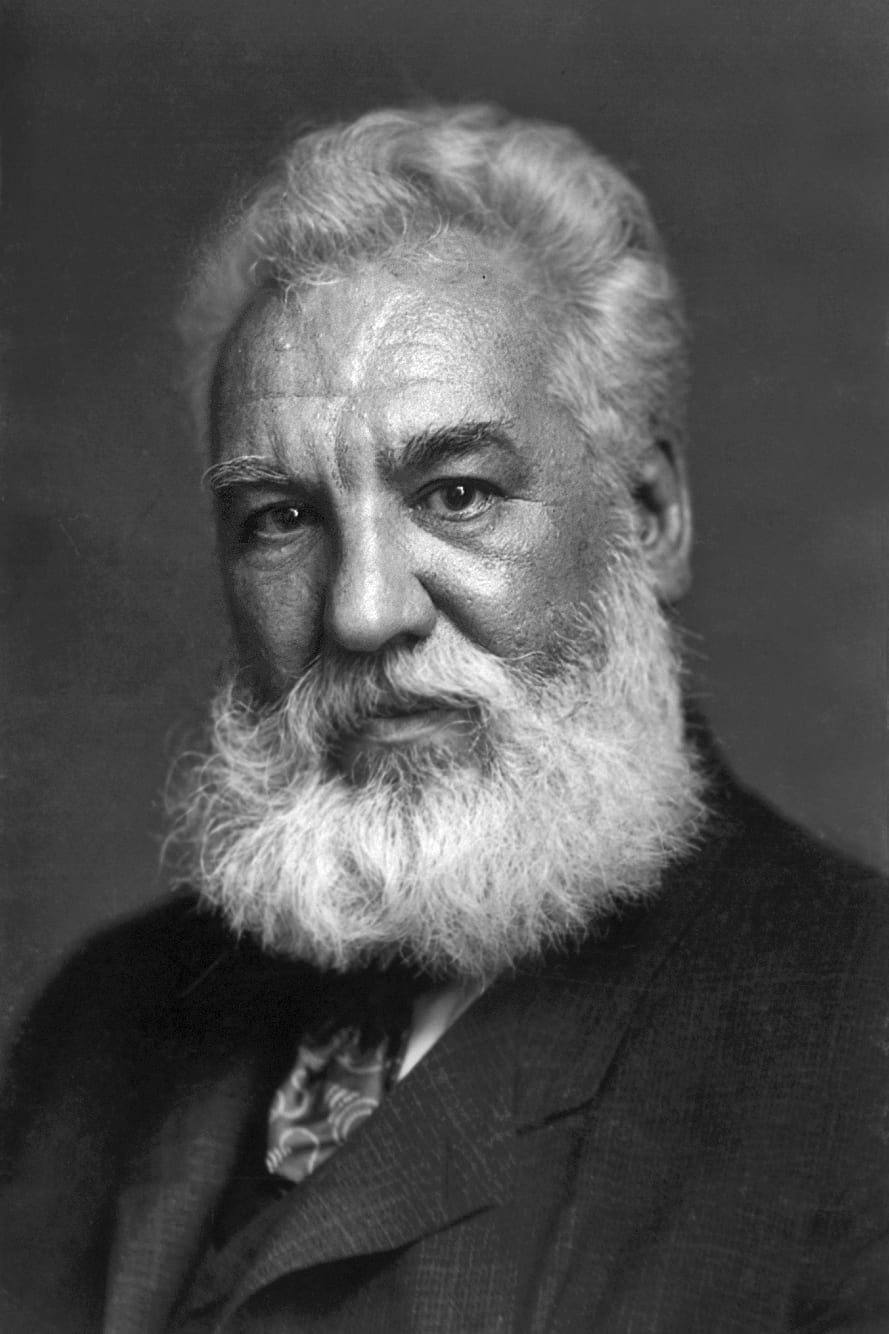
When the Wire Carried a Voice
Bell and Watson’s experiment made intelligible speech travel electrically. Turning that short laboratory connection into a useful telephone system would be another invention altogether.
The sentence asked an assistant to come into the room. On March 10, 1876, Alexander Graham Bell’s request reached Thomas Watson through an experimental telephone in Boston. The content was ordinary; the route it took was the point. Watson could understand words carried electrically rather than hear a voice directly across the room. A short laboratory exchange opened a possibility that would eventually reshape how people dealt with separation, from business arrangements to conversations at home.
Bell’s work grew partly from attempts to improve the telegraph. Sending several signals along one wire offered an obvious commercial attraction, and he investigated a harmonic approach using different pitches. Watson contributed practical electrical and mechanical skill. Alongside the effort to transmit multiple signals, they explored the more difficult idea of transmitting speech itself. The two goals were related but not identical. A wire that could distinguish separate tones did not automatically reproduce the changing complexity of a spoken sentence.

Keep reading in Yester
Coming soon to the App Store
Keep following the story
Sources
Image: Unknown author Unknown author