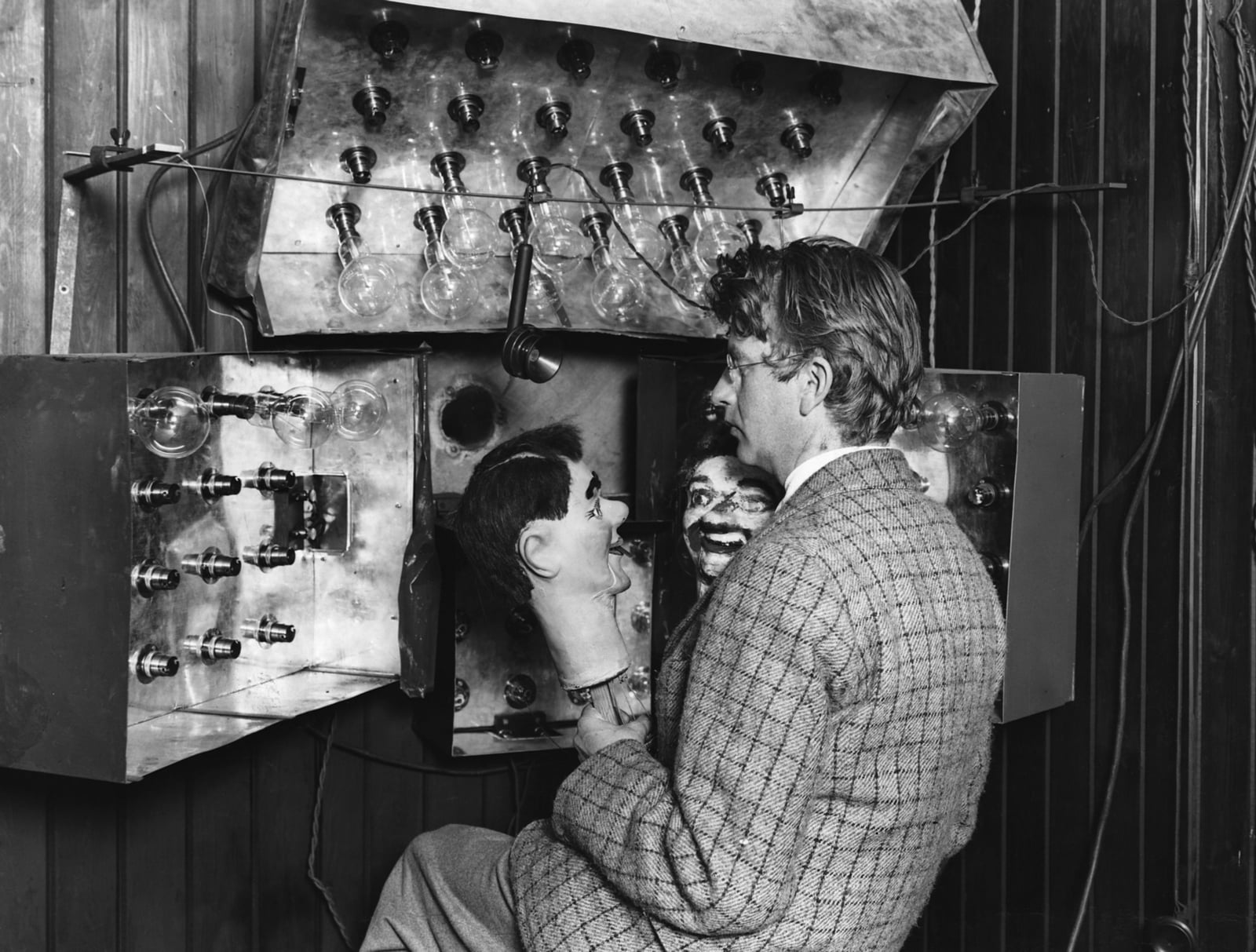
Baird Demonstrates Television in London
Moving images transmitted by a mechanical system were shown to an invited audience.
On 26 January 1926, Scottish inventor and electrical engineer John Logie Baird welcomed members of the Royal Institution and a correspondent from The Times into his laboratory at 22 Frith Street in London's Soho district. There, using an electromechanical apparatus built around the spinning perforated disc conceived decades earlier by Paul Gottlieb Nipkow, Baird gave the world's first public demonstration of a television system capable of scanning and displaying live moving images with tonal gradation. The crude assembly projected recognizable human features, and The Times reported an image that was faint and often blurred but could show movement and facial expression, marking an essential shift from silhouette transmission to authentic pictorial reproduction.
Baird's presentation represented the culmination of several years of intensive experimentation conducted under strained financial and physical circumstances. Relocating to Hastings in 1923 because of failing health, he had initially assembled a rudimentary transmission apparatus from discarded items, including a hatbox, bicycle lenses, and darning needles. He moved his operations to London in 1924, and in March 1925 gave a three-week series of demonstrations of moving silhouette images at Selfridges department store. Back at his Frith Street laboratory, Baird managed to transmit a greyscale image of a ventriloquist's dummy on 2 October 1925, followed immediately by televising an office worker from downstairs, William Edward Taynton.

Keep reading in Yester
Coming soon to the App Store
Keep following the story
Sources
- Milestones: First Public Demonstration of Television, 1926 (IEEE, Engineering and Technology History Wiki)
- John Logie Baird blue plaque, 22 Frith Street (English Heritage)
- How engineer John Logie Baird invented television (Historic England, Heritage Calling)
- History of British television timeline (Science and Media Museum)
- Baird Television Ltd (Science Museum Group Collection)
- Telechrome tube (Science Museum Group Collection)
- John Logie Baird
Image: Orrin Dunlap, Jr.