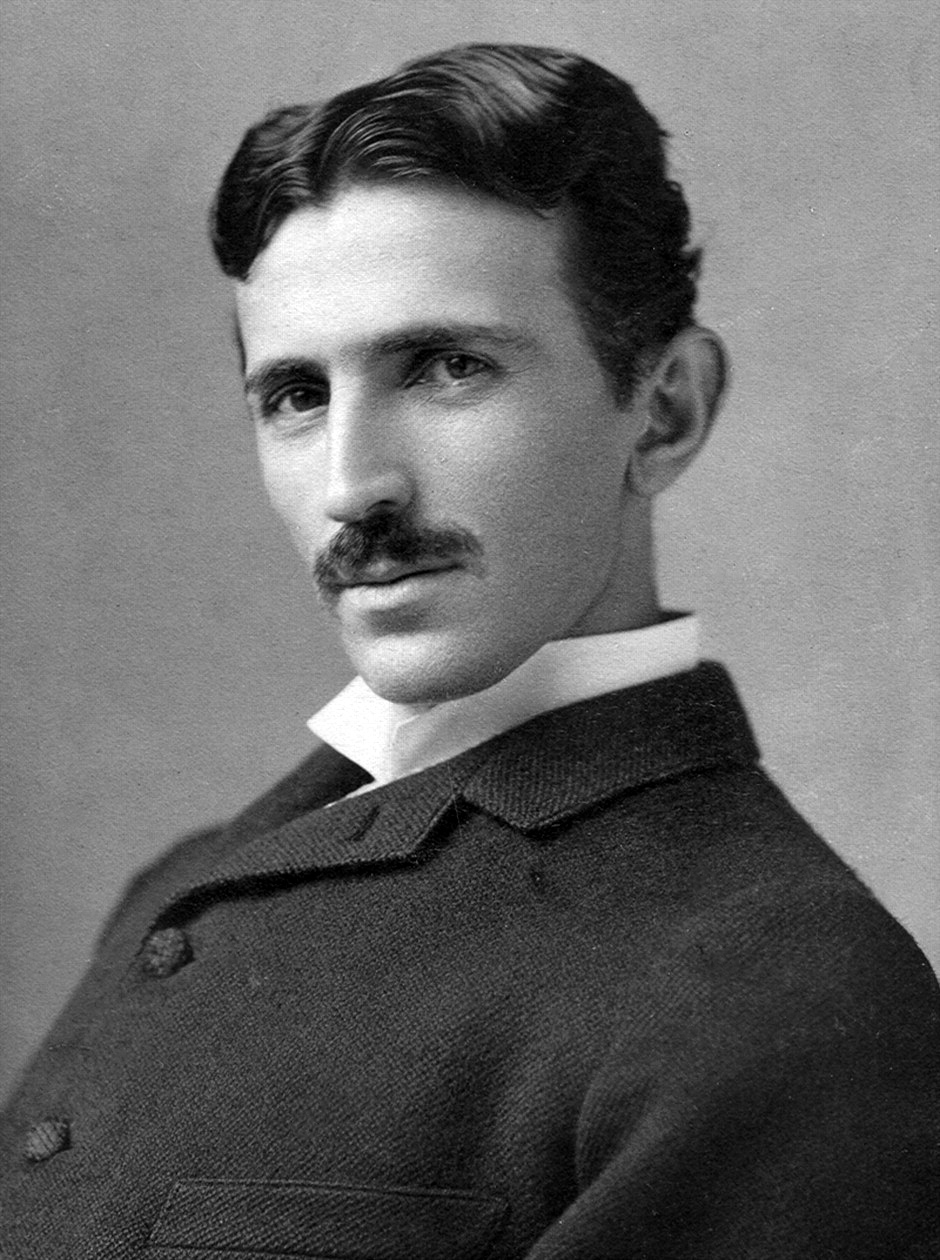
Tesla Helps Make Alternating Current Do Useful Work
An induction motor and a system of alternating currents helped transform electrical engineering. The achievement depended on patents, industrial partners and a wider field of competing experiments.
In May 1888, Nikola Tesla stood before the American Institute of Electrical Engineers in New York to demonstrate a new electric motor. Alternating current had already gained favor for transmitting electrical energy efficiently over long distances at high voltage, yet practical alternating-current motors remained elusive. Tesla presented an induction motor powered by polyphase currents that generated a rotating magnetic field. By dispensing with mechanical commutators and brushes, his self-starting design reduced the sparking and maintenance associated with those components, offering a promising solution to convert alternating electricity into reliable mechanical work.
Tesla had arrived in the United States in 1884 after working in Paris for Continental Edison and briefly serving at the Budapest Telephone Exchange, an early hub of telephony. In New York, he spent a short, frustrating period at the Edison Machine Works troubleshooting generators before striking out independently. An initial enterprise to manufacture arc lighting collapsed in 1886 when his business backers abandoned the venture, leaving Tesla destitute and forced into manual labor. His prospects revived later that year through a partnership with attorney Charles Fletcher Peck and telegraph superintendent Alfred S. Brown, who financed a Manhattan laboratory and managed his patents.

Keep reading in Yester
Coming soon to the App Store
Keep following the story
Sources
Image: Napoleon Sarony