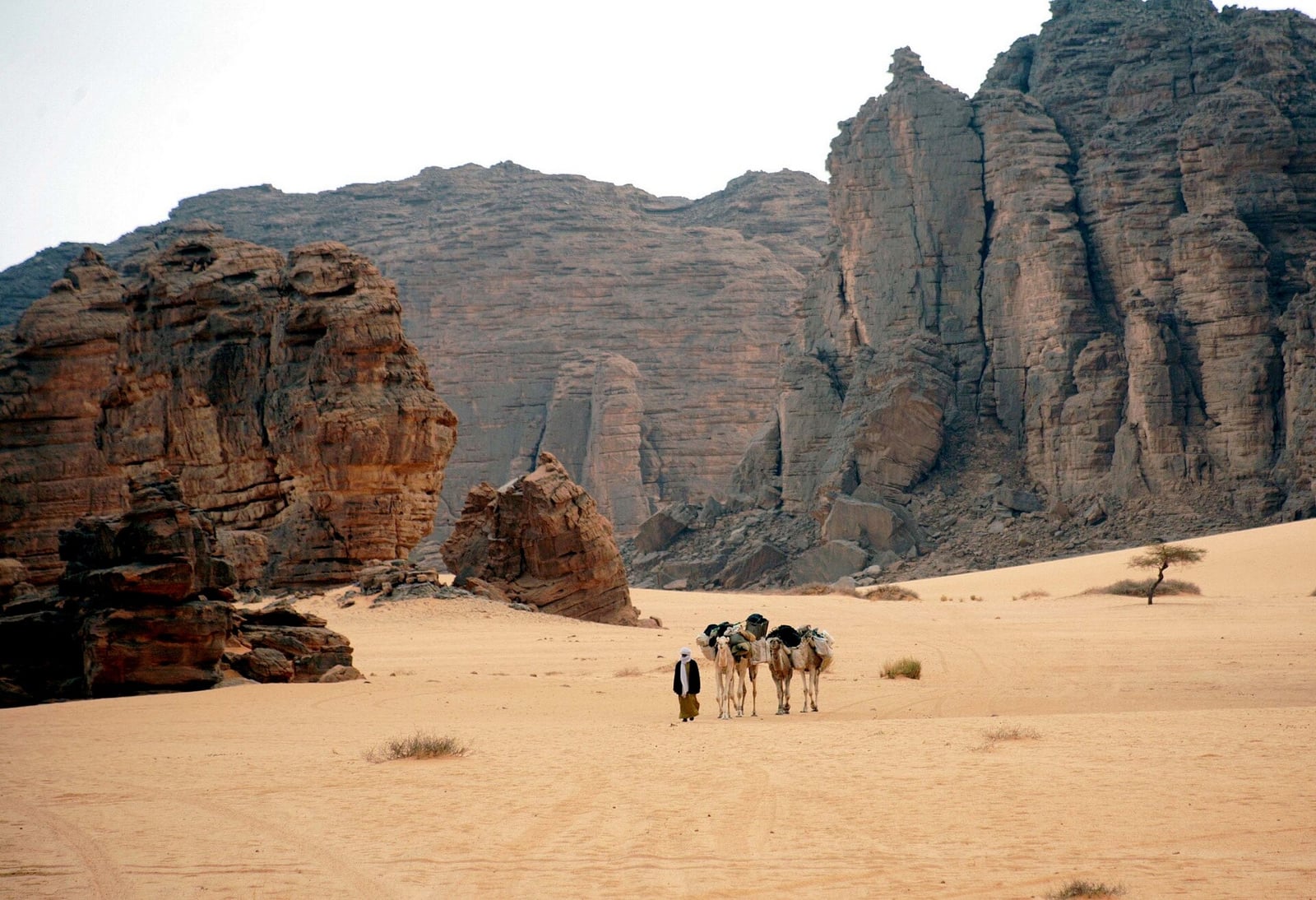
Rock Painters Record a Green Sahara at Tassili
Thousands of paintings show cattle herds, hunters and dancers where desert now stretches.
Rising above the desert plains of southeastern Algeria near the borders of Libya and Niger, the sandstone plateau of Tassili n'Ajjer preserves a vivid record of a transformed environment. Its indigenous name translates to 'plateau of rivers,' referencing ancient waterways that once cut gorges up to four hundred meters deep into the stone. Across thousands of rock shelters, an immense concentration of prehistoric engravings and paintings charts the climatic and cultural shifts of the Sahara from a humid, fertile savanna into an arid wilderness.
During the early Holocene African Humid period, the region supported diverse plant and animal life alongside human populations. Hunters and gatherers occupied the plateau between 10,000 and 7,500 years before present, utilizing the natural corridors between highland shelters and lowland camps. In the highland shelters, archaeologists have recovered Neolithic material culture, including ceramic pots, stone arrowheads, grinding stones, and personal ornaments. As fluctuating weather patterns led to a prolonged dry interval between 7900 and 7200 BP, local communities reorganized around mobile pastoralism to manage environmental uncertainty.

Keep reading in Yester
Coming soon to the App Store
Keep following the story
Sources
Image: magharebia