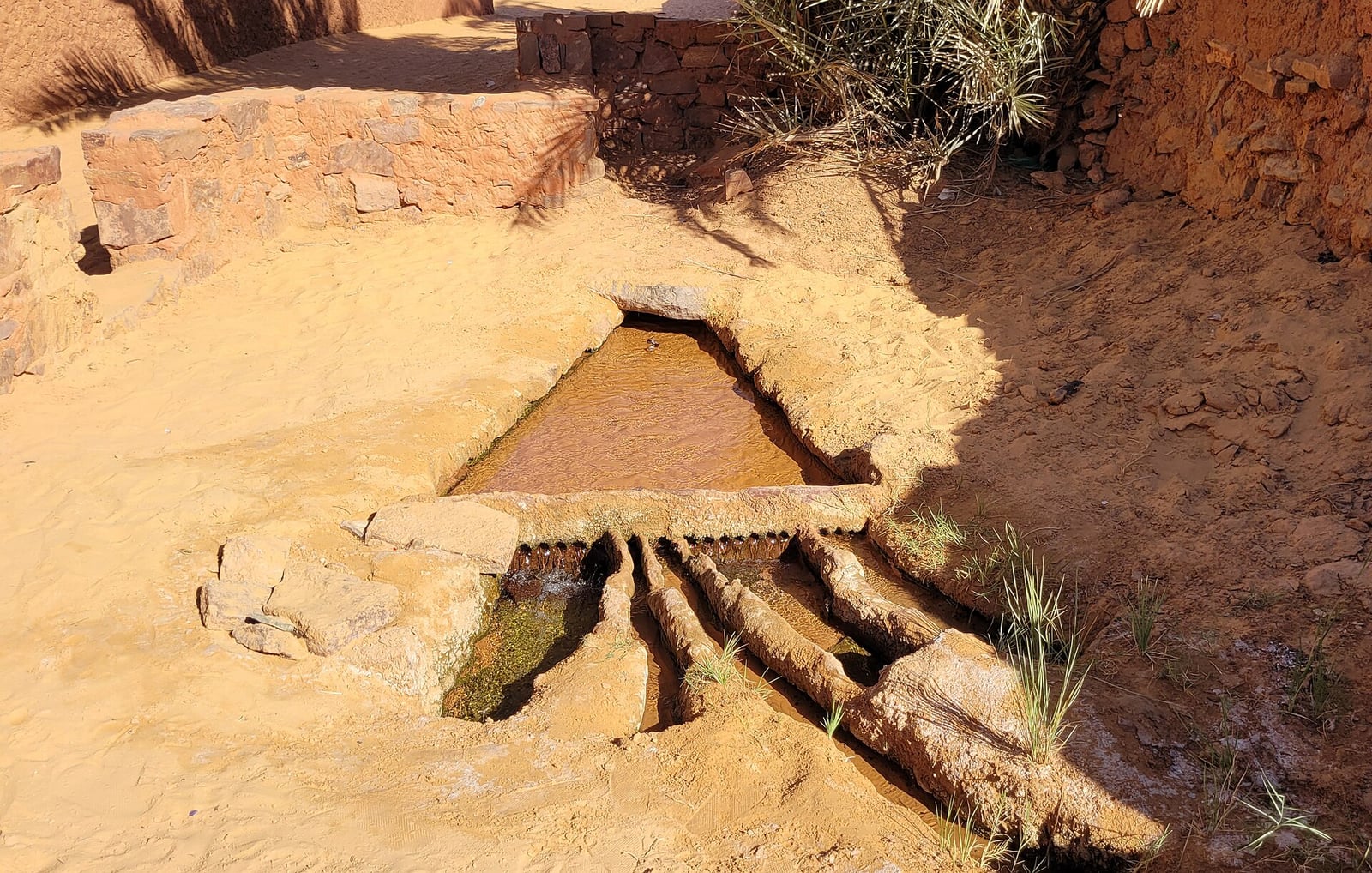
The Garamantes Farm the Sahara with Underground Channels
A desert kingdom in Libya tapped ancient groundwater through hundreds of kilometres of foggaras.
In the arid Fezzan depression of southwestern Libya, ancient builders constructed an expansive agrarian civilization deep within the Sahara. Emerging from local pastoral traditions by at least 1000 BC, the Garamantes developed the earliest known urban society in a major desert that did not depend upon a perennial river system. By the middle of the second century AD, they controlled an estimated territory of roughly 180,000 square kilometres. Archaeological investigations at modern Germa, the site of their ancient capital Garama, reveal an urban core that housed approximately four thousand residents, surrounded by suburban settlements accommodating thousands more.
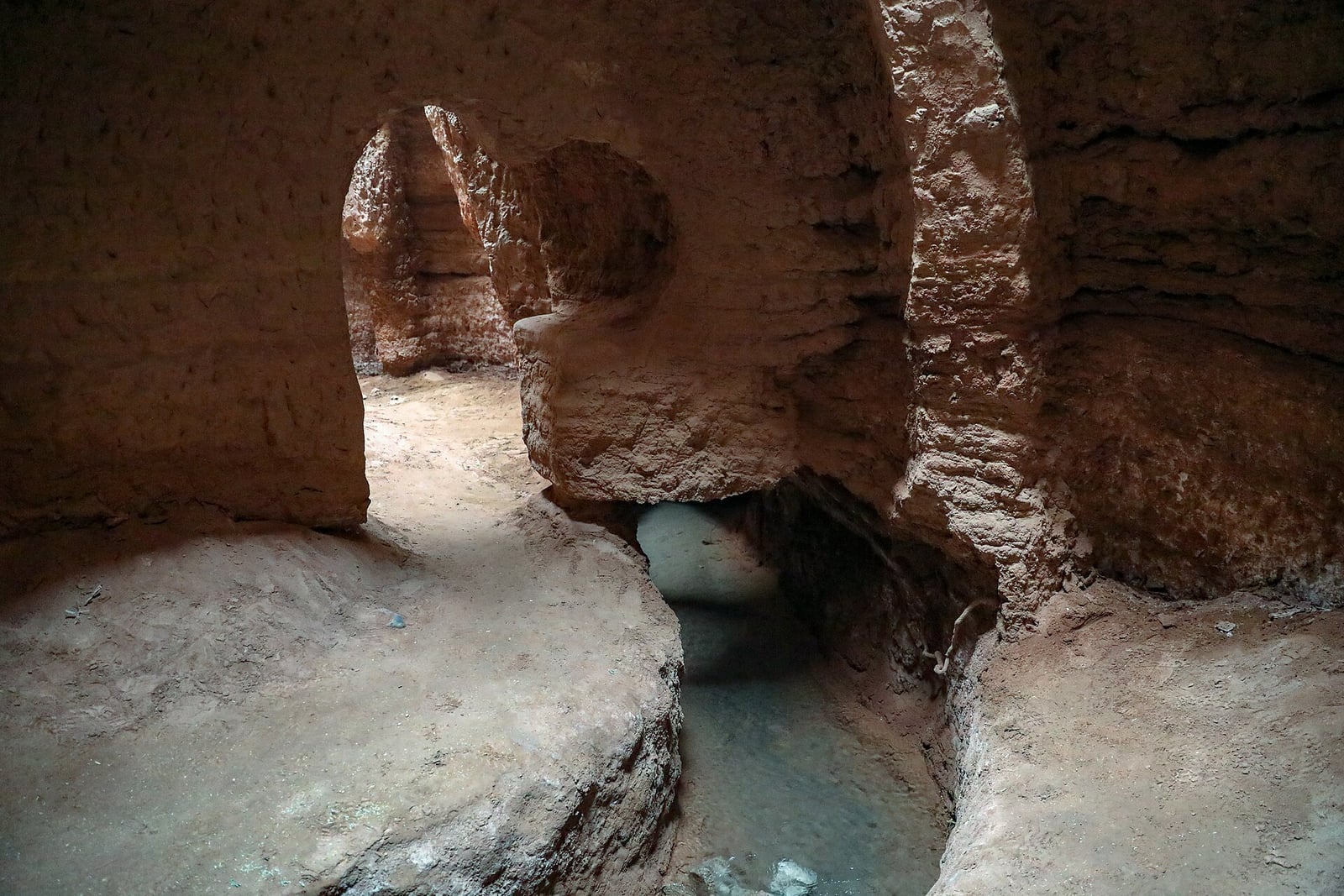
This desert urbanism relied entirely on tapping subterranean water stored in an aquifer beneath the desert. Drawing on an engineering tradition comparable to the subterranean qanat systems utilized across arid regions, the Garamantes dug extensive underground tunnels and vertical shafts known in Berber as foggaras. While the exact date of their initial construction remains debated, appearing between 200 BC and 200 AD, these channels captured fossil water accumulated during wetter prehistoric epochs. The extracted water flowed through gravitational conduits to irrigate date groves and field crops across the valley, supporting thousands of people throughout the broader wadi.

Keep reading in Yester
Coming soon to the App Store
Keep following the story
Sources
- Kingdom of the Sands, David Keys (Archaeology, Archaeological Institute of America, 2004)
- Libya: Castles, kings, and caravans (Current World Archaeology)
- How an ancient society in the Sahara rose and fell with groundwater (ScienceAlert)
- Pliny the Elder, Natural History 5.5, Bostock translation (Perseus Digital Library, Tufts University)
- Garamantes
Image: Bernard Gagnon