Lascaux Reveals a Painted Ice Age World
The discovery of a decorated cave raised enduring questions about art and preservation.
On 12 September 1940, eighteen-year-old Marcel Ravidat explored a hole created by an uprooted tree on the La Rochefoucauld-Montbel lands near Montignac, in southwestern France. Returning with Jacques Marsal, Georges Agnel, and Simon Coencas, Ravidat climbed down a fifteen-metre shaft that the youths suspected might lead to a legendary passage beneath a local manor. Instead, their descent opened into an extensive underground limestone chamber containing hundreds of prehistoric animal figures and enigmatic signs painted directly onto the stone. The site soon drew prehistorians, including Henri Breuil, who documented the compositions before environmental changes began obscuring the prehistoric imagery.
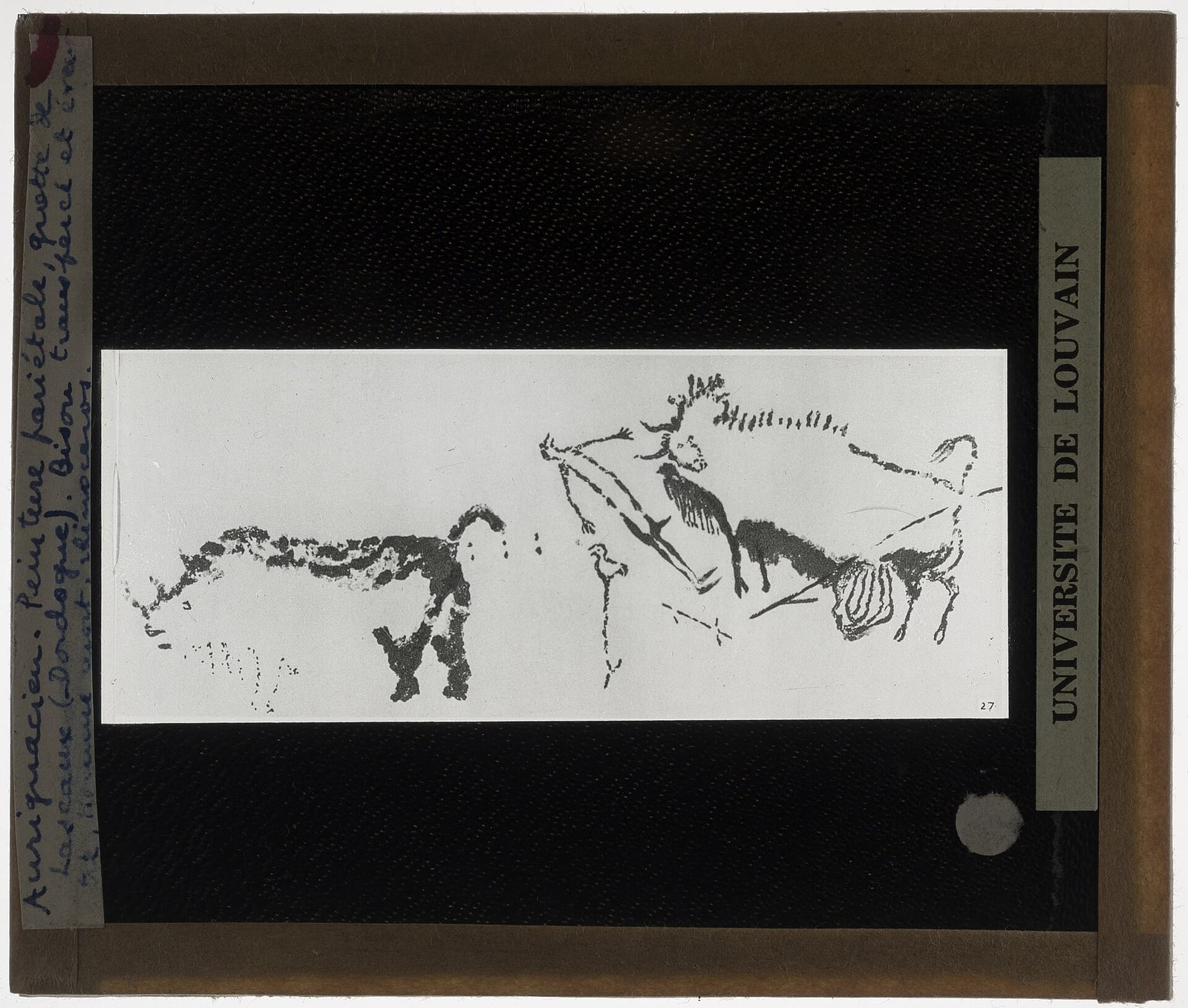
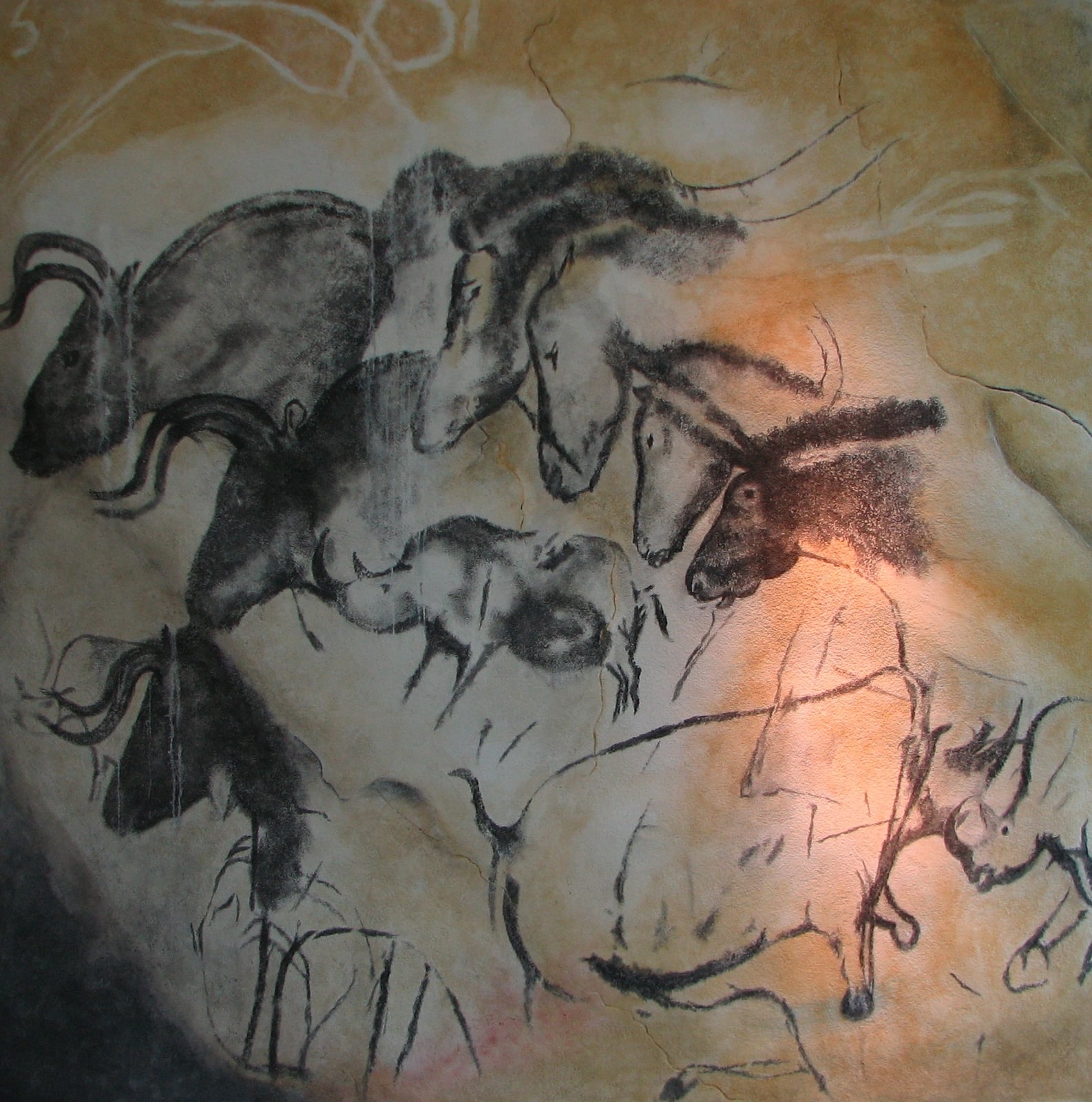
The decorations in the cave network of Lascaux comprise nearly six thousand figures dating to between 17,000 and 22,000 years ago, placing them within the early Magdalenian culture of the Upper Paleolithic. Artists worked with naturally available pigments, grinding minerals such as hematite, goethite, and other iron oxides to produce reds and yellows, alongside manganese compounds for black. These pigments were brushed on, blotted with suspensions of clay or cave water, or blown through tubes directly onto the limestone. Where the rock surface permitted, Paleolithic creators engraved outlines into the walls, sometimes utilizing scaffolding to reach high ceilings, as seen in the densely marked chamber known as the Apse.

Keep reading in Yester
Coming soon to the App Store
Keep following the story

Sources
Image: Unknown