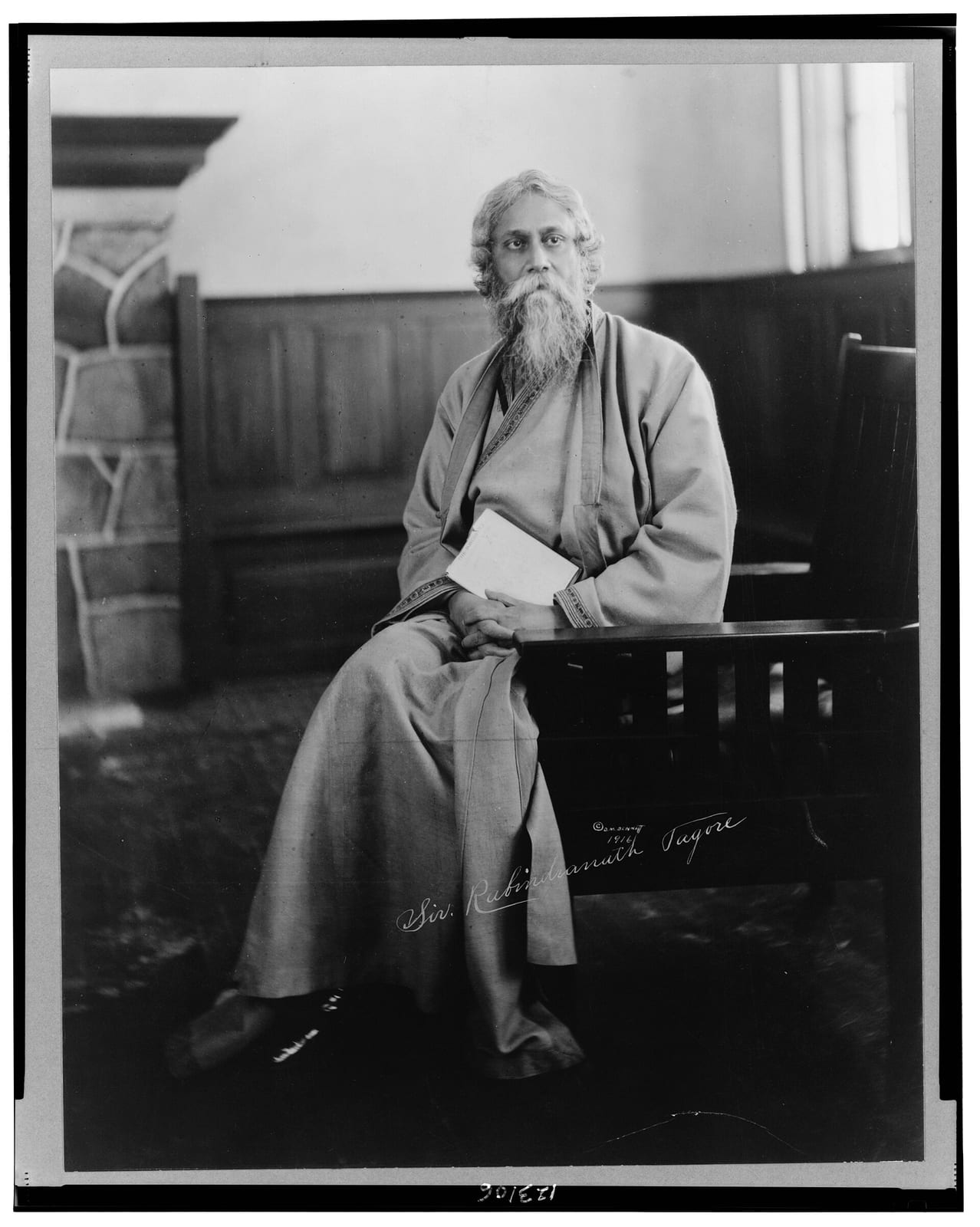
The Bengali Poet Who Changed the Nobel Map
Rabindranath Tagore’s poems crossed languages and won a Nobel Prize. His larger project was an education and a culture that could cross borders without surrendering their roots.
In 1913, the Nobel Prize in Literature went to Rabindranath Tagore, a writer already celebrated in Bengal but newly famous among many European readers. The award was a landmark in the prize’s geographical reach. Yet it can also create the wrong starting point for his story, as though a Swedish institution had brought an otherwise unknown literary culture into existence. Tagore’s work had deep roots in a language, a community of readers and a life of experimentation that preceded the announcement.
The English volume Gitanjali helped carry his poetry abroad. It was not simply a line-by-line duplicate of the Bengali book bearing the same name: the collection drew on poems from more than one source. Translation therefore did more than transport an unchanged object. It shaped what new readers encountered and what they thought Tagore represented. The international reception made him famous, but it also encouraged a selective image of a writer whose work extended far beyond spiritual lyricism.

Keep reading in Yester
Coming soon to the App Store
Keep following the story
Sources
Image: Miscellaneous Items in High Demand, PPOC, Library of Congress