A King Is Buried in a Ship at Sutton Hoo
An Anglo-Saxon ship burial held a helmet, gold and treasures from distant lands.
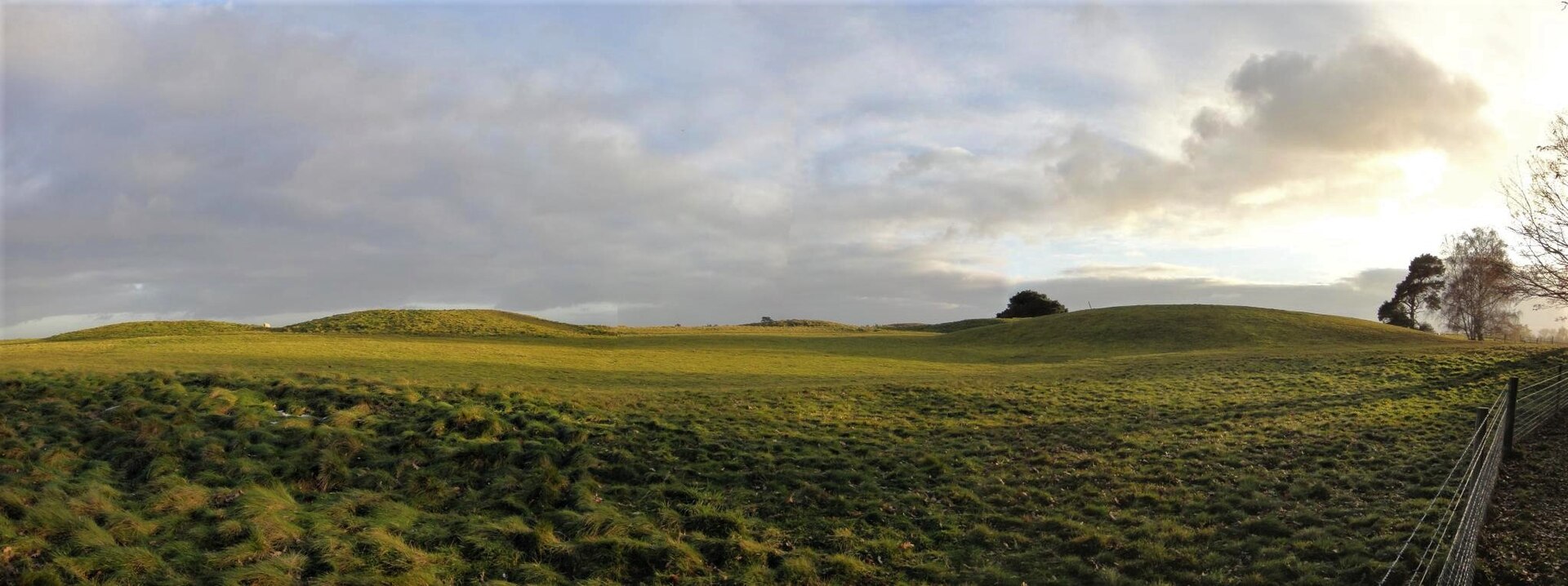
On a high promontory above the River Deben in Suffolk, a cluster of about eighteen earthen barrows long overlooked the waterways of early East Anglia. In 1938, the landowner Edith Pretty engaged Basil Brown, a self-taught local archaeologist, to investigate the mounds on her estate. Working with estate staff the following spring on the prominent Mound 1, Brown exposed iron rivets still held in original alignment within the sandy earth. Although the organic timber had decayed, the acidic soil had preserved an imprint of an undisturbed seagoing vessel twenty-seven metres long, buried beneath a mound nearly three metres high and thirty metres across.
Recognising the scale of the discovery, professional archaeologists led by Charles Phillips assumed control of the excavation in mid-1939. At the centre of the buried hull sat a collapsed wooden chamber sheltering a funerary assemblage of extraordinary craftsmanship. Among the objects were a ceremonial helmet, a pattern-welded sword, a shield, a lyre, and personal dress fittings fashioned from gold and garnet cloisonne cellwork. The grave also contained imported prestige goods, including silver plate from the Eastern Roman Empire, a bronze hanging bowl, and lumps of bitumen that British Museum scientists traced to the Middle East.

Keep reading in Yester
Coming soon to the App Store
Keep following the story

Sources
- The Anglo-Saxon ship burial at Sutton Hoo (British Museum)
- Eighty years (and more) of Sutton Hoo, Sue Brunning (British Museum blog)
- Edith Pretty (British Museum)
- A brief history of Sutton Hoo (National Trust)
- The Royal Burial Ground at Sutton Hoo (National Trust)
- The exhibition at Sutton Hoo (National Trust)
- Visiting Tranmer House at Sutton Hoo (National Trust)
- Sutton Hoo
Image: Alex Healing