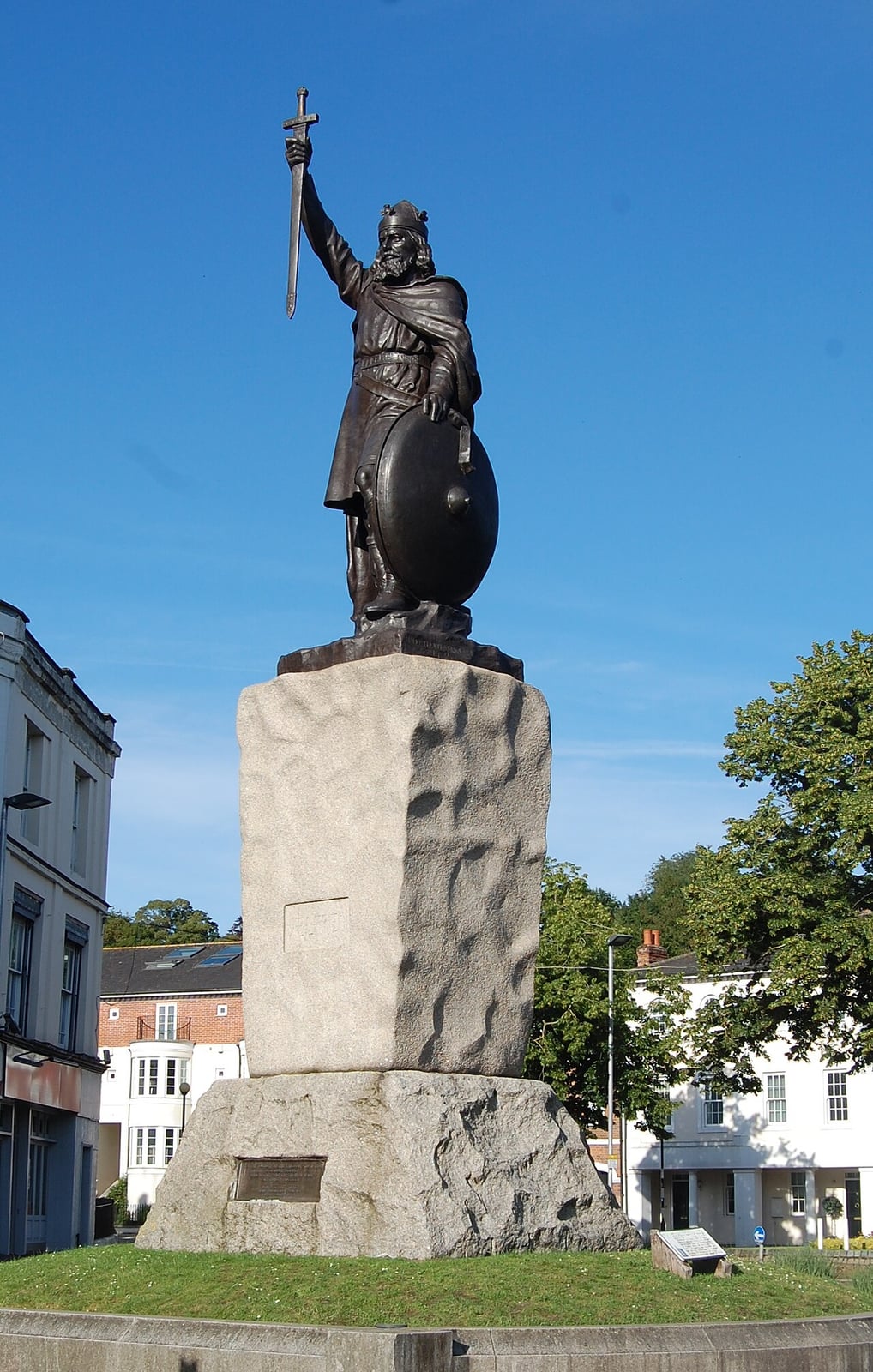
Alfred the Great Defeats the Vikings at Edington
A West Saxon king recovered his kingdom from a Danish army.
In May 878, King Alfred of Wessex marshaled a regional levy against the forces of the Danish warlord Guthrum at a location identified in early records as Ethandun, commonly accepted today as Edington in Wiltshire. The confrontation took place in the seventh week after Easter, following months of crisis during which the West Saxon ruler had been forced into temporary concealment in the Somerset marshes. The clash resulted in a decisive West Saxon victory, ending a protracted period during which northern incursions repeatedly jeopardized the remaining independent Anglo-Saxon rule in southern Britain.
Scandinavian raiding parties had targeted the British Isles intermittently since the late eighth century, beginning with strikes along the southern coast and the recorded assault against the monastery at Lindisfarne in 793. By 865, the character of the incursions altered fundamentally with the landing of what chronicles designated the Great Heathen Army. Moving beyond sporadic shoreline plunder, this force aimed at sustained settlement and territorial conquest. Over the subsequent decade, Northumbria and East Anglia fell under Scandinavian dominance, while repeated campaigns into Wessex severely tested the kingdom's defenses under Alfred and his predecessor Æthelred.

Keep reading in Yester
Coming soon to the App Store
Keep following the story


Sources
Image: Hassocks5489