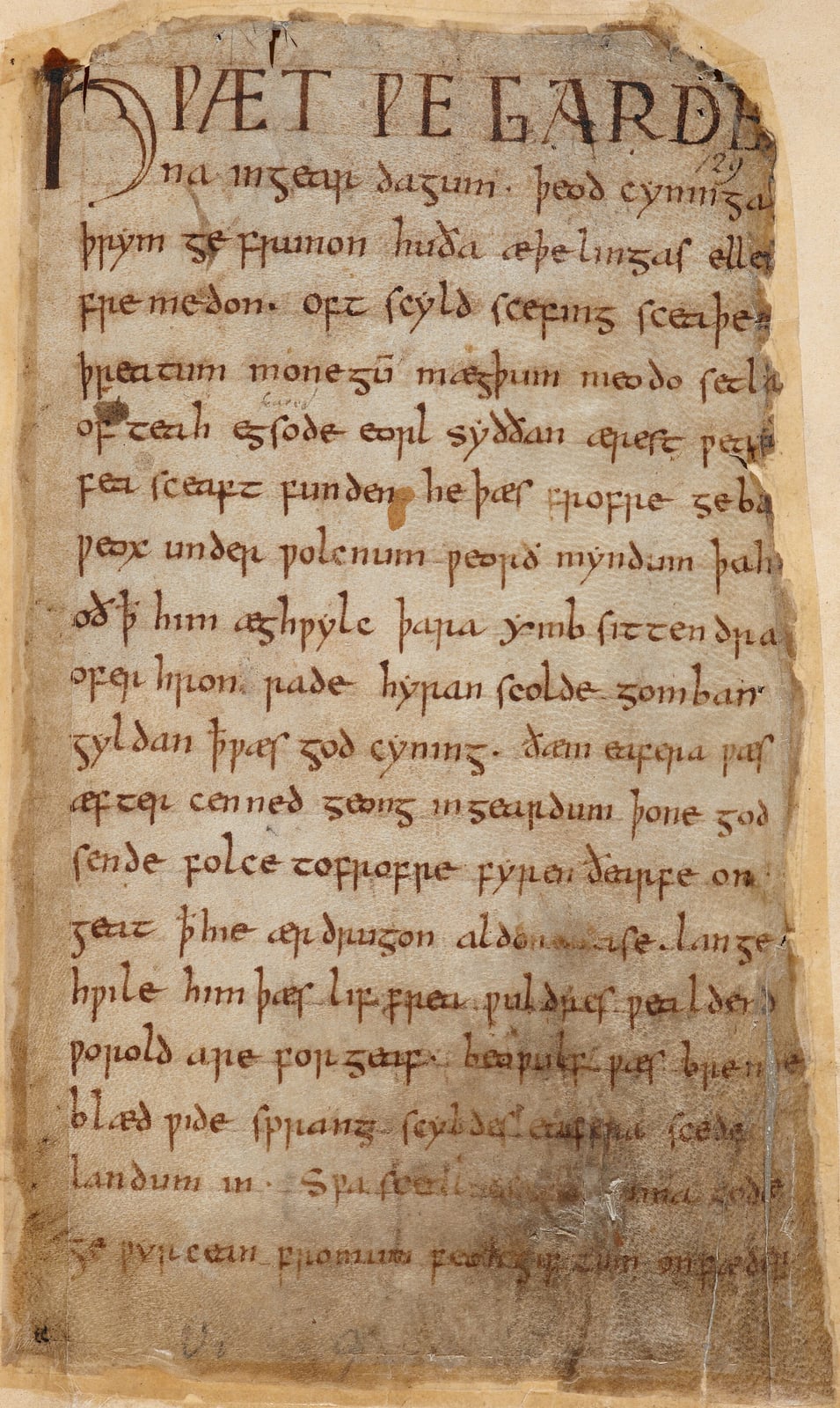
Beowulf Survives in a Single Manuscript
An Old English poem of monsters and kings was copied around the year 1000.
Sometime between the late tenth and early eleventh centuries, two scribes in England copied an epic poem across thousands of alliterative lines onto leaves of parchment. Bound into what is now known as the Nowell Codex, the manuscript represents the only surviving contemporary witness to the text. The anonymous work bore no formal title in its physical setting, but modern readers and editors know it by the name of its hero, Beowulf. Composed of 3,182 lines, the verse remained largely forgotten in monastic and private holdings for hundreds of years, emerging into modern study through transcription and translation only in the late eighteenth and nineteenth centuries.
The poem recounts the deeds of Beowulf, a champion of the Geatish people who journeys across the sea to Denmark. The Danish king Hrothgar has seen his great hall, Heorot, subjected to twelve years of nightly slaughter by the monster Grendel. Beowulf defeats the creature with bare hands and later descends into an underwater cavern to slay Grendel's vengeful mother. Returning home across the water, the warrior eventually rules his own kingdom for half a century. His life ends after a fatal confrontation with a treasure-guarding dragon, culminating in his cremation on a coastal pyre and the construction of a prominent memorial barrow.

Keep reading in Yester
Coming soon to the App Store
Keep following the story


Sources
Image: anonymous Anglo-Saxon poet