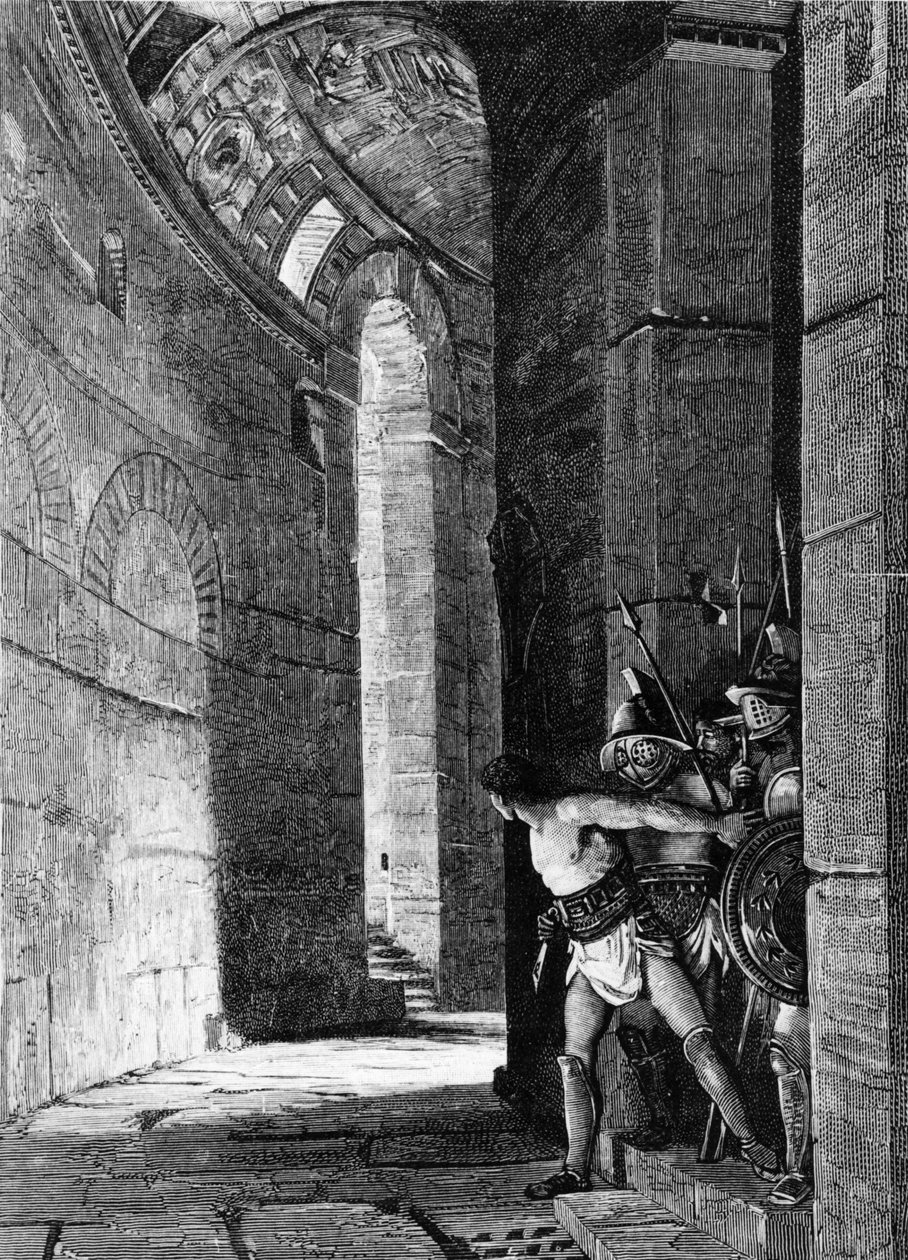
Spartacus Leads a Revolt Against Rome
Gladiators who escaped from Capua grew into an army of the enslaved.
In 73 BC, a plot among roughly two hundred slave gladiators at a training school in Capua unraveled through betrayal. About seventy of them managed to seize kitchen implements, fought their way clear of the facility, and confiscated wagons loaded with combat equipment. Taking refuge on Mount Vesuvius, the fugitives elected leaders, including Crixus, Oenomaus, and Spartacus. They routed an initial pursuit sent from Capua and began raiding local estates in Campania, gathering runaway farmhands, shepherds, and herdsmen into their ranks.
Rome initially treated the disturbance as a sudden surge of banditry rather than an organized military threat. The praetor Gaius Claudius Glaber led a hastily gathered militia of three thousand men to blockade the rebels on the slopes of Vesuvius. The besieged fighters wove ropes and ladders from wild mountain vines, climbed down the sheer cliffs on the unguarded side of the peak, and outflanked the Roman encampment. They destroyed Glaber's force and later overcame a second expedition under the praetor Publius Varinius, capturing arms and baggage.

Keep reading in Yester
Coming soon to the App Store
Keep following the story
Sources
Image: Lodovico Pogliaghi