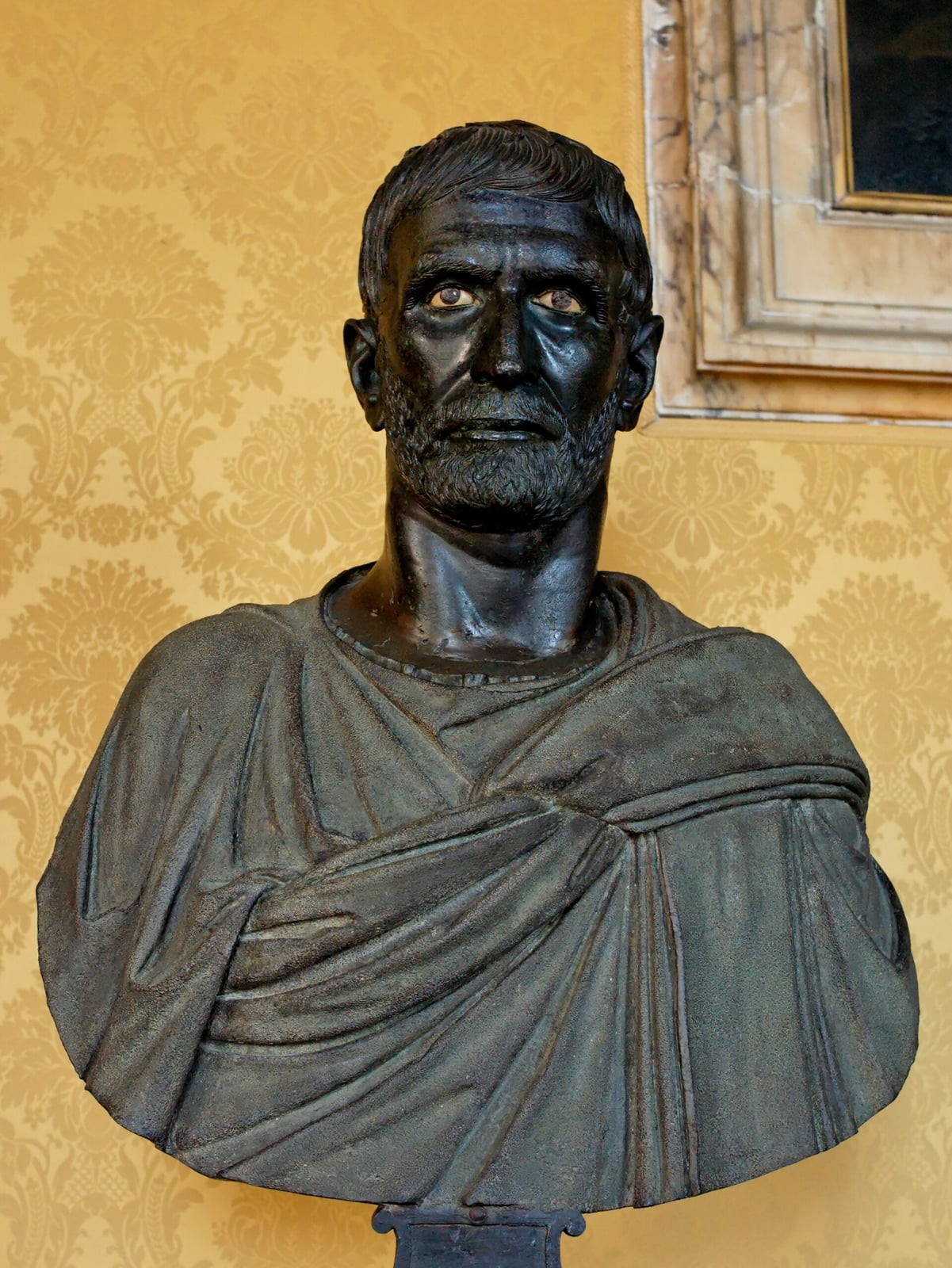
Rome Expels Its Kings and Becomes a Republic
Romans told how the last king fell and two consuls took his place.
Centuries after Rome discarded its royal rulers, Roman historians recorded a dramatic narrative explaining how their kingdom collapsed. In this classical telling, the crisis began when Sextus Tarquinius, the son of the reigning monarch Lucius Tarquinius Superbus, assaulted the noblewoman Lucretia. After revealing the attack to aristocratic kin and allies, Lucretia took her own life. Outraged by the tyranny of the royal family, a group of noblemen led by the king's nephew, Lucius Junius Brutus, mobilized the citizens and the military to shut the gates of Rome against the king, force the ruling dynasty into exile, and swear a solemn public oath never again to tolerate a monarch.
To replace individual rule, the traditional account held that the citizens created an annual magistracy of two elected officials, later recognized as consuls. The newly established republic faced immediate armed opposition. Deposed and exiled, Tarquinius Superbus sought allies across Etruria and Latium to reclaim his lost throne. Legendary battles followed, including the clash at the Silva Arsia, the dramatic defense of a Tiber bridge against the Etruscan king Lars Porsenna of Clusium, and a climactic engagement at Lake Regillus. Only after repeated military failures did the exiled king retreat to permanent exile in Cumae, where he died in 495 BC.

Keep reading in Yester
Coming soon to the App Store
Keep following the story
Sources
- The History of Rome, Books 1 to 8, Livy, trans. D. Spillan (Project Gutenberg)
- Roman Antiquities Book IV, Dionysius of Halicarnassus (LacusCurtius, University of Chicago)
- Roman Antiquities Book VI, Dionysius of Halicarnassus (LacusCurtius, University of Chicago)
- Lucius Tarquinius Superbus (World History Encyclopedia)
- Overthrow of the Roman monarchy
Image: Jastrow