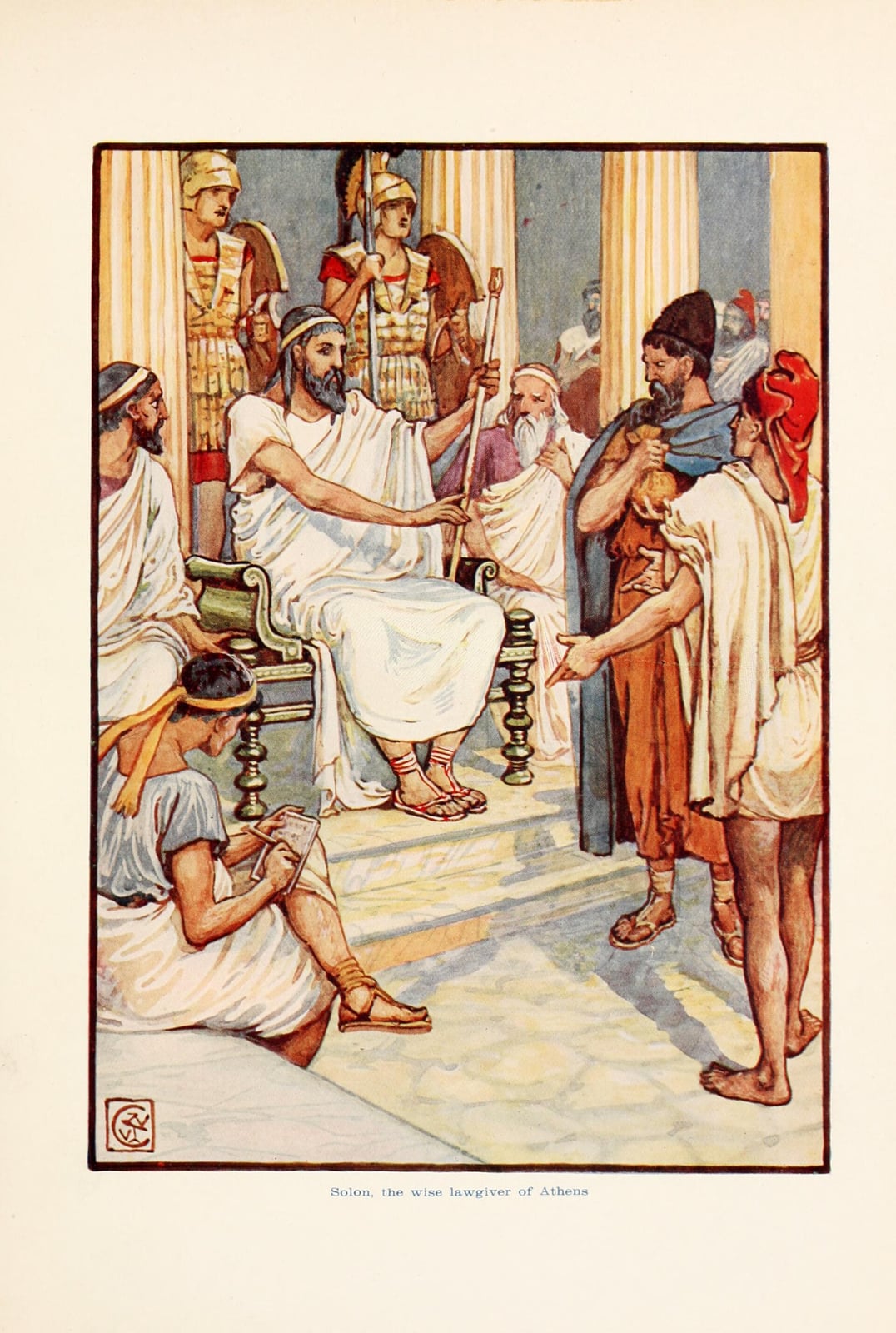
Solon Attempts to Ease Athens’s Social Crisis
Reforms addressed debt and political conflict without ending inequality.
In 594 BCE, the citizens of archaic Athens selected the poet and statesman Solon as archon, granting him extraordinary legislative authority to resolve an escalating crisis. Ancient narratives depict the city as deeply fractured between wealthy aristocrats and an impoverished agrarian population. Bound by harsh debt obligations, many vulnerable Athenians had pledged their personal freedom to secure loans, leaving them and their households subject to enslavement when harvests failed. Solon was charged with easing these tensions before factional unrest culminated in violent tyranny.
Solon's most celebrated measure was the seisachtheia, or the shaking off of burdens. This reform abolished debt slavery, released citizens who had fallen into servitude, and removed the horoi, the boundary stones that marked contractual debt on agricultural land. To encourage civic stability, he also prohibited using a debtor's person as collateral and repealed most of the earlier legal code attributed to Draco, preserving only its homicide statutes. Modern historians continue to debate whether this measure represented a broad cancellation of debt or the dismantling of an archaic system of dependency.

Keep reading in Yester
Coming soon to the App Store
Keep following the story

Sources
Image: Walter Crane