Hammurabi’s Laws Are Inscribed in Stone
A royal monument joined legal judgments with a claim to just rule.
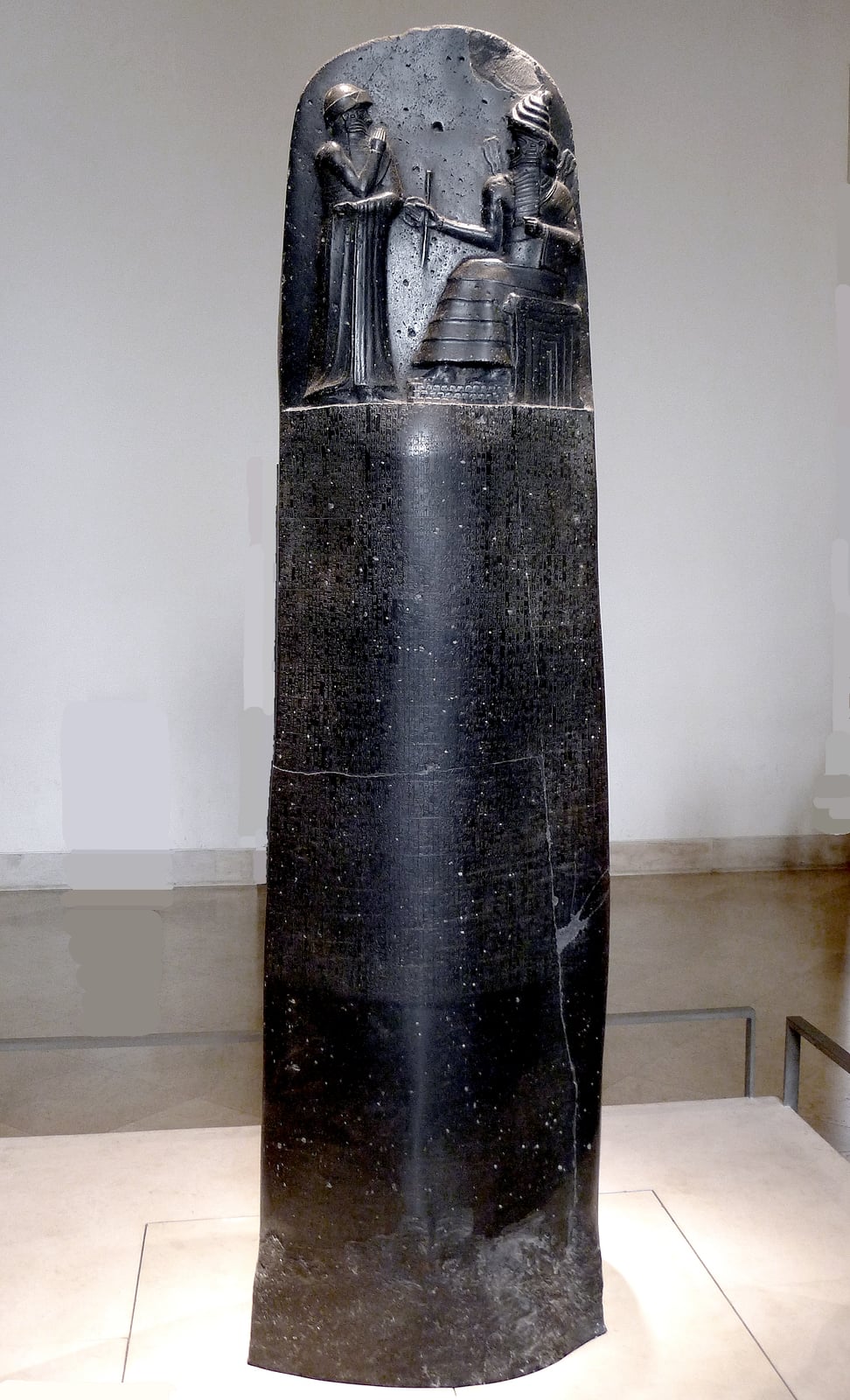
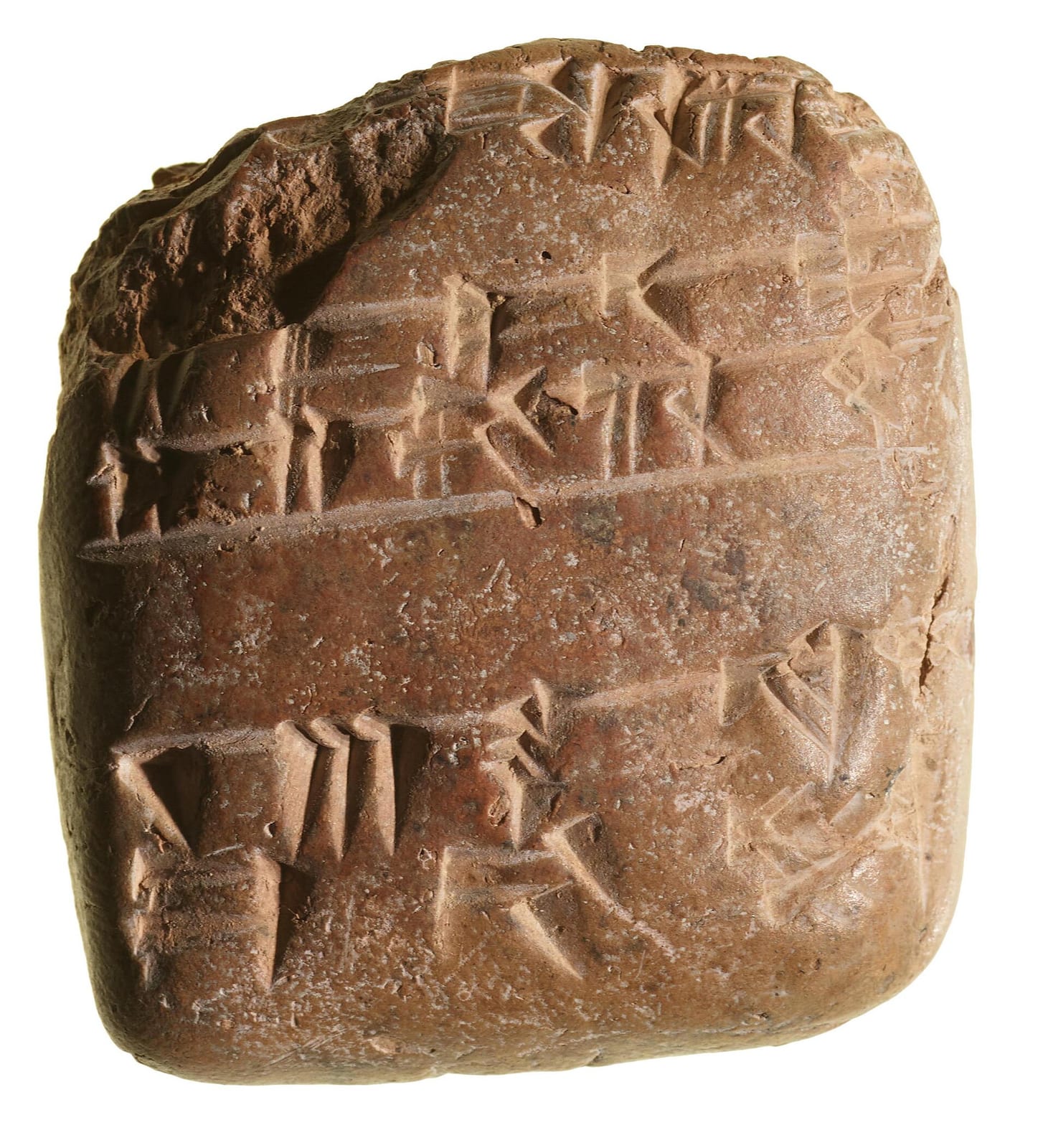
Late in his reign, around 1750 BCE, King Hammurabi of Babylon commissioned a towering monument of dark basalt to commemorate his rule and define the principles of his administration. Standing 2.25 meters high, the stele presents a prominent relief at its crest depicting the monarch before Shamash, the Babylonian god of justice and the sun. Beneath this divine encounter, scribes engraved more than forty columns of Akkadian text in archaic cuneiform. Rediscovered in fragments between December 1901 and January 1902 at Susa, in modern-day Iran, where it had been carried away as plunder centuries after its creation, the monument survives as one of the most complete legal texts preserved from the ancient Near East.
The inscription opens with a poetic prologue that roots the king's mandate in divine sanction. Hammurabi recounts that the great deities Anum and Enlil selected him to lead Babylon, charging him to protect the weak from oppression and bring order to his subjects. He details his personal piety, battlefield triumphs, and temple restorations, casting himself in the traditional royal guise of a caring shepherd. This rhetorical framework encloses what are traditionally called the laws, which occupy four fifths of the total inscription before concluding with an elaborate epilogue. There, the king urges aggrieved individuals to have the monument read aloud so they might understand their rights, while calling down vivid divine curses upon any future ruler who dared alter or deface his words.

Keep reading in Yester
Coming soon to the App Store
Keep following the story
Sources
- Code de Hammurabi, collection record SB 8 (Musee du Louvre)
- The Code of Hammurabi (Musee du Louvre)
- The Code of Hammurabi, King of Babylon, ed. Robert Francis Harper, University of Chicago, 1904 (Internet Archive)
- The Code of Hammurabi, translated by L. W. King (Avalon Project, Yale Law School)
- Hammurabi, Relief Portrait (Architect of the Capitol)
- Code of Hammurabi
Image: Mbzt