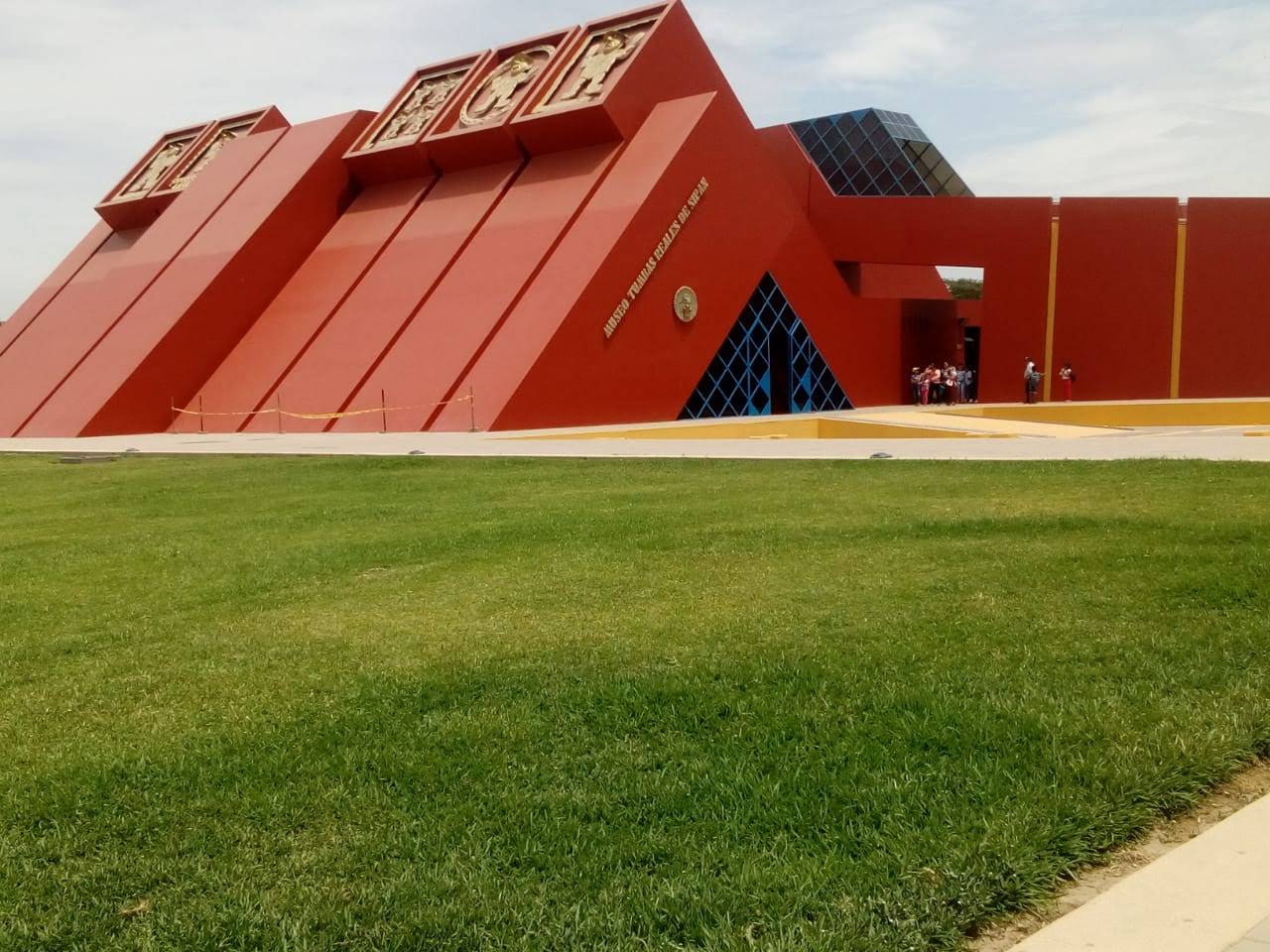
Archaeologists Find the Tomb of the Lord of Sipán
An untouched Moche royal tomb revealed gold and silver treasures.
In early 1987, illicit diggers operating at the complex of Huaca Rajada, situated near the settlement of Sipan in northern Peru's Lambayeque Valley, unearthed an array of precious gold artifacts. An internal disagreement among the looters prompted an alert to local police, who intervened to secure the area and seized multiple recovered pieces. Law enforcement officials subsequently informed the Peruvian archaeologist Walter Alva, setting off formal scientific excavations at an adobe monument consisting of two large mud-brick pyramids and a smaller platform dating from pre-Columbian times.
Huaca Rajada served as an important ceremonial center built by the Moche civilization, with its platform and earliest pyramid constructed prior to 300 AD, followed by later architectural additions around 700 AD. Monumental earthen mounds across coastal Peru had suffered persistent plunder since the sixteenth-century Spanish conquest of the Inca Empire, making the survival of an undisturbed burial chamber exceptionally unusual. Alva's investigation led directly to the intact tomb of a high-ranking Moche dignitary, who came to be designated as the Lord of Sipan.

Keep reading in Yester
Coming soon to the App Store
Keep following the story
Sources
- Tombs of the Lords of Sipan (Current World Archaeology)
- Señor de Sipán: hallazgo arqueológico peruano más notable del siglo XX cumple 35 años (Andina, Peru News Agency)
- Lord of Sipan's face reconstructed using 3D imaging (Andina, Peru News Agency)
- Forensic Anthropologists Reconstruct Lord of Sipan's Face (Archaeology Magazine, Archaeological Institute of America)
- La nueva vida del Señor de Sipán (El Colombiano)
- Lord of Sipán
Image: Karen Arévalo Calle