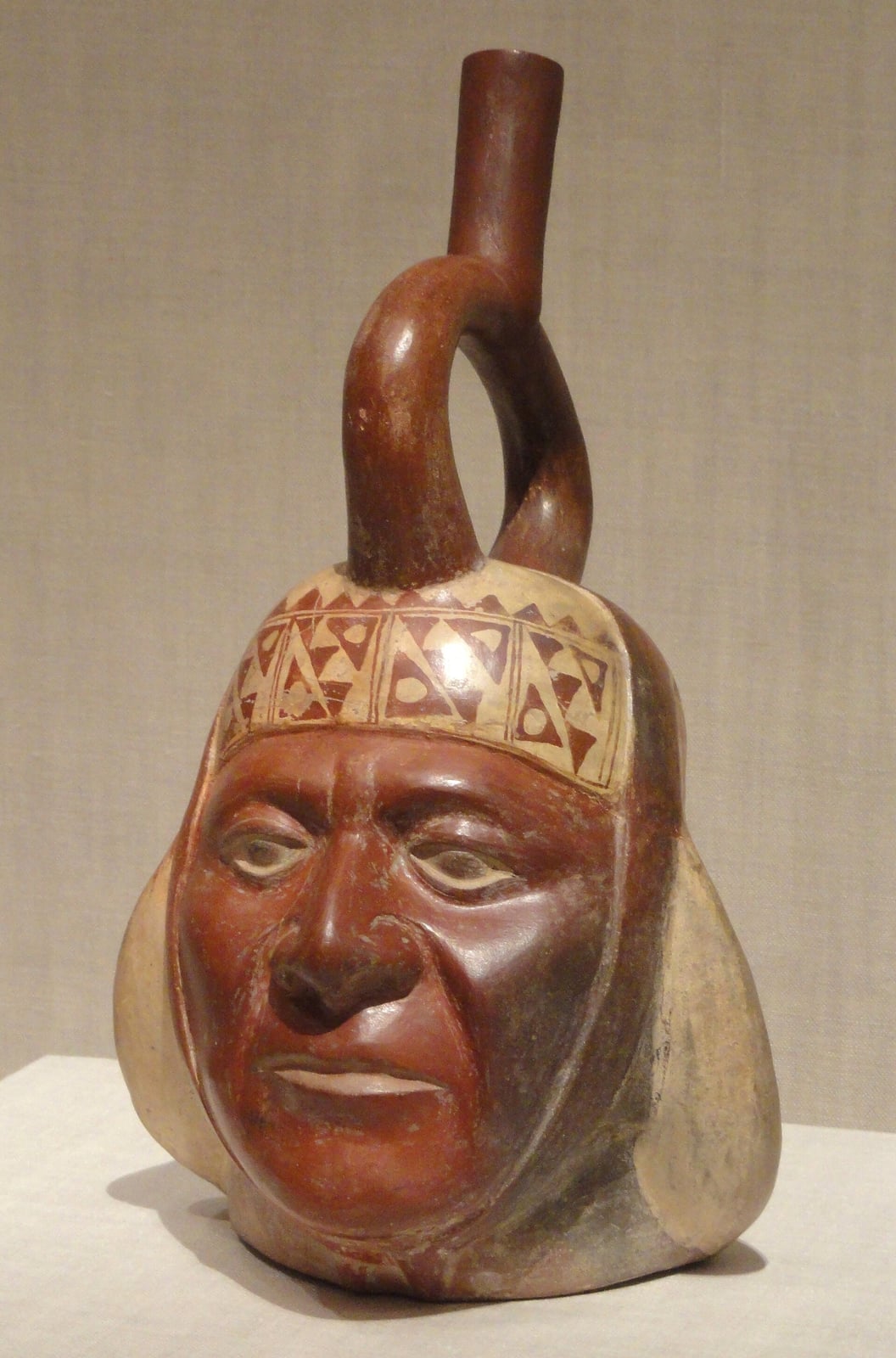
Moche Potters Model Lifelike Portraits in Clay
Stirrup-spout vessels from Peru’s north coast show individual faces, animals and daily life.
Across the arid coastal valleys of northern Peru, the Moche culture developed one of the most distinctive ceramic traditions of the ancient Americas between roughly 100 and 800 AD. In an environment defined by stark desert terrain and dependent on canal-fed river runoff from the Andes, craft specialization flourished alongside agricultural intensification. Among the most recognizable artifacts produced during this era were modeled ceramic vessels featuring stirrup spouts, which served as prominent elements of funerary assemblages rather than practical containers for daily pouring.
Moche potters relied primarily on a focused color palette of cream and deep red, working with both freehand fineline painting and sculptural modeling. They frequently employed clay molds, a technique that enabled the standardized production of popular shapes while still permitting intricate detail. The vessels documented a wide spectrum of physical life and societal roles, ranging from architectural models and warrior depictions to detailed portrayals of agricultural labor, weaving, and explicit sexual encounters.

Keep reading in Yester
Coming soon to the App Store
Keep following the story
Sources
Image: Daderot