Chan Chan Builds a Capital from Earth
The Chimú capital combined monumental adobe compounds with networks of water, craft production and political power.
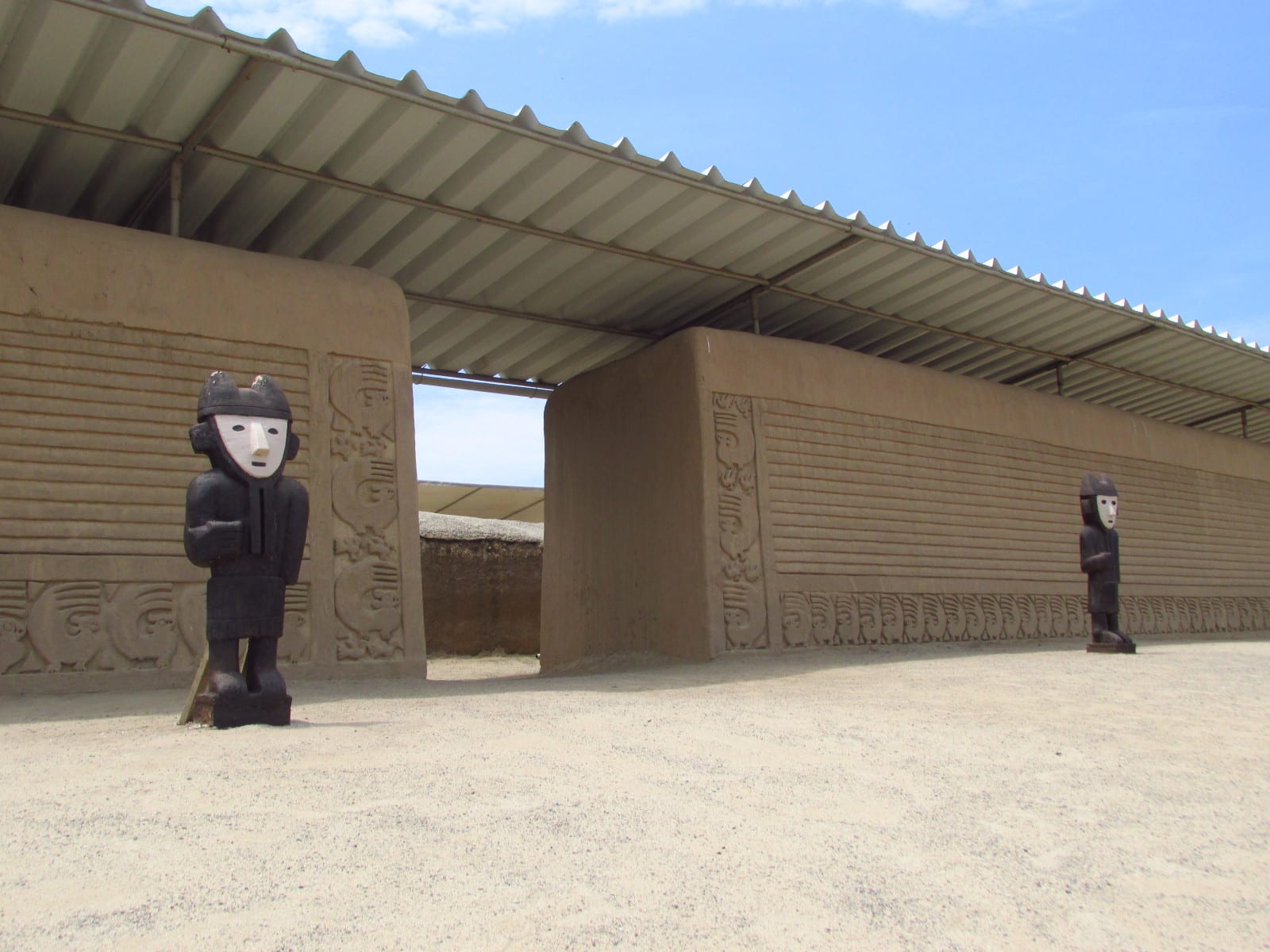
Chan Chan arose in the mouth of the Moche Valley in northern Peru, developing into the capital of the Chimor kingdom between approximately 900 and 1470. Situated in an arid strip of the coastal desert, the urban center grew to cover twenty square kilometers, with a dense central core spanning six square kilometers. Because rainfall along the coast was scarce, the city depended upon freshwater runoff flowing from the Andes through river systems. Chimú builders constructed an extensive network of irrigation canals diverting water from the Moche River, which supported an urban population estimated in the tens of thousands.
The core of Chan Chan was defined by ten monumental walled enclosures known as ciudadelas. These rectangular complexes featured exterior adobe walls roughly nine to ten meters high, built about two meters wide at the base. Each enclosure typically contained only a single entrance, sheltering interior plazas, storage facilities, reservoirs, and royal burial platforms. Outside these elite compounds, the broader population occupied small, irregular agglutinated rooms. These modest dwellings doubled as workshops for weavers, potters, and metalworkers, reflecting a strictly stratified social hierarchy organized around craft production and centralized administration.

Keep reading in Yester
Coming soon to the App Store
Keep following the story
Sources
Image: eduardorudas