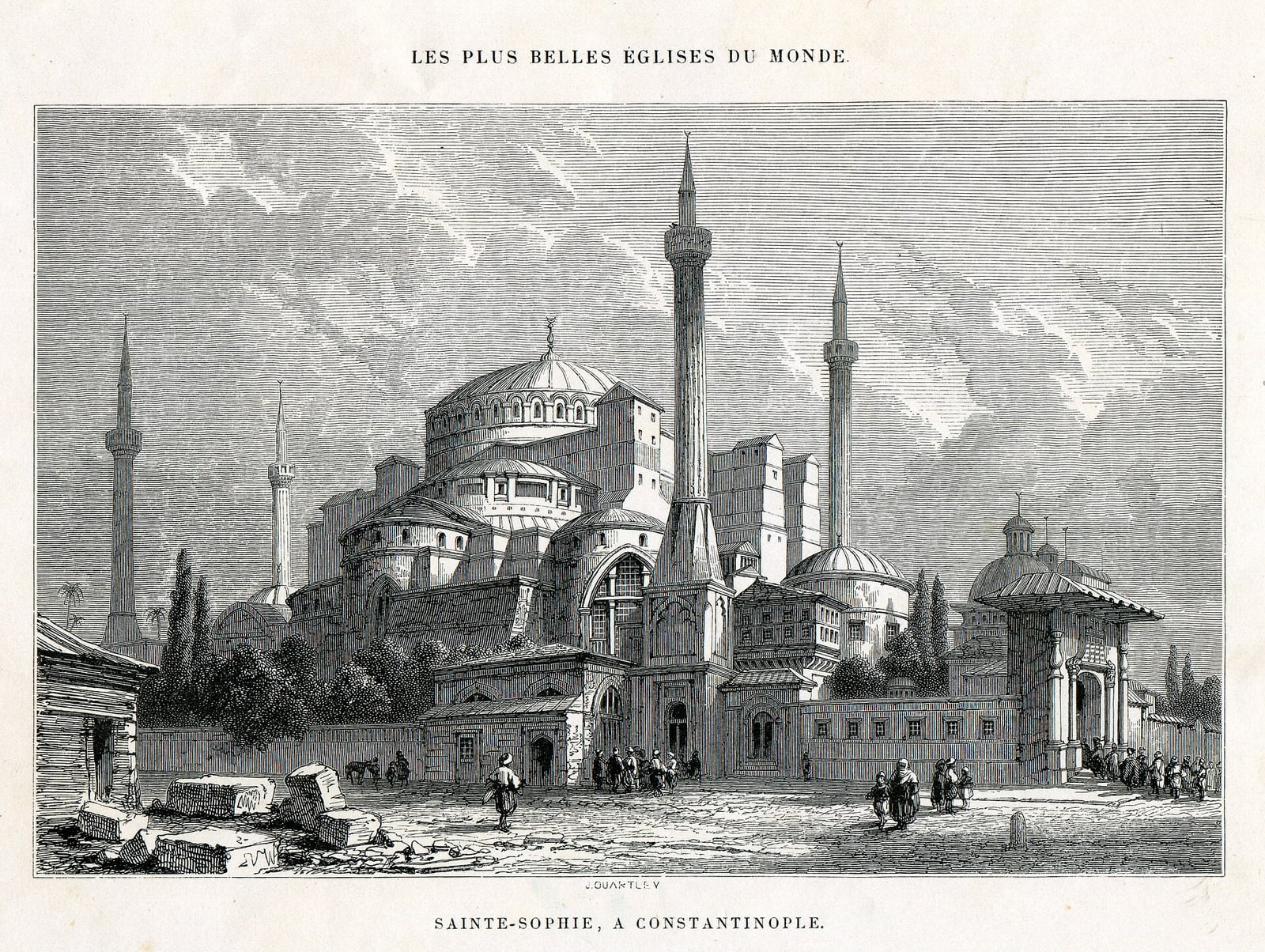
Hagia Sophia Raises a New Imperial Dome
Justinian’s great church joined daring engineering to imperial and religious authority.
In January 532, riots originating in the nearby Hippodrome of Constantinople devastated the city and reduced its second great cathedral to charred ruins. Within weeks of the destruction, Emperor Justinian I initiated construction of a third basilica dedicated to Holy Wisdom. Determined to surpass earlier shrines in scale and magnificence, he selected the geometer Anthemius of Tralles and the engineer Isidore of Miletus to direct the ambitious enterprise, moving past conventional basilica plans in favor of an enormous, centralized vaulted structure.
More than ten thousand workers contributed to erecting the monumental edifice between 532 and 537. Financed initially through the praetorian prefect Phocas, the cathedral incorporated materials gathered from across the Mediterranean world, including Egyptian porphyry and diverse marble columns. The finished interior was encased in rich, multicolored revetments and gleaming gold glass mosaics, while the exterior displayed white marble panels and gilded surfaces that enhanced its visibility from the surrounding sea. Dedicated by Justinian and Patriarch Menas on 27 December 537, the cathedral provided Constantinople with an unprecedented ceremonial stage.

Keep reading in Yester
Coming soon to the App Store
Keep following the story
Sources
Image: Unknown author Unknown author